Karim Ghelloussi
Global marqueteries: memory of worldwide struggles and action through images
Comprised of six or seven pieces, all of which focus on a foregrounded figure, the series Ceux qui vivent [Those Who Live], initiated circa 2020, presents itself as an updated take on marquetry. Through this ancient woodworking technique, Karim Ghelloussi tackles the media coverage of the revolutionary surge that swept the world in 2019, particularly in Hong Kong, Algeria, Lebanon, Palestine, Chile and Brazil, during which images played an integral part in militant strategizing. The need to visualise revolutions by producing forms which are in themselves suggestive of an alternative seems to be a common thread throughout the artist’s approach. Through his use of figuration and the research he undertook in the 2000s around moulding techniques, he gives substance to the memory of these struggles, in the wake of his series Mémoire de la jungle [Memory of the Jungle].
Revisiting the origins of the series, Karim Ghelloussi explains that he chose to work with offcuts of wood for material reasons. Sorting through his works and re-evaluating them led him to disassemble some of the wooden sculptures that “he wasn’t satisfied with”.1 Furthermore, he manifested a particular interest in the visual economy of global popular emancipation movements: these protests could be described as “a massive and inventive movement.”2 That his approach may have unconsciously sought to materialise these struggles and the dynamics that connects them, both in their histories and timelines, is clearly apparent when one considers the links between his work and the global issues at play within marquetry. This woodworking technique — of which Louis XV’s desk is one of the most famous examples — refers to the assemblage of “pieces of wood of variegated essences and tones, inlaid on a carpentered structure in order to form various designs and patterns.”3 Decorative but profoundly hybrid, in that the materials used combine veneers of tortoiseshell, mother-of-pearl or mahogany sourced from the four corners of the earth, this technique positioned itself as a true border-object in the 18th century. Therefore, in Karim Ghelloussi’s work, the embodiment of worldwide images of emancipation through a technique that carries within itself a global imagination amounts to setting these images in motion again, according to their original circulatory poetics.
Everything in his work seems to encourage us to consider that his reflection on form is related to issues pertaining to images. His depictions of activists speak of how powerfully images can influence the political field and reality. For instance, the artist’s paper cut-out depiction of a Brazilian protestor opposing Jair Bolsonaro’s regime highlights his headdress and costume. The sharp-edged pieces of painted wood create an evocative contrast and produce an image within the image, which calls attention to the links that exist between current political modes of exhibition and the tradition of the Native Carnival in Brazil. As Krista Thompson points out, the goal of such an expression of links between present and past times is to complete the freedom project.4 As such, Karim Ghelloussi sets aside the decorative aspect in favour of using depiction as a tool to directly evoke the memorial strategies Brazilians rely on to carry out this unfinished campaign for freedom.
Karim Ghelloussi’s marqueteries and paper collages present themselves as meta-images precisely because the artist is interested in the weight of visual strategies in militant actions. Thereby, he reminds us that during some of these historic demonstrations, especially in Algeria in 1961, protestors would pay particular attention to the outfits they wore (hats, suit jackets, etc.) when they took to the streets, even though they were doing so to fight for their country’s independence. It comes as no surprise that images should make up such an integral part of the exercise of militancy. Indeed, Georges Didi-Huberman and Horst Bredekamp’s writings remind us that, through its very ontology, the image is an act in and of itself.5
The political significance of the artist’s production thence lies in the manner in which he documents the meta-discursive strategies that activists implement in their use of images. While his research initially focused on the production of missing images, he has now steered his practice toward the production of “image acts”.
Nowadays, the expression of the image act’s agency6 has come to characterise other kinds of sources: family pictures. Through his use of a more delicate technique — cut out paper —, the artist has developed a personal form of narration which enables him to “connect with places that were important to [him] — the Parisian region, Algeria and the region of Nice — by digging into family photo albums and the pictures [he] took [himself]”.7 With meticulous gestures reminiscent of painting, Karim Ghelloussi, whose father was Algerian and who spent the summer holidays in Algeria until he was fourteen, depicts a return to his family roots, capturing several generations of women. By presenting a conscious reinterpretation of the Women of Algiers, his work opens up a dialogue with Orientalist imagery. The composition of the drawing, which shows women sitting on a couch, was deliberately conceived as a conversation starter about the depiction of Algerian women, which sees the artist distancing himself from the idleness that Delacroix depicted in his works. This depiction of women with vertical lines breaks with the codes of Orientalist painting, in which women’s bodies are consistently shown reclining, in a horizontal position.
And yet, as author Meyda Yegenoglu remarks, these types of images were for the longest time associated with the fantasy of conquest, tying together the future of an entire country with that of the female gender.8 Karim Ghelloussi’s depictions, on the other hand, aim to “subtly change the way we look at things.”9 In this sense, the way in which the artist shifts depictions produced by colonial and post-colonial history is characteristic of all of his recent output.
In Karim Ghelloussi’s current approach, form, technique and art history, but also the agency of images, all become resources that the artist uses to shed light on post-colonial struggles and family histories. His works examine these subjectivities as well as the power of images to influence the political domain. Despite the decline of figuration in the 20th century, these works reveal the full potential of the figurative image to challenge “the structures of desire in classist, racist and patriarchal societies”10 and to build a counter-hegemonic visual iconography of subordinate histories.
Notes:
1 Conversation with the artist, Nice, 18 October 2024.
2 Ibid.
3 CNRTL definition.
4 Thompson Krista (ed.), En Mas’: Carnival and Performance Art of the Caribbean, exh. cat., New Orleans, Contemporary Arts Center, 2015, p. 31.
5 See, in particular, Horst Bredekamp, Théorie de l’acte d’image, Paris, La Découverte, 2007.
6 The term “agency” designates a person’s ability to intentionally affect themselves or their surroundings. See Anne Jézégou, “Agentivité”, in Anne Jorro (ed.), Dictionnaire des concepts de la professionnalisation, 2nd edition, p. 41-44, De Boeck Supérieur. https://doi.org/10.3917/dbu.jorro.2022.01.0041
7 Conversation with the artist, 18 October 2024.
8 Meyda Yegenoglu, Colonial Fantasies; Towards a Feminist Reading of Colonialism, Cambridge, Cambridge University Press, 1998.
9 Conversation with the artist, Nice, 18 October 2024.
10 Lydia Yee (ed.), Radical Figures: Painting in the New Millennium, exh. cat., London, Whitechapel Art Gallery, 2020, p. 7.
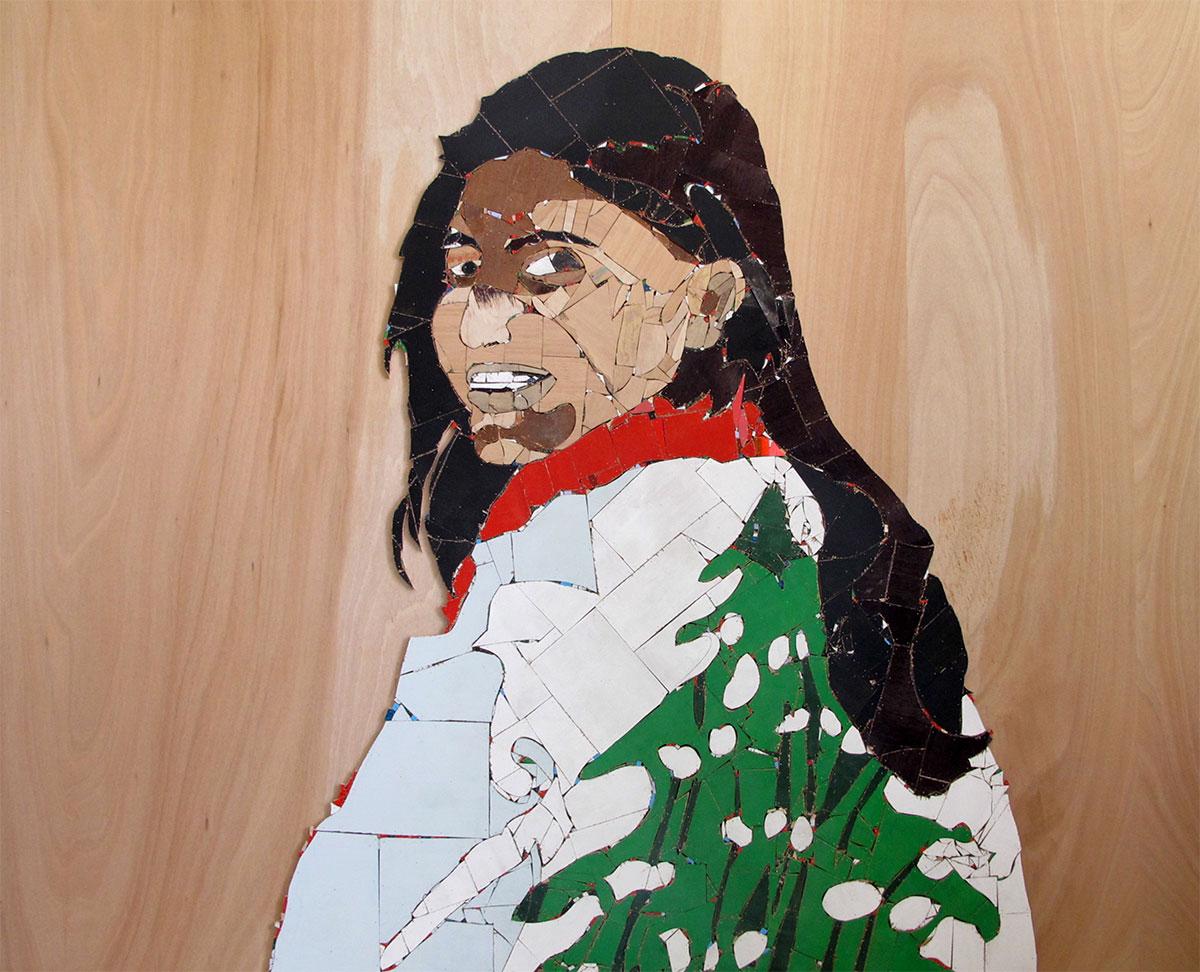
Wood scraps on wood panel, 200 x 244 cm — Collection of the city of Vénissieux
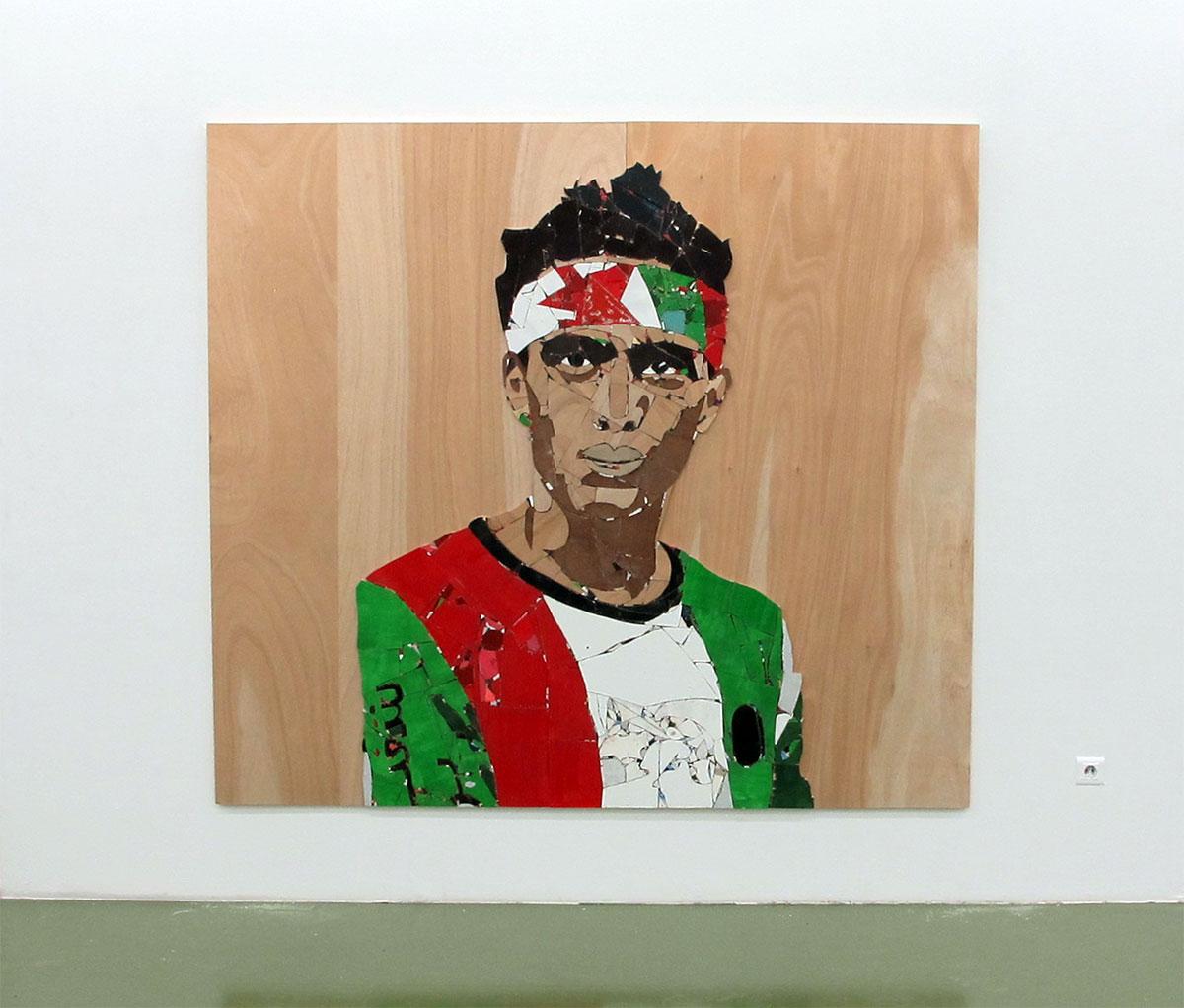
Wood scraps on wood panel, 200 x 224 cm
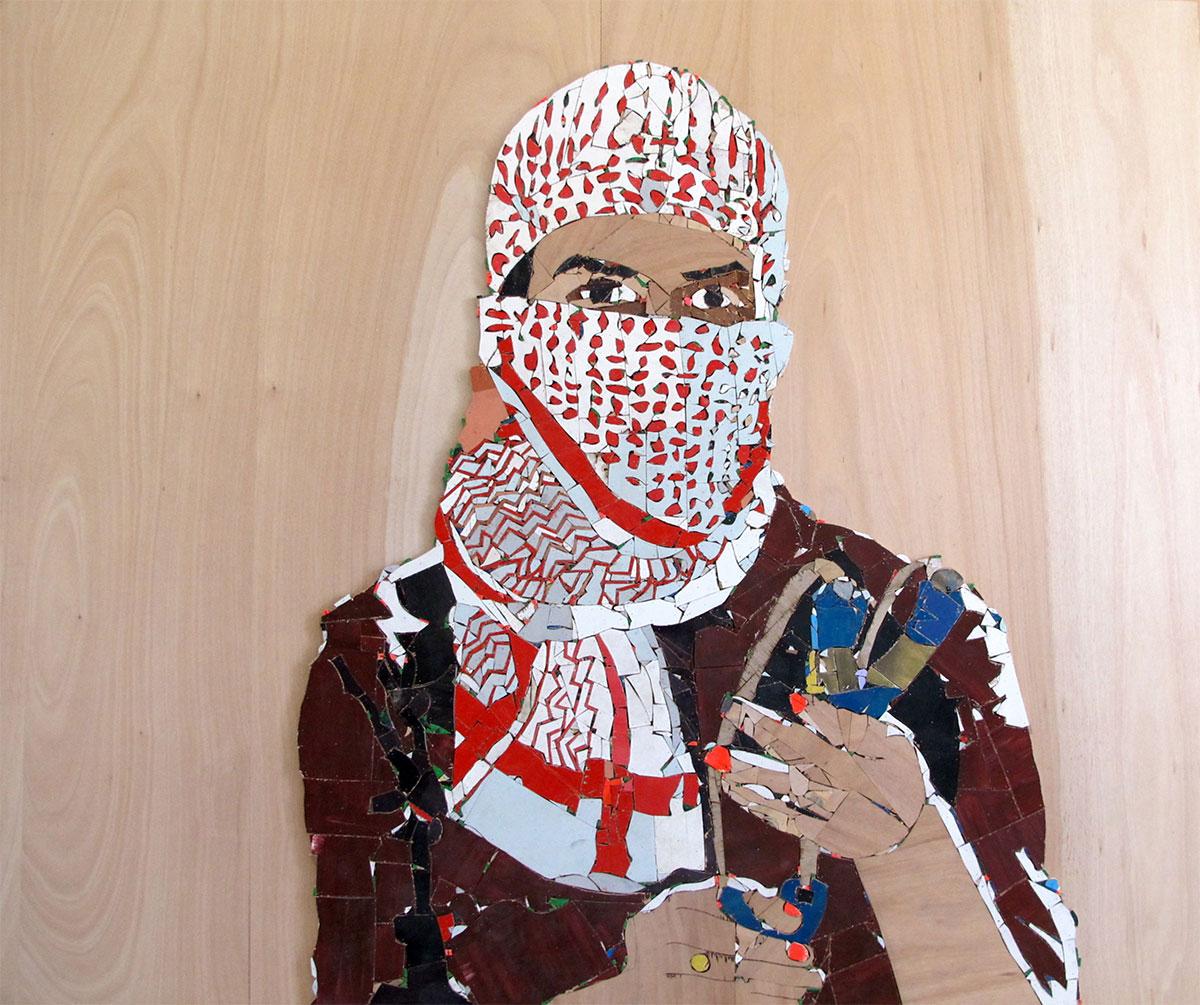
Wood scraps on wood panel, 200 x 224 cm
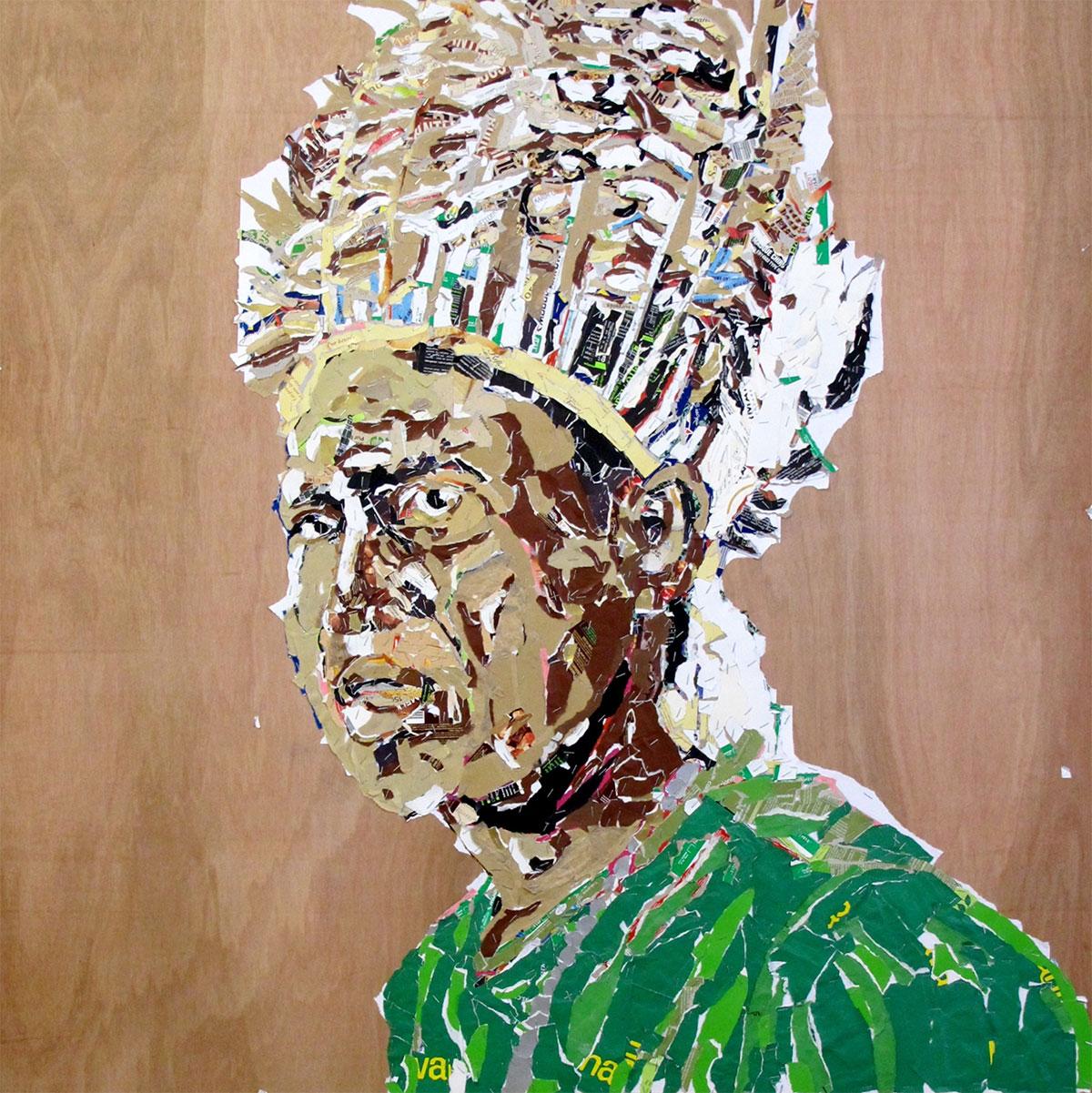
Paper scraps stapled onto wood panel, 122 x 122 cm
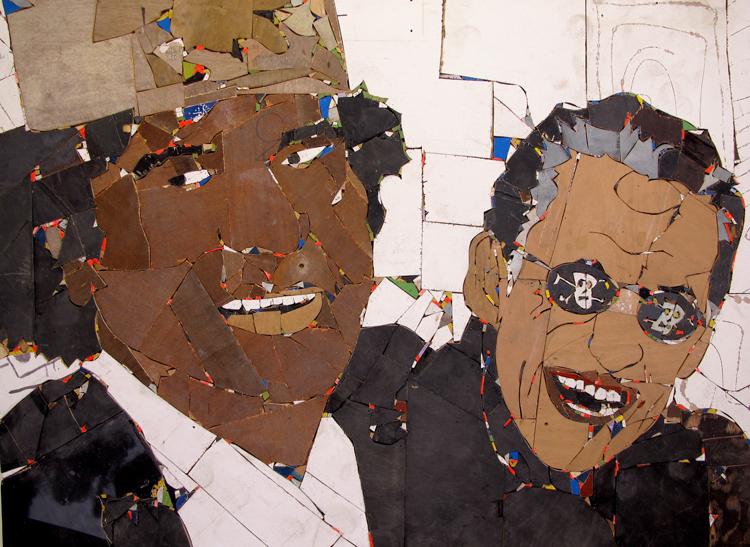
Wood scraps on wood panel, 113,5 x 158 cm
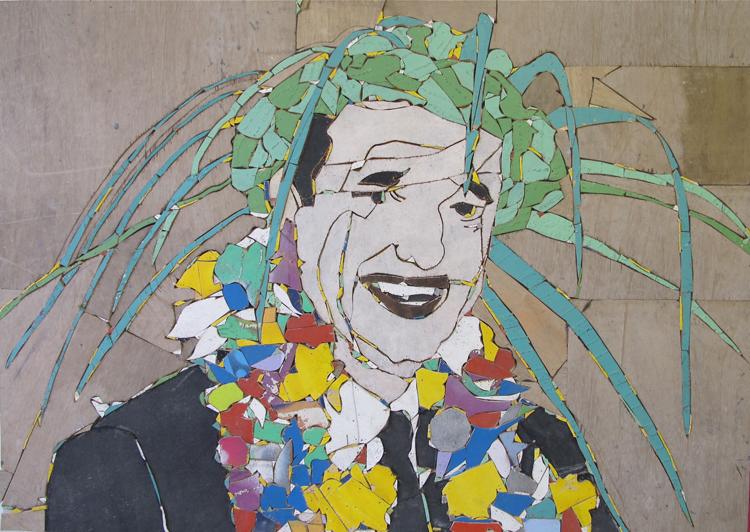
Wood scraps on wood panels, 100,5 x 140 cm
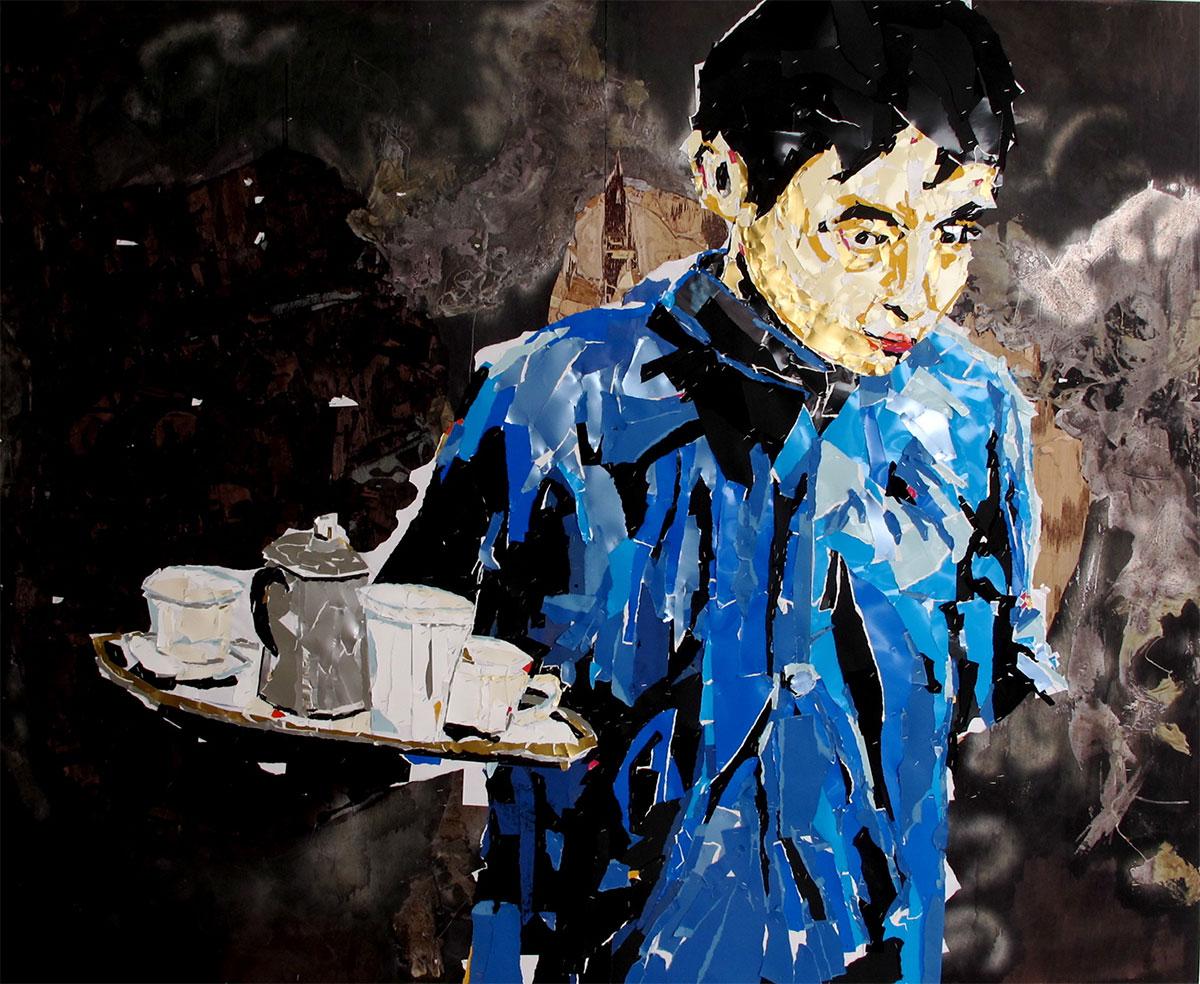
Paper scraps stapled onto wood panel, 200 x 244 cm
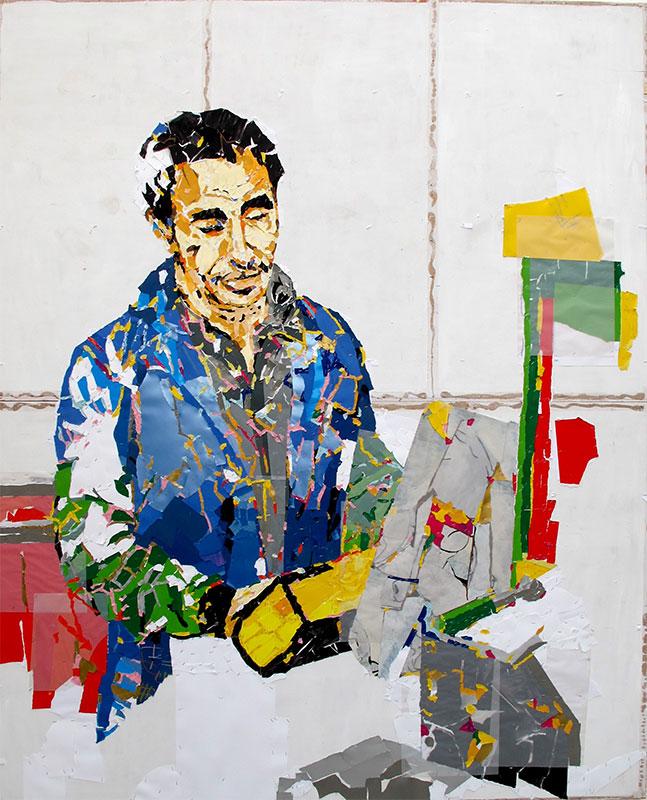
Paper scraps stapled onto wood panel, 240 x 200 cm
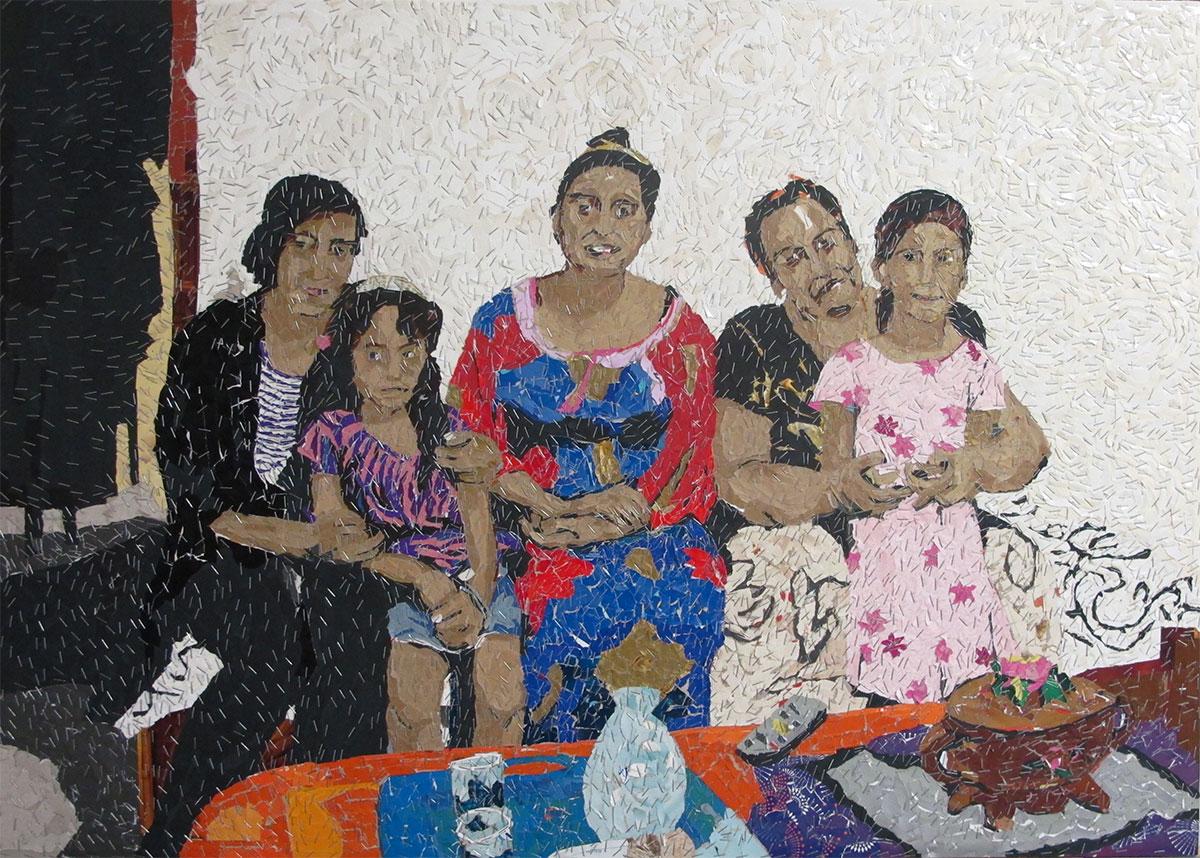
Paper scraps stapled onto wood panel, 80 x 112 cm
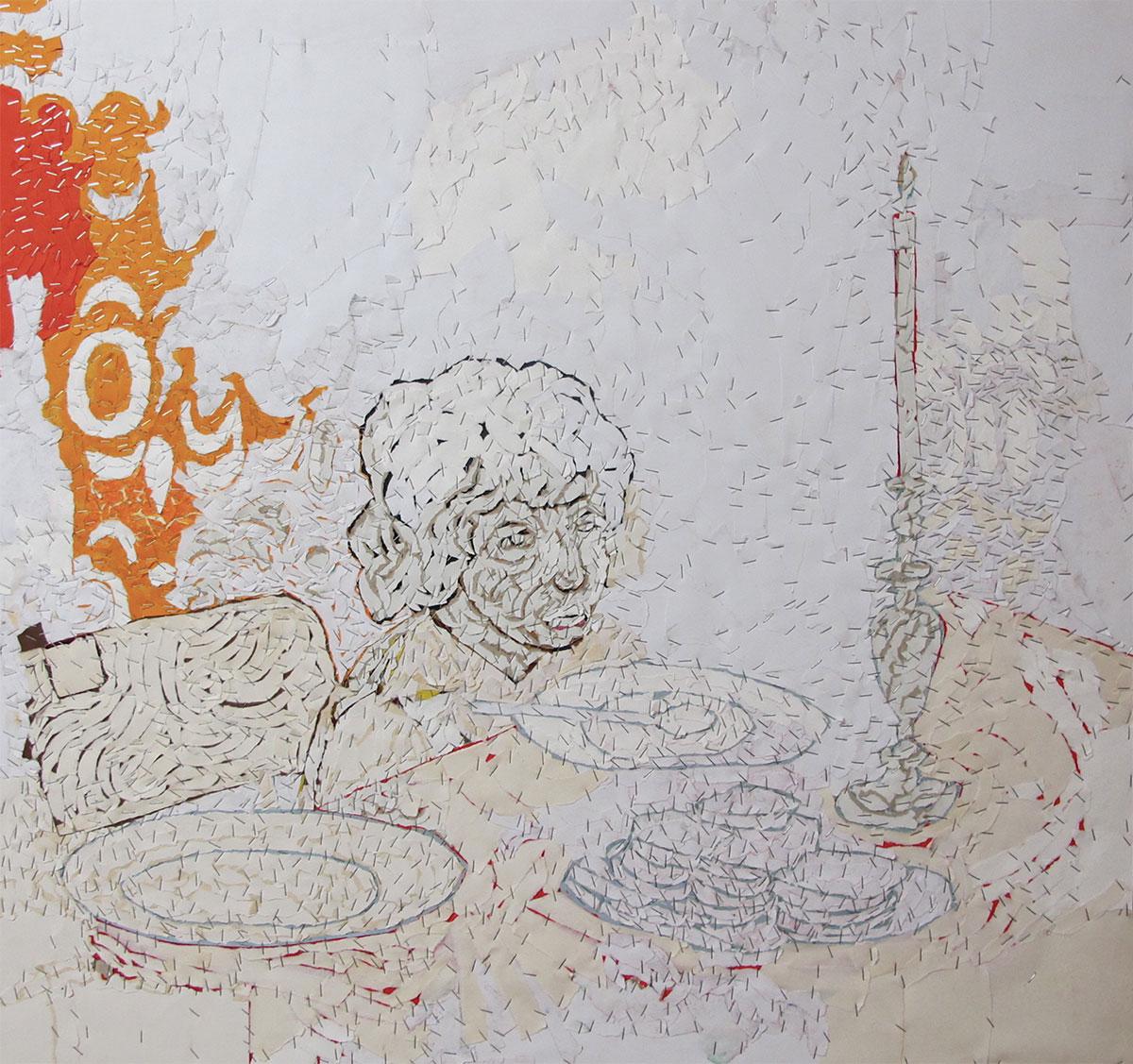
Paper scraps stapled onto wood panel, 95,5 x 100 cm - Private collection
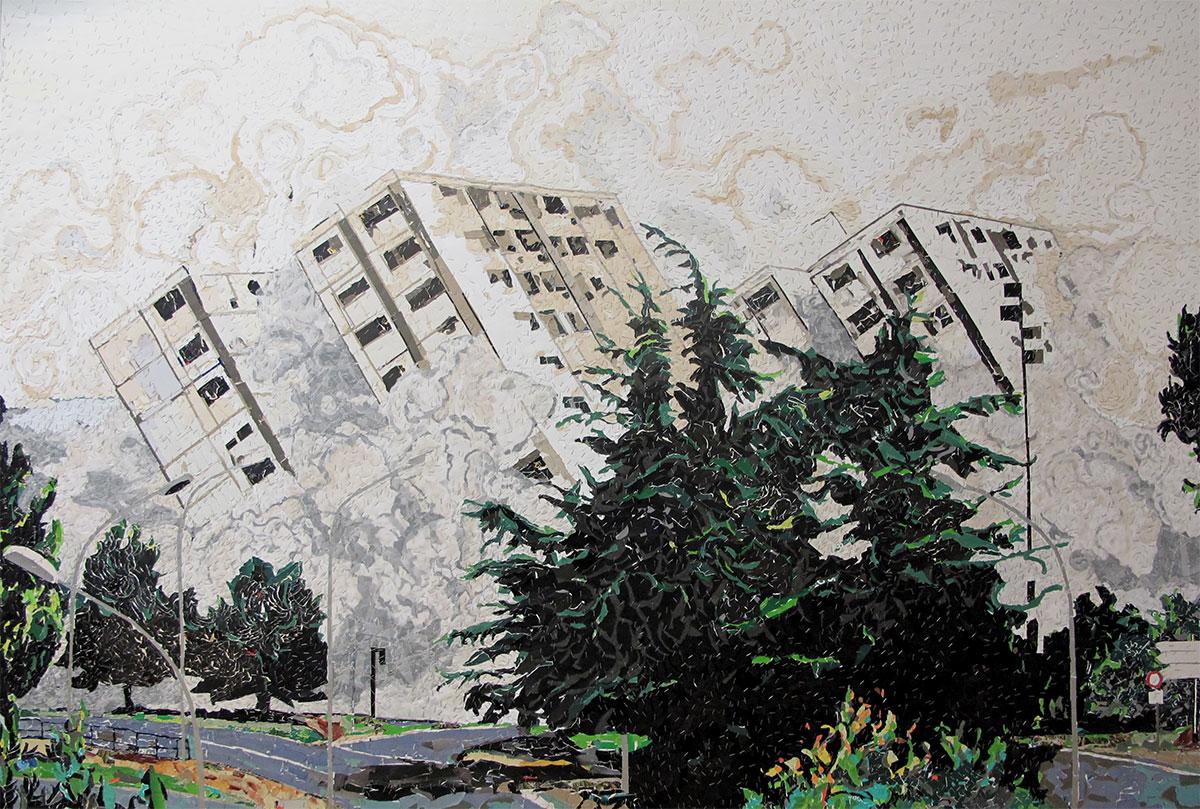
Paper scraps stapled onto wood panel, 170 x 244 cm - Private collection