Antoine Dorotte
Punk-like aqua fortis, zinc flowers and bleach1
Iridescence
Who has not gazed in wonder at the snaky shimmer of petrol patterns on a puddle, thrown a stone into them and watched the colours emerge out of the ripples?...2
Volontiers iconoclaste, la pratique d'Antoine Dorotte se présente comme la ré-intreprétation d'esthétiques de la représentation et la compilation de certains codes de l'histoire de la figuration, en re visitant les techniques traditionnelles de la gravure, de l'eau-forte ou de l'aquatinte. Entre le dessin et l'estampe, l'installation et l'architecture in situ, Antoine Dorotte explore les différents statuts d'émergences de l'image, entre volume et 2D, page et plaque de métal, sculpture et impression dans l'espace, au travers de perspectives gigognes, de textures et d'autres peaux de zinc ou de cuivre.
In his book Chroma: A Book of Colour, Derek Jarman presents us with a literary, intimate, sensitive, and almost alchemistic colour chart, a combination of chromatic explorations and erudite diary entries, somewhere between an autobiography and a kaleidoscope. Situated at the intersection of phenomena of appearance and chemical emulsions, of facts of ornamentation and architecture, and of reproduction and printing techniques, this is in some ways the same type of dimension one finds when one listens to Antoine Dorotte evoke his creative journey since the early 2000s and most of his works, and express his continuous desire to “make images”.
Drawing, sculpting, unfolding
While drawing is the starting point and heart of the matrix of Antoine Dorotte’s visual project, one often forgets the origin of his relationship with the discipline, which started during his years studying at the School of Fine Arts in Quimper, where he became acquainted with etching and comic books, as well as engineering and arts and crafts. The reference to Derek Jarman to describe the artist’s approach and some of his propositions correlates with this hybridisation and convergence of aesthetic fields, types of craftsmanship and ancient traditions: the artist’s preparatory sketchbooks are reminiscent of Leonardo Da Vinci’s, complete with a range of measurements, mathematical data and mental projections. Transitioning from the second to the third dimension, Antoine Dorotte’s drawing generates a shift from figuration to volume: the reason we talk about sculptures or constructions here is because one should acknowledge them first and foremost as drawings in space. As a folding and shaping of coated surfaces and graphic outlines, sculpture consists in the assembling of volumes applied in the manner of skins or drawings onto the material where the patterns become embedded. Scales, feathers, fur markings or variations on the motif of the eye — as illustrated in the piece Aux ocelles [To the Eyespots, 2024] and its 600 engraved plates —, echoes of the organic, plant and floral realms, create arrangements of anamorphoses and retinal transformations. Tableaux, textures and geometric silhouettes against the landscape that leave imprints of their visual outlines in urban or natural contexts, they should be understood as modular habitats or ways of entering an image, both in the physical and in the corporeal sense.
Image matrixes, copper paper and oxidised fictions
In Antoine Dorotte’s work, between fusion and ductility, the analogies with the hand and pencil guide the movement of the line on the paper but match its shift toward 3D. When faced with the potential methodological orthodoxies of printing or publishing, thanks to new and alternate uses and reuses of combinations, while the artist highlights the figure of the autodidact or the notion of bricologie [DIYology], he also questions the genres and subcultural dimensions of these repertoires, uses of representation and their histories. Whether he is referencing the Atelier Van Lieshout or Panamarenko for possible connections with the designing or creating of unlikely machinery, or other artists of his generation such as Vincent Mauger and Vincent Ganivet for their use of the public space and examples of unconventional sculptures, Antoine Dorotte bases his work on the revisiting and constant updating of these artistic registers and behaviours. Likewise, in more recent times, while he has also referenced figures such as Jean-Marie Appriou, Caroline Mesquita or Lou Masduraud as a way of highlighting questions of figuration and matter, handcrafting and installation practices, and the relationship between sculpture and images, he has done so against the backdrop of the idea and universe of practicing heterodox ironwork or inventive goldsmithery.
Metallic is the colour
Like a common thread or a generic key entry point, Antoine Dorotte was able, on his own terms, to expand on the idea of “digging into matter” by learning and borrowing from various engraving techniques ranging from aquatint to etching. Without any recourse to machinery or handheld tools such as the burin or traditional needle, “making images” has to do with both precipitation and chemistry, contributing to the revelation of effigies or shapes, with a degree of randomness in the artist’s gestures and plastic decisions. For Dorotte, the studio embodies a space for experimentation and a laboratory, at once empirical and intuitive, where various states of matter and manifestations of potential new materialities can emerge. In the same way one would talk about a mutating or site-specific engraving, these drawings, these shapes and this chemistry are all part of an iconology achieved through physical reaction and contact, alteration or time-related oxidisation. Like an almost esoteric distant echo or a nod to the codes and to an aesthetic and ancient genealogy, there is something akin to playfulness when Antoine Dorotte pearlises the optical blur, maintains a shine or a lustre, a patina or a reflection, with a carnal perception of metal similar to that of pigment in painting.
Perpetually poised between straight and sensual, crude and precious, cold and gleaming, visual and volume, Antoine Dorotte’s works muddy the waters between abstraction and untimeliness, monumental and sketched, mould and matrix, interior and exterior. Retracing two decades of the artist’s production would be like attempting to look at all of these angles without ever managing to close the loop, like lines seeking each other out in traces, areas and volutes. Whether this is a question of drawings, surfaces or volumes in a particular setting, the point is to rediscover precise and stubborn places, hazy and brilliant, in which the body and eye can both enter.
Notes :
1 “Punk-like bleach…”: an expression that the artist used during a visit of his studio to illustrate and characterise his methodology, describing a generic process involving both alteration and manipulation, as well as a chemical and visual reaction. The expression can refer to the result obtained through the corrosive action of bleach on a t-shirt and to the discolouration that ensues.
2 Chroma: A Book of Colour, Derek Jarman, The Overlook Press, Woodstock, New York, 1995.
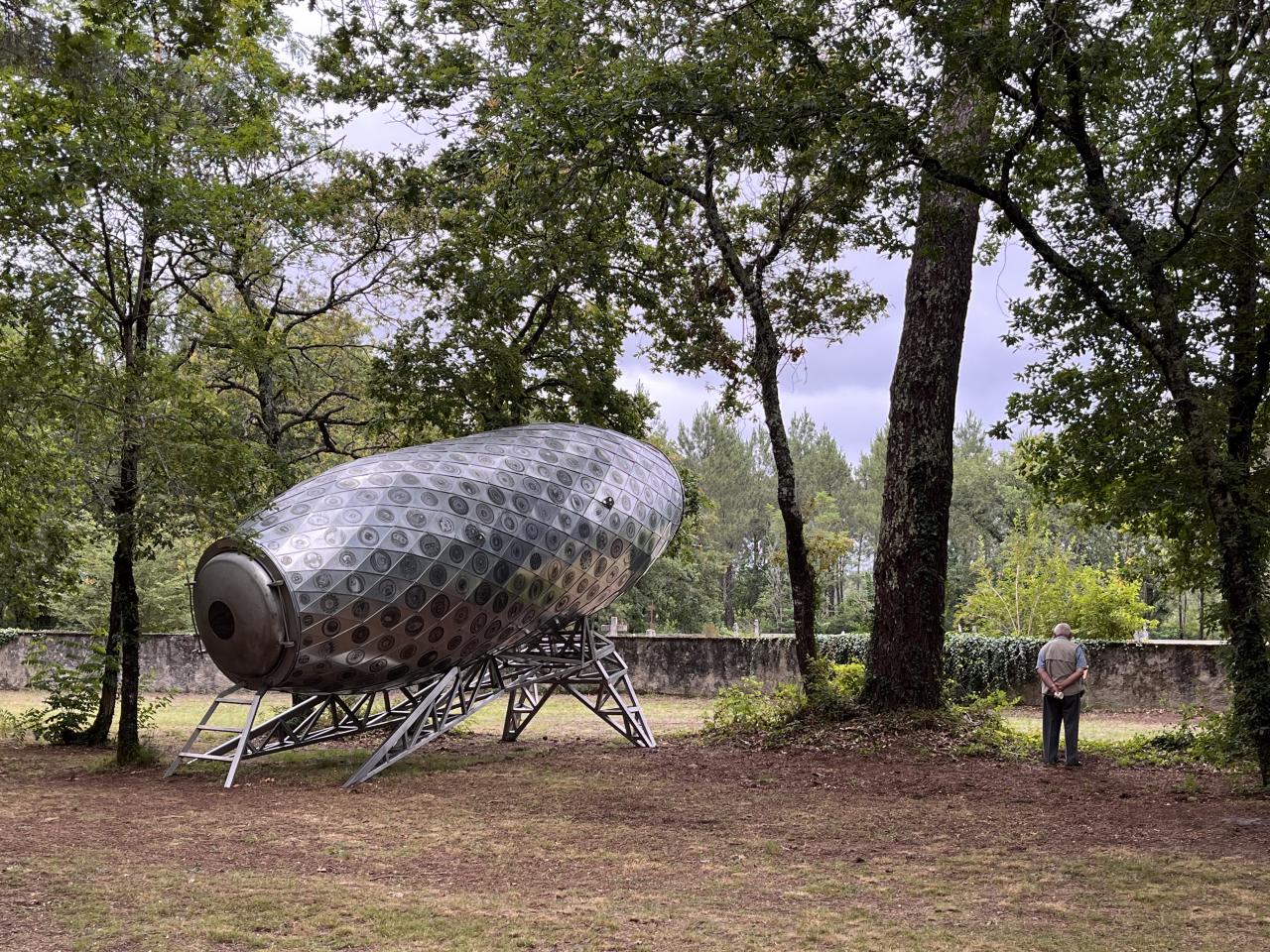
La Forêt d'Art Contemporain, Callen
Etching on assembled zinc, stainless steel structure, various materials
Capsule with a length of 8 m for a maximum diameter of 3 m
Photo: © Antoine Dorotte – © Adagp, Paris
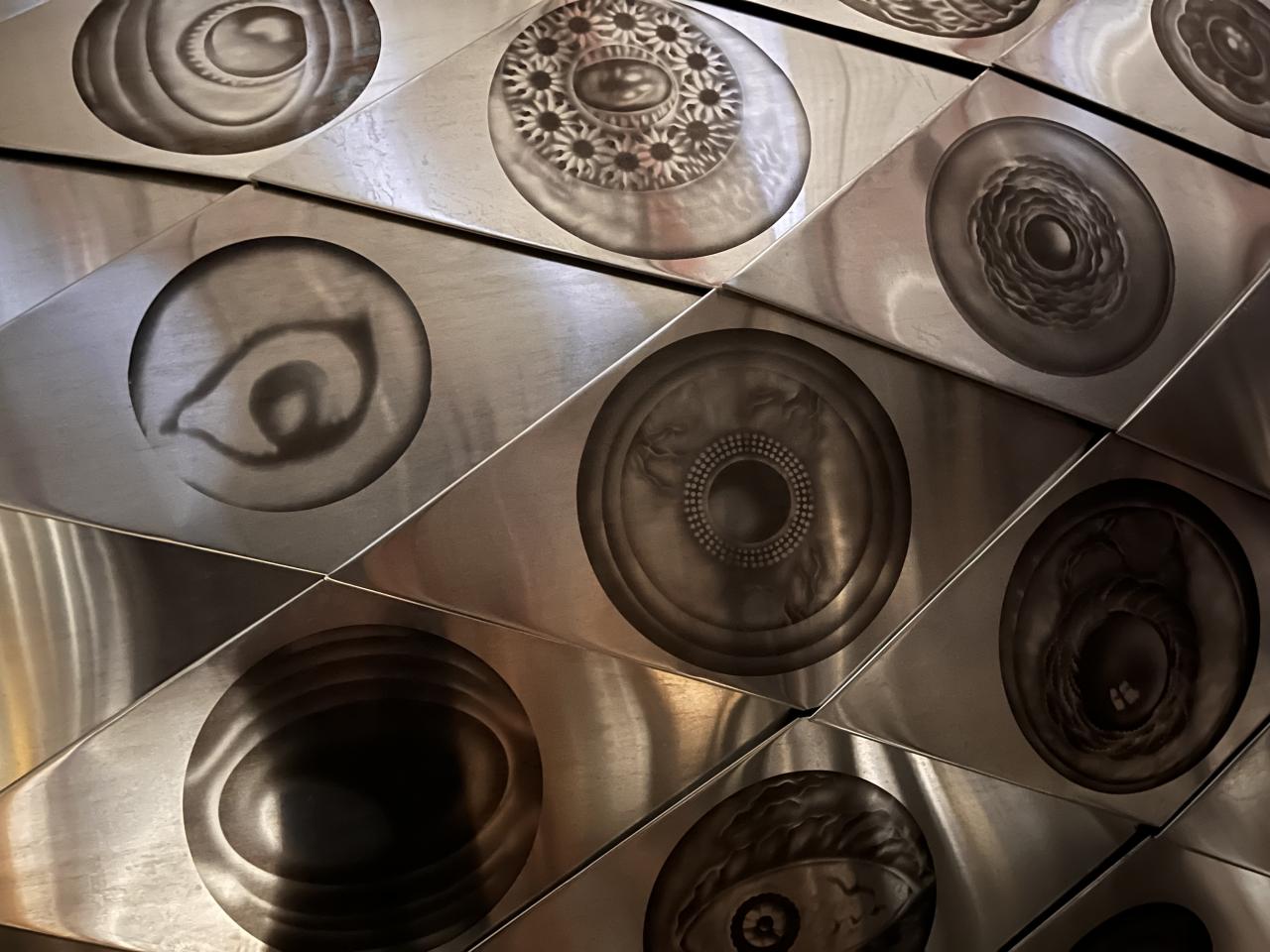
Etching on assembled zinc, stainless steel structure, various materials
Capsule with a length of 8 m for a maximum diameter of 3 m
Photo: © Antoine Dorotte – © Adagp, Paris
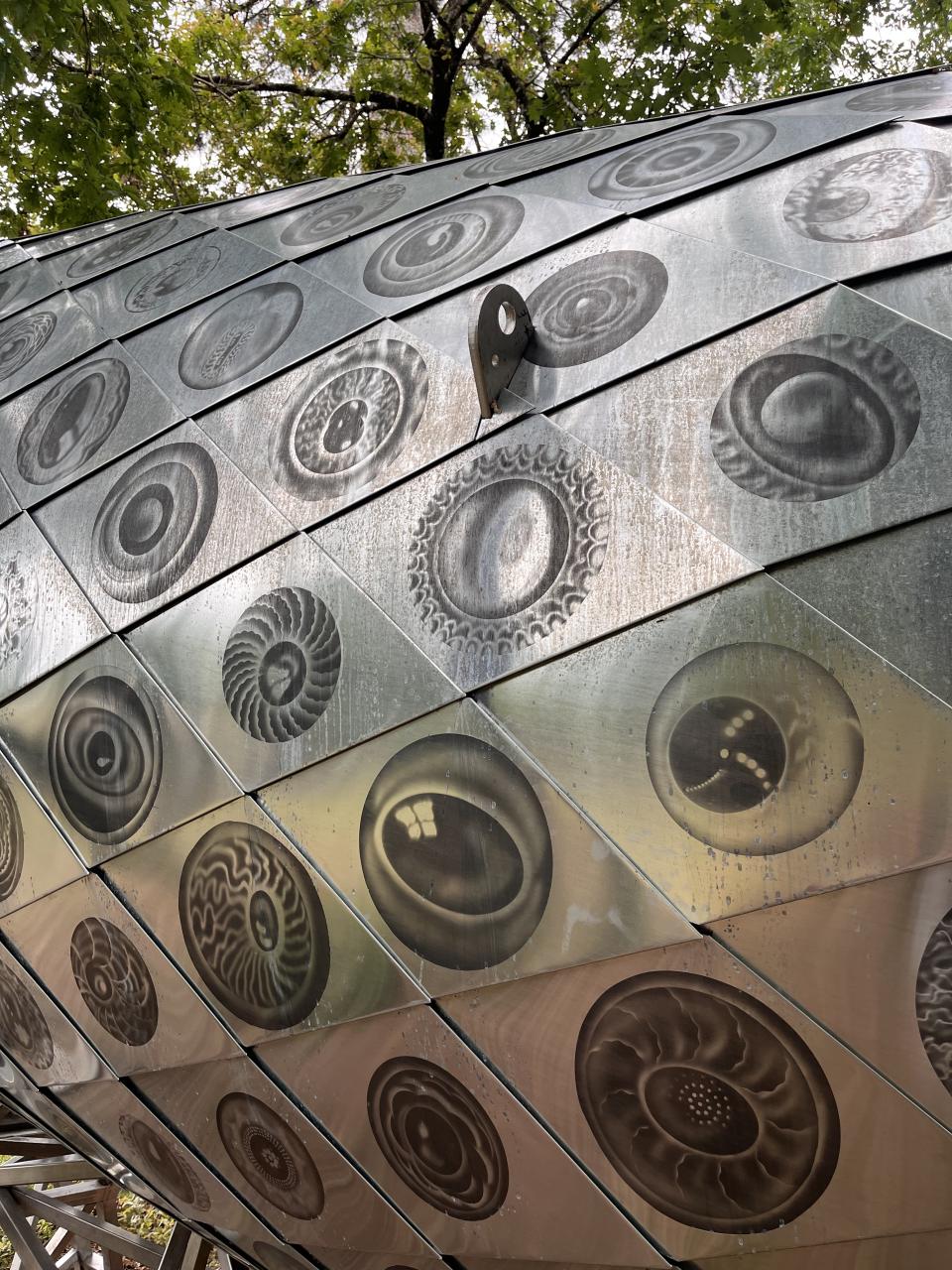
La Forêt d’Art Contemporain, Callen
Etching on assembled zinc, stainless steel structure, various materials
Capsule with a length of 8 m for a maximum diameter of 3 m
Photo: © Antoine Dorotte – © Adagp, Paris
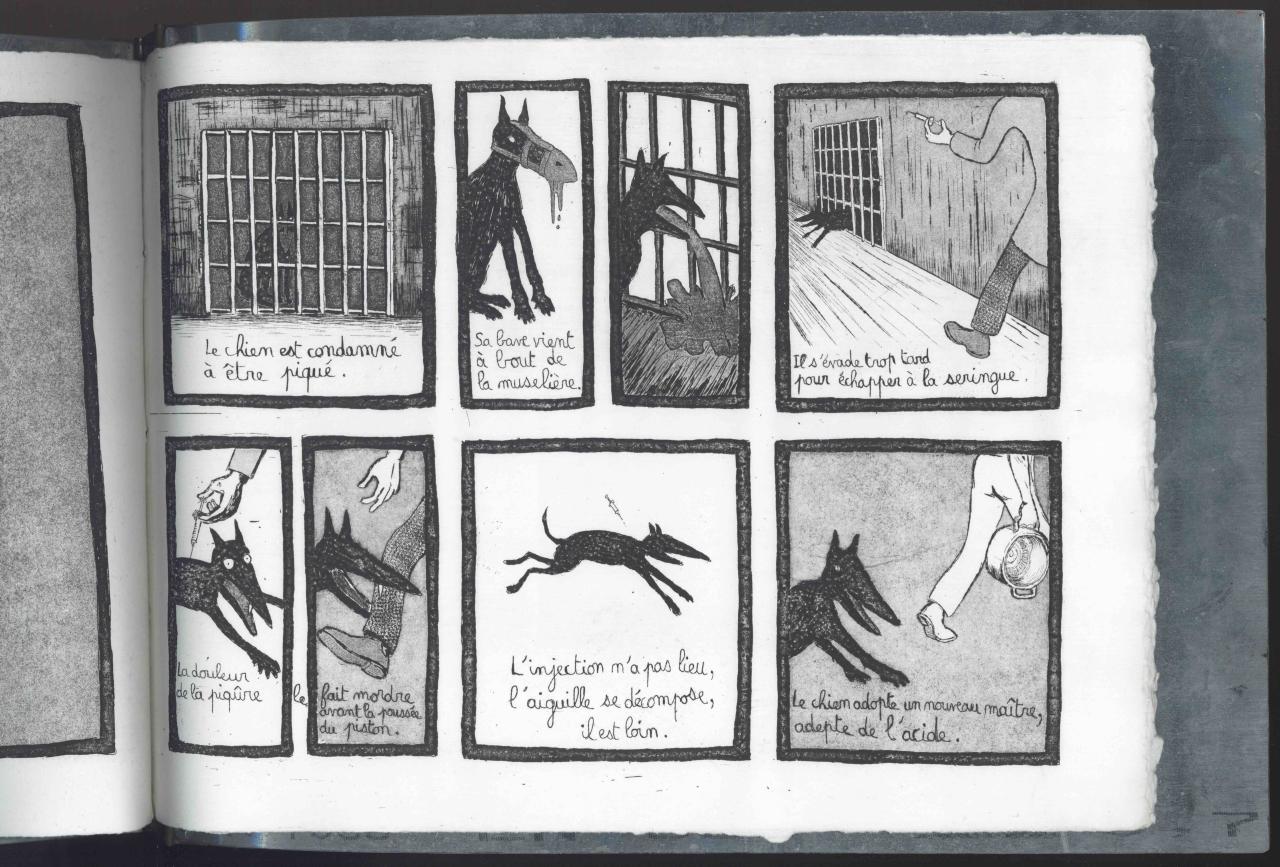
Etching on BFK Rives 270g paper
Photo: © Antoine Dorotte – © Adagp, Paris
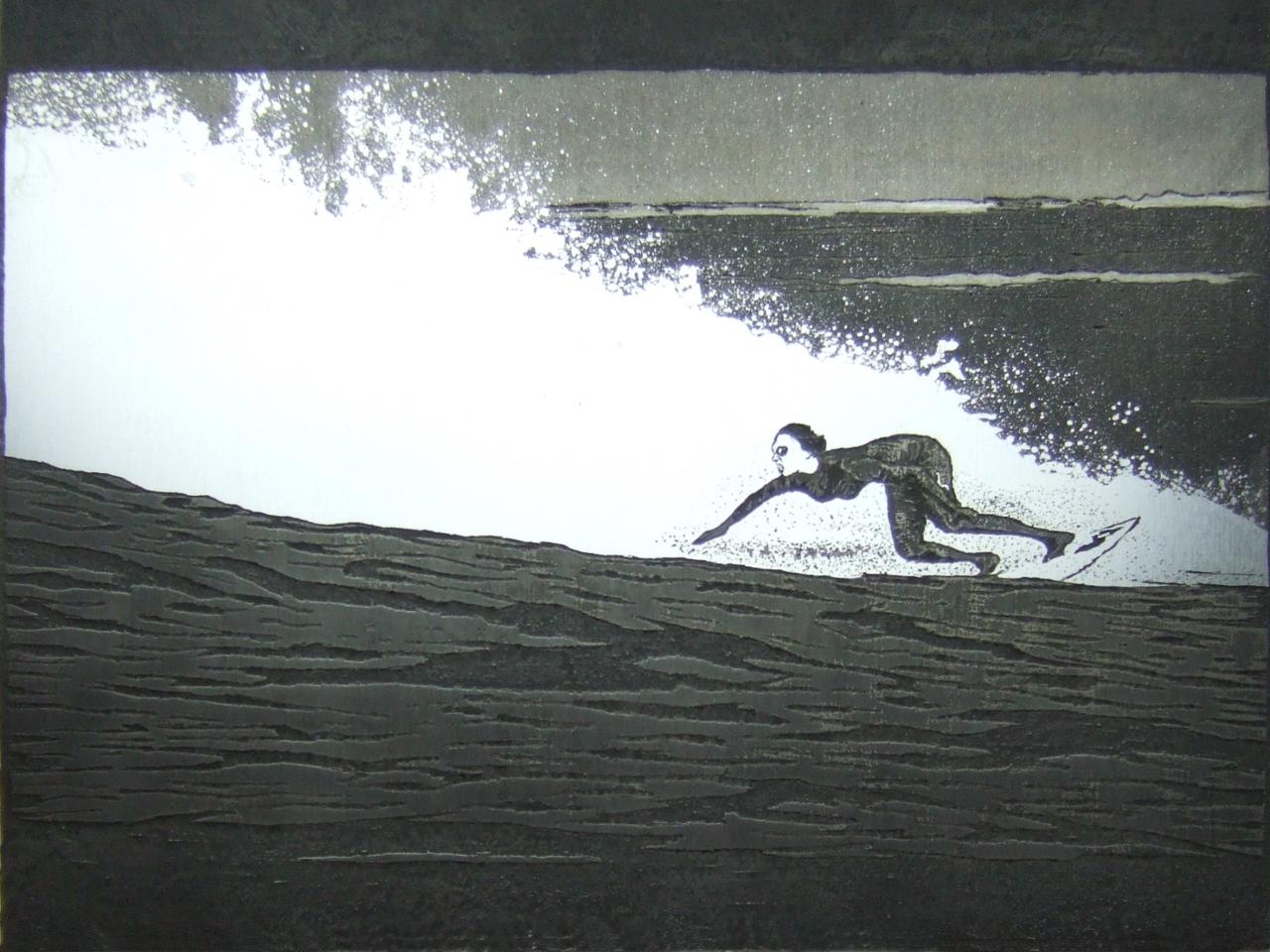
16mm film, looping projector, etching and aquatint on zinc, RGB LED, plate 15 x 20 cm, with the participation of Le Fresnoy – Studio national des arts contemporains and DRAC Bretagne.
© Adagp, Paris
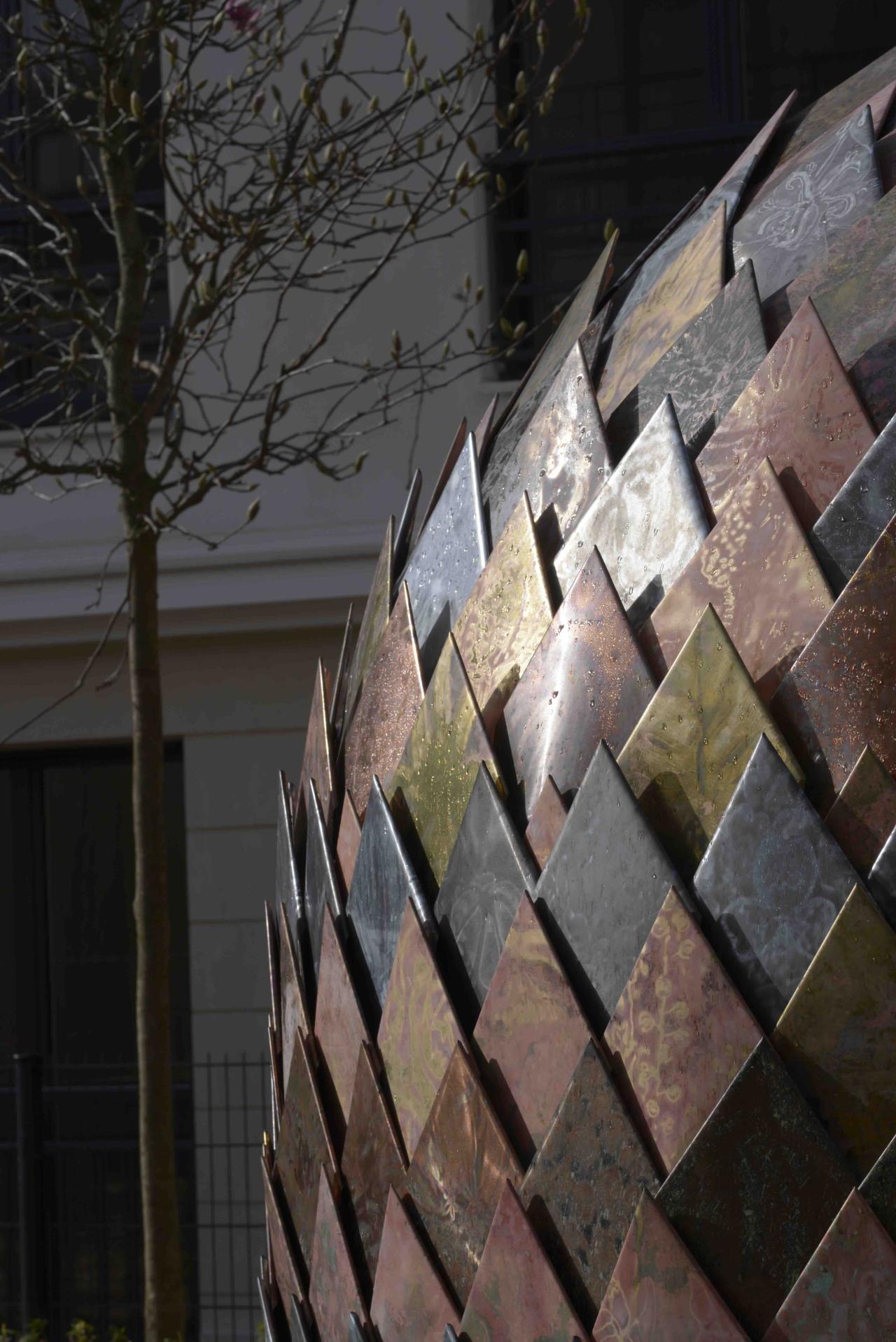
Geodesic frame in galvanized steel, cladding in scales of three metals: copper, brass, and zinc, 250 x 250 x 250 cm
Commissioned by the Emerige group, as part of the "1 immeuble, 1 œuvre" charter, Châtillon
Photo: © Philippe Richard – © Adagp, Paris
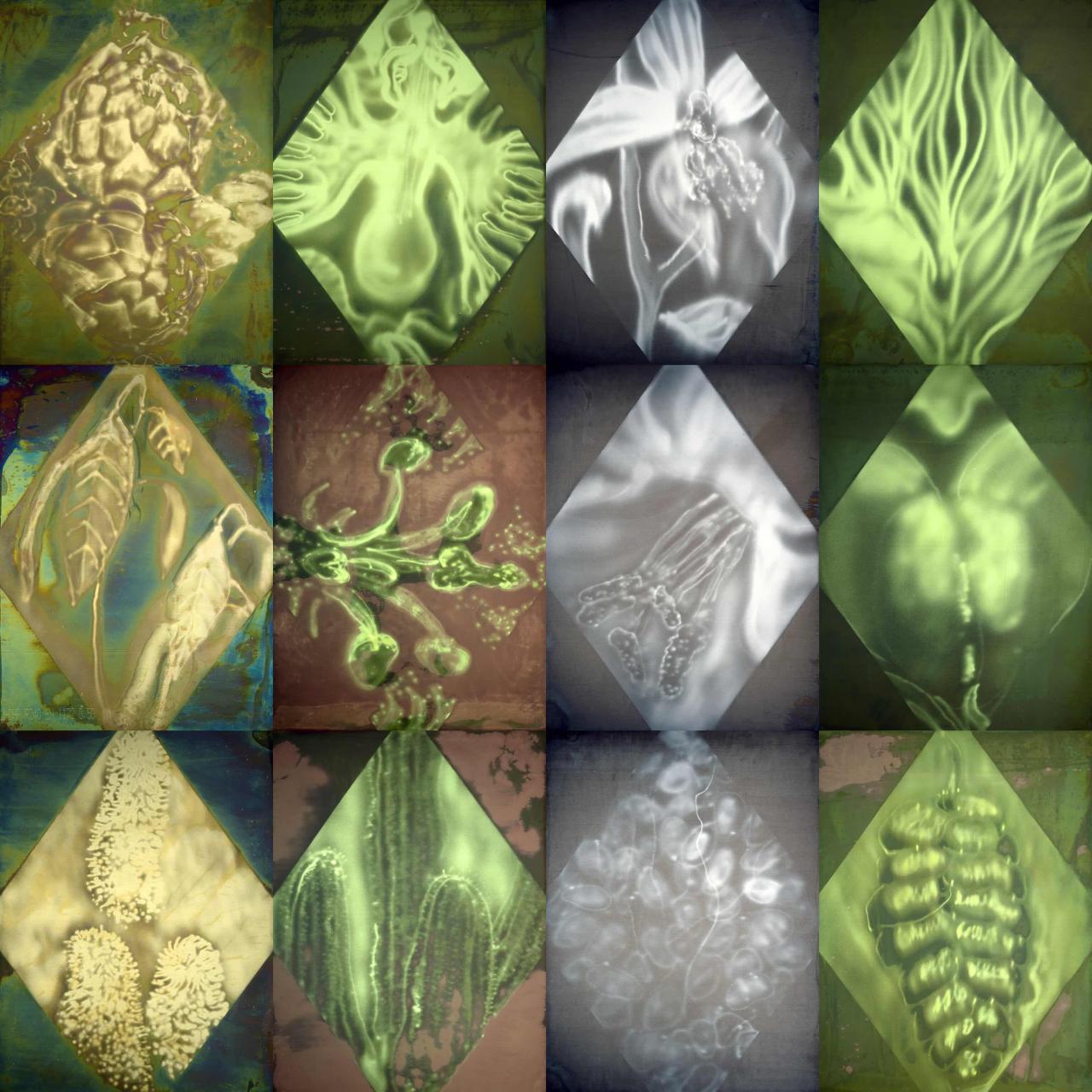
Etching on copper, brass, and zinc
Photo: © Philippe Richard – © Adagp, Paris
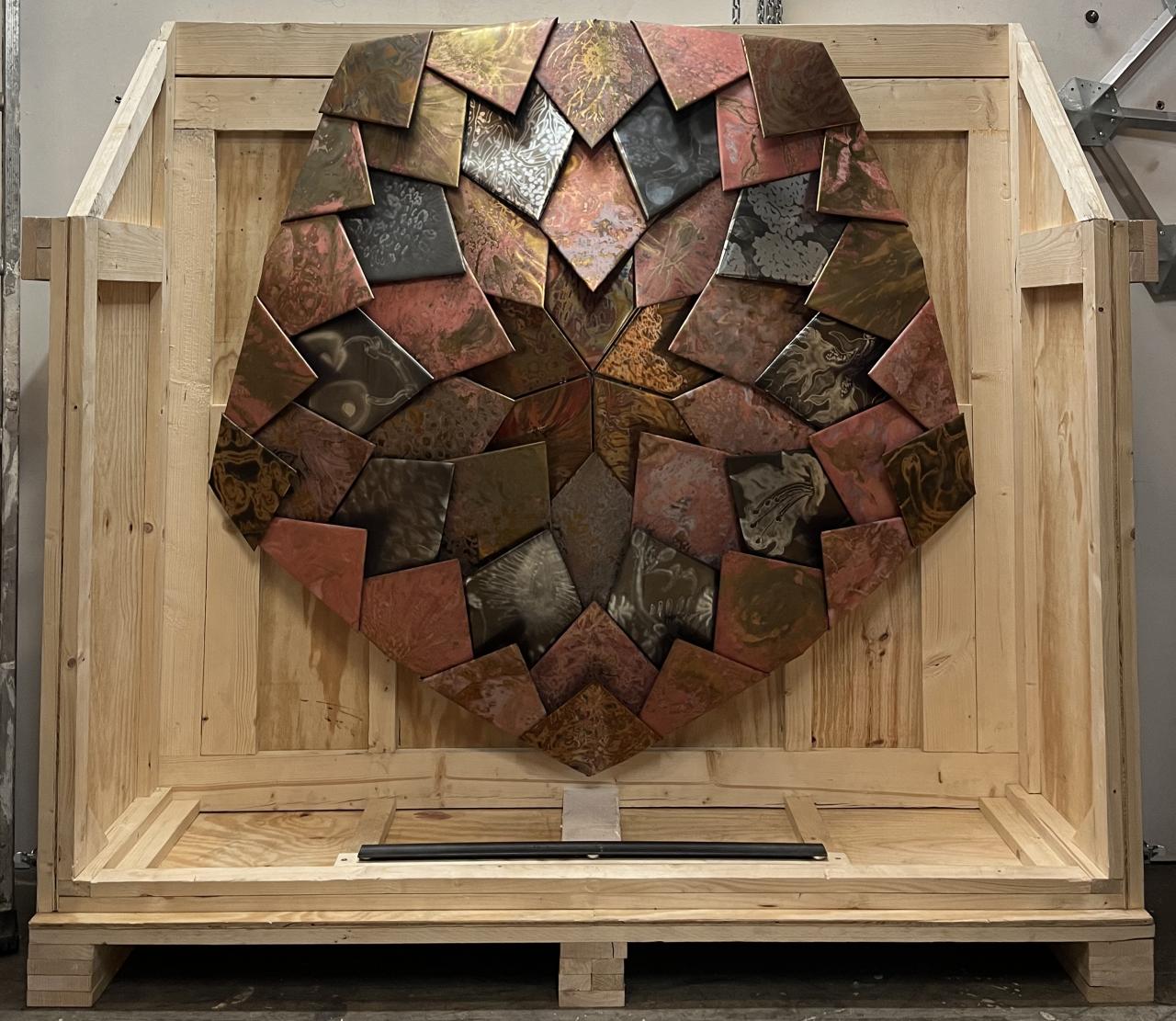
Etching on copper, brass, and zinc – galvanized steel frame, 133 x 130 x 20 cm
Photo: © Antoine Dorotte – © Adagp, Paris
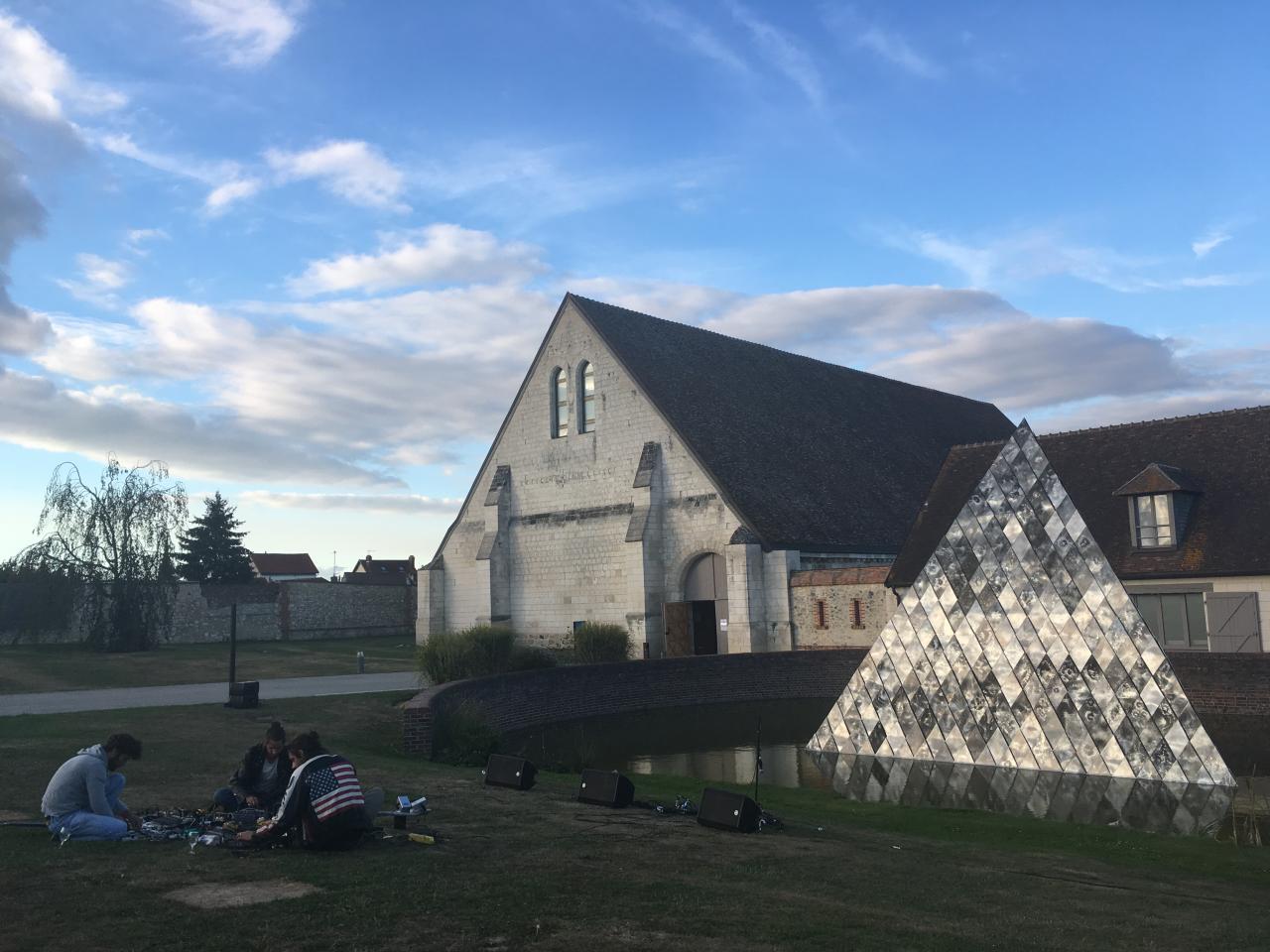
Etching on assembled zinc, tetrahedron with 8 m edges
Le Quadrilatère hors-les-murs, La Maladrerie Saint-Lazare, Beauvais
Photo: © Antoine Dorotte – © Adagp, Paris
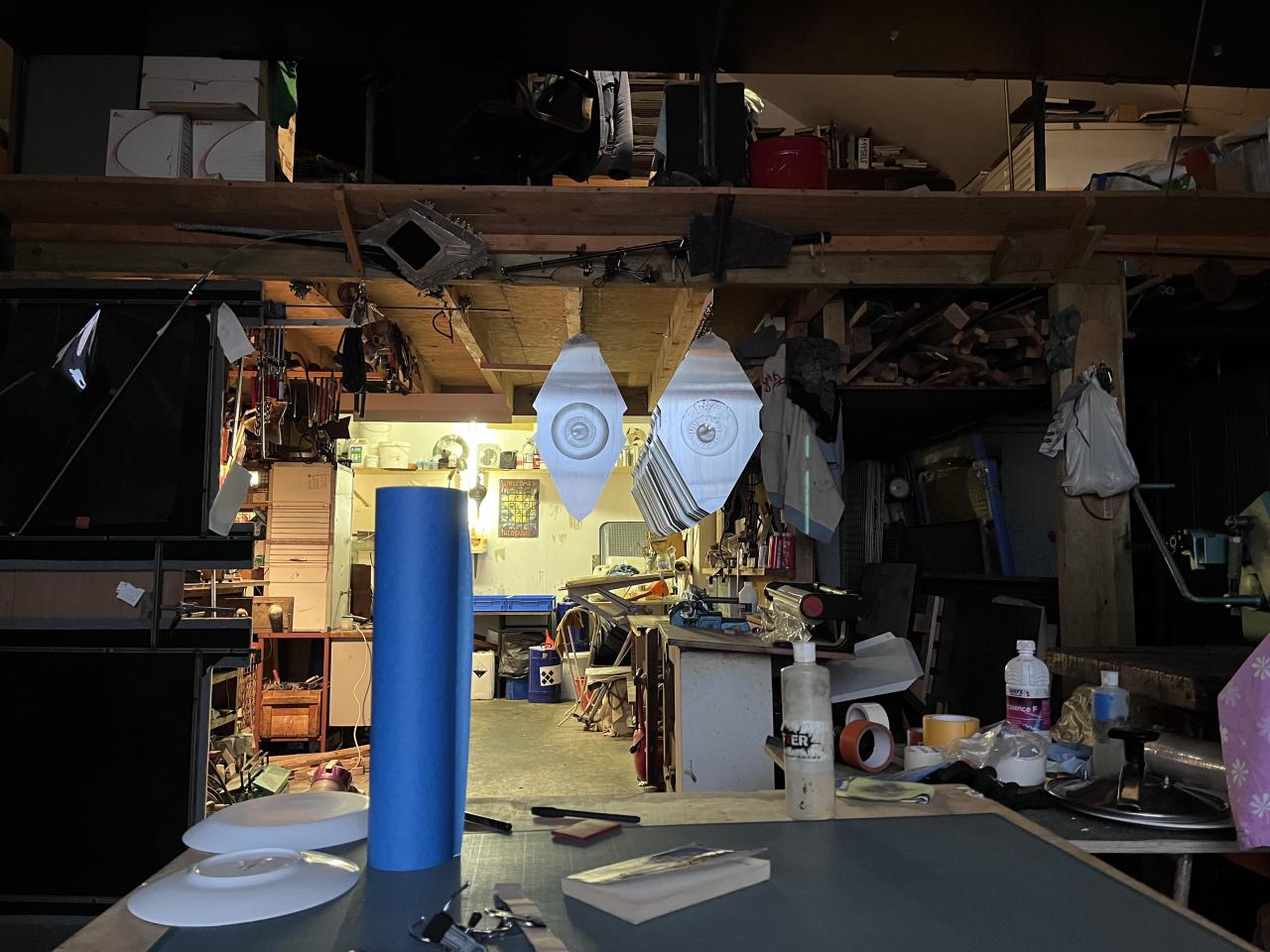
Photo : © Antoine Dorotte
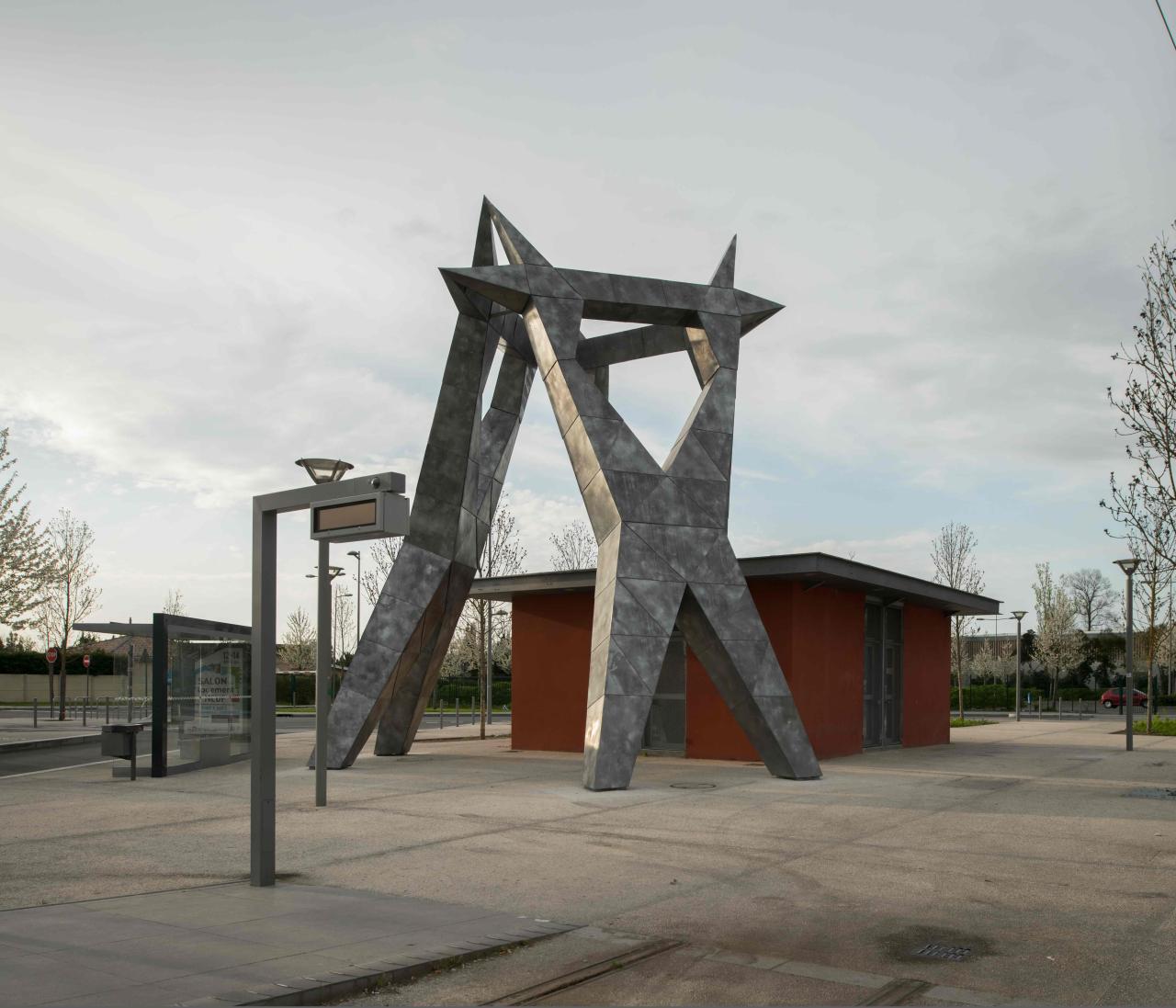
Lagardette Bassens Carbon-Blanc Tramway Station, Bordeaux.
Work commissioned by Bordeaux Métropole as part of a public commission by the Ministry of Culture and Communication
Aquatint on zinc, LED programming, galvanized steel, 6.59 x 8.83 x 9.42 m
Photo: © Anne Leroy – © Adagp, Paris