Les 3 samouraïs
The artwork was created as part of the 1% artistique (public art funding program) of the Collège d'Autun.
A college is a living space: it is the primary arena in which students write the story of their adolescence. Teaching and support staff accompany this journey toward adulthood. This notion takes on a very particular dimension at the Collège Militaire d'Autun, where the principles of communal living are further shaped by their connection to a military context. Living within the microcosm of such an institution might give the impression of a world turned inward, yet the school, with its motto "Pour la Patrie, toujours présent" ("Always present for the Homeland"), challenges that stereotype.
Many of these children are boarders, either because they are wards of the nation or because their parents are serving military personnel, absent or deployed on long overseas missions. They grow up with the reality of death; each year, a class becomes the godmother of a UN peacekeeper killed in combat while serving in the name of peace. They tend to this memory as an extension of their own family lives.
The artwork I created in the patio of the school canteen draws on this memorial experience: I chose to honor Bernard Gangloff, a student at Autun's collège just like them, who died for France in 1944.
Like many children, Bernard Gangloff — along with his two comrades René and Thomas — joined the Resistance. As bazooka crew chiefs, they harassed the enemy and carried out numerous sabotage missions.
Like René, Bernard — nicknamed Popeye — would fall under German fire. Gravely wounded, he died in terrible agony without ever betraying his fellow Maquis fighters, repeating to his torturers: "I am Sergeant Popeye!"
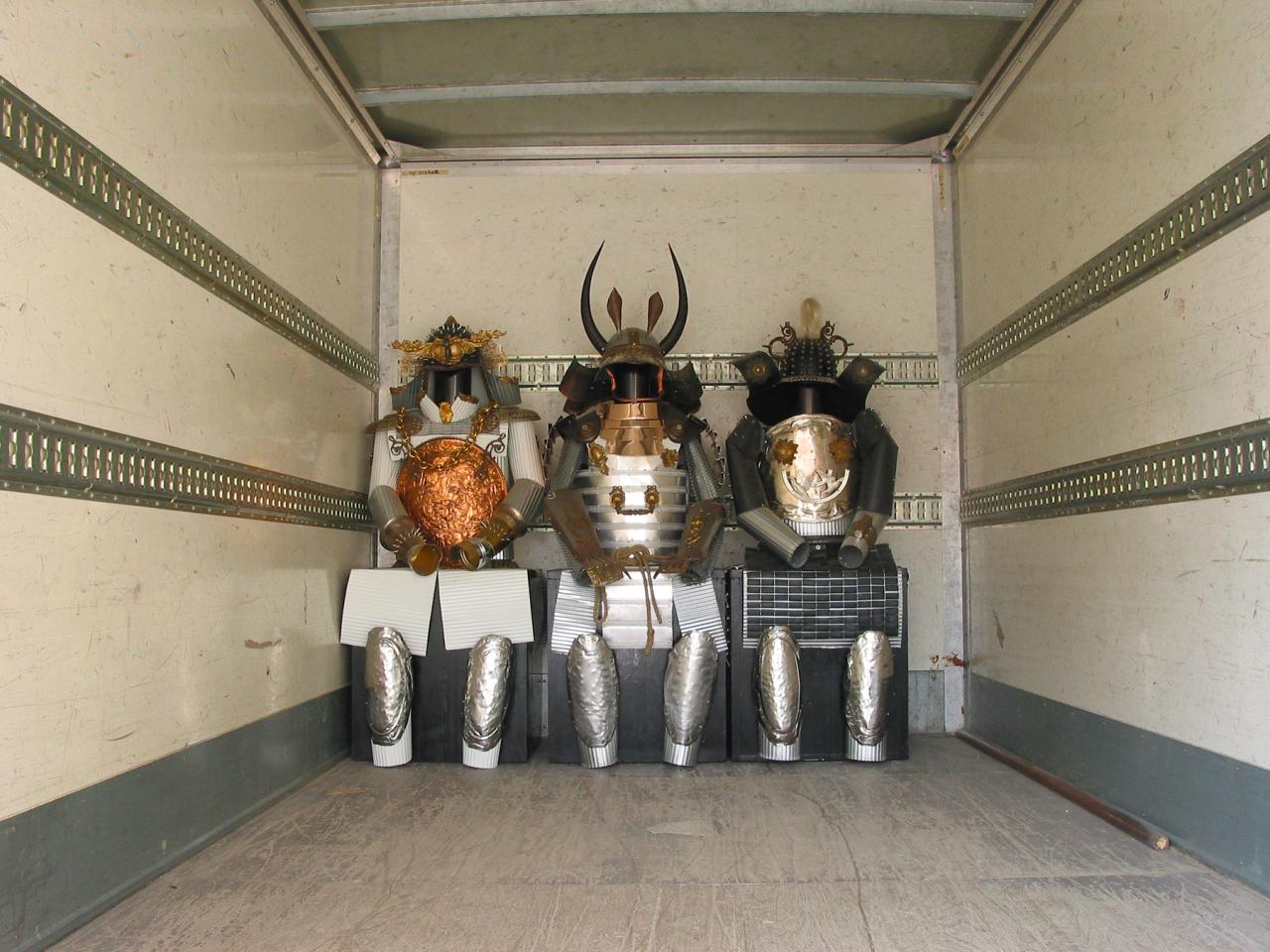
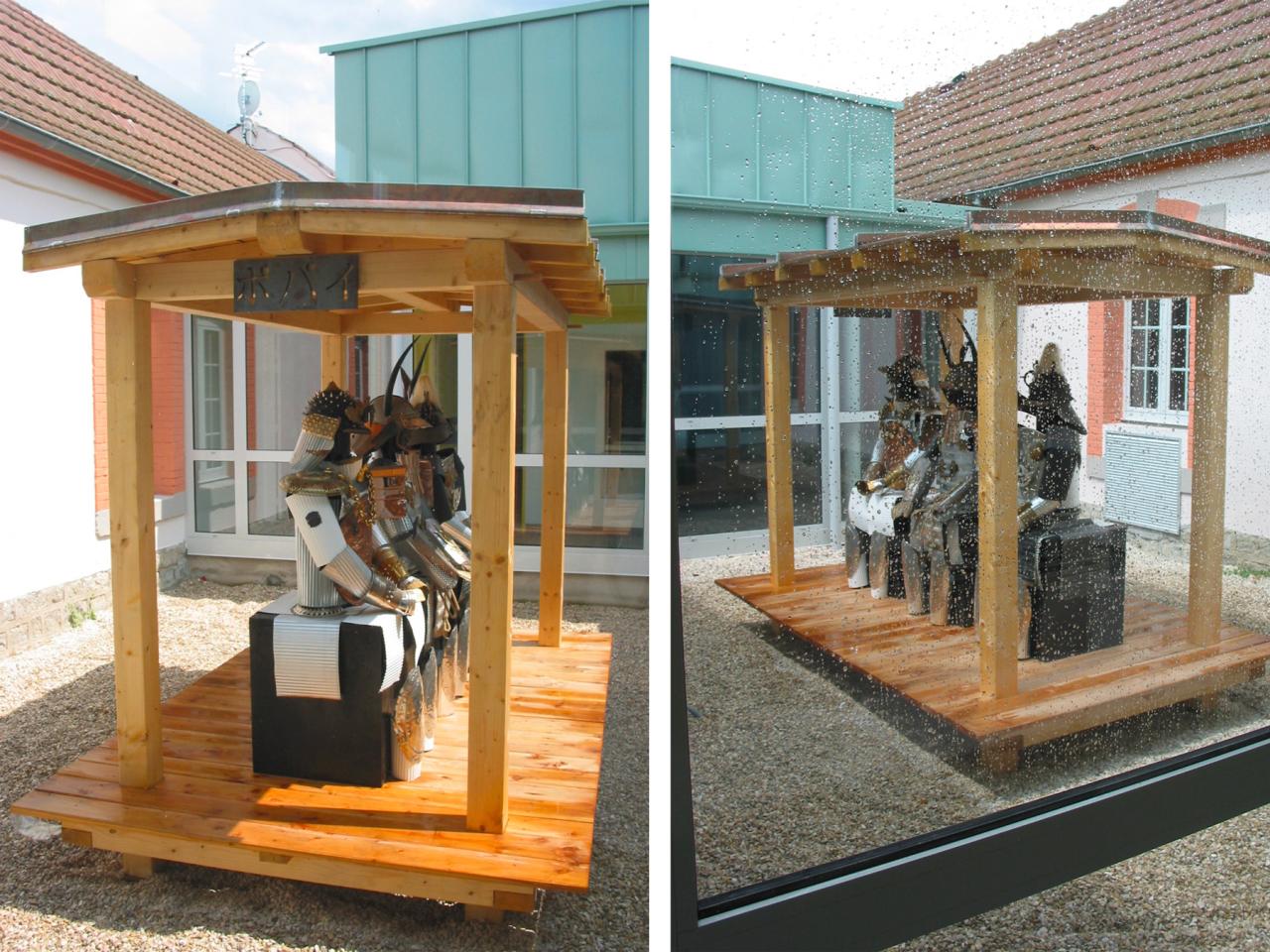
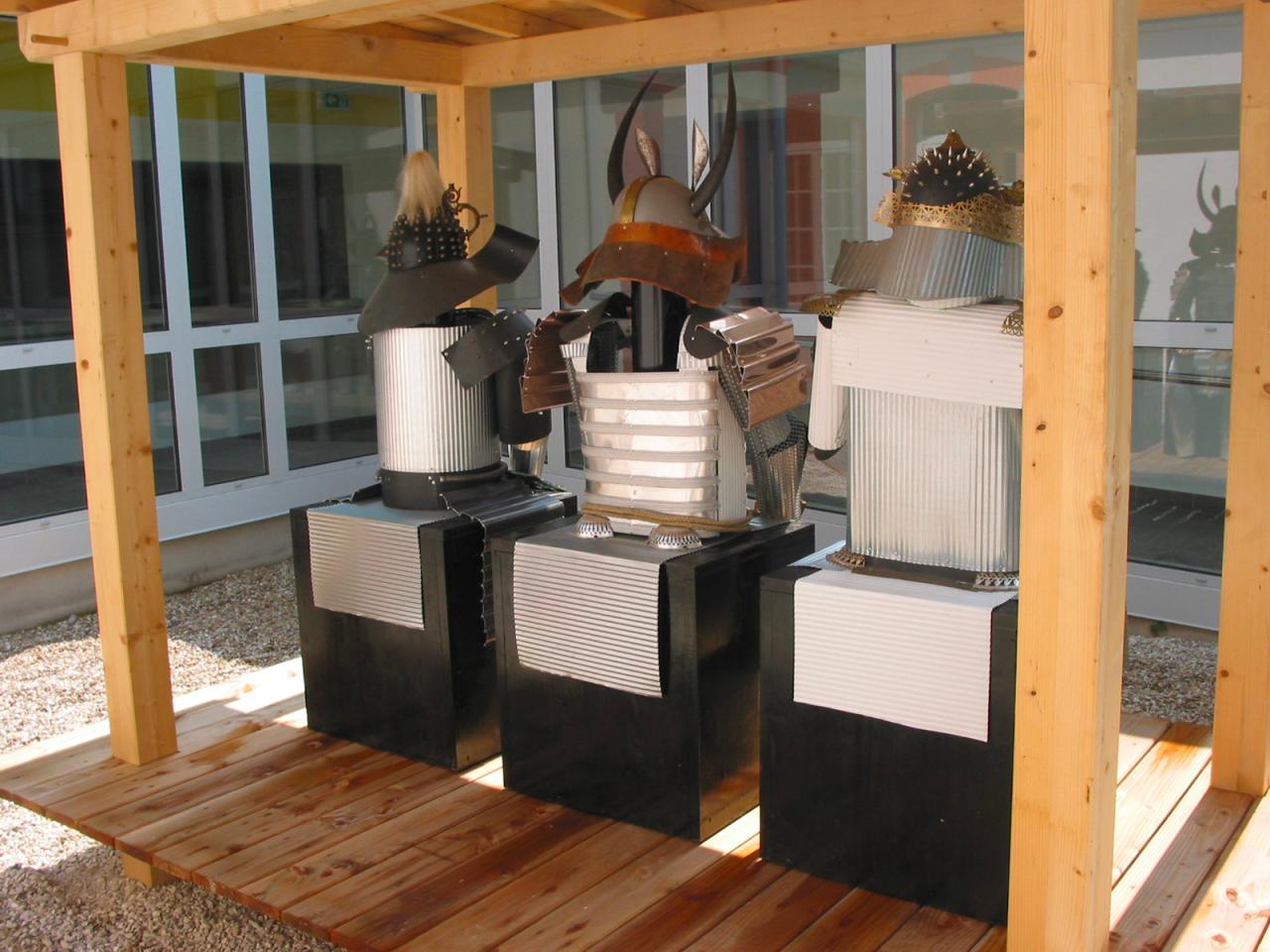
I began by building a small wooden kiosk in a Japanese-inspired style, echoing — through mimicry — the distinctive old rooftops of the students' dormitory building. Beneath this kiosk stand three samurai armors representing Bernard, René, and Thomas as Manga heroes.
On the gable of the structure, a word in Japanese is cut into a heavy steel plate. Viewers — most often the students themselves — find themselves wondering about the translation: "Popeye." This assembly of playful forms around that single word remains a kind of game; only when a third party shares the story of Bernard Gangloff does the sculpture become a memorial. In this way, the artwork embraces the school's own traditions: memory and the passing down of stories through words.