Île/Mer/Froid
Île/Mer/Froid is sculpted. The conjugation occurs in the singular, in the pronominal form. An identity takes shape through what is being made. It is blatant when you look at it. One starts an action that the other continues. Substance circulates between the four hands of a single entity. Objects move according to a flowing choreography of movements guided by intuition, in turns. And things definitively stand upright. Fibre, clay and canvas are built upwards. One single body, monstrous and superhuman because it is more than one individual, is able to simultaneously cook and model. A unit asserts itself without contradiction in the face of plurality. It isn’t really clear, but it doesn’t really matter. One doesn’t muddy the waters in order to clarify them. Giving oneself such a name discourages attempts to elucidate anything. Their complementary nature radiates thanks to their distinct energies. It grows through porosity, through contact with people and places, through an appetite for materials. It has existed in this way for over a decade. The two of them met at the Beaux-Arts in Toulouse. They were more, and are still one.
Île/Mer/Froid is currently based in Salmiech. Etymologically, legends would place us midway between a salt road, or even the middle of the Earth, deep in the Ruthénois region. It isn’t the most beautiful place in the Aveyron, but the fields are very rich. Sheep are raised there. There are a lot of hydroelectric lakes with beaches to swim at. There are kinds of woodlands, menhir-statues, but no caves. It is the Rouergue, and then it becomes Quercy. There are also horse-dealers, beehives, grapes, dormice, catchweed, brambles, birds of prey, breezeblocks, asbestos, sun, cold wind, wildcats, quartz, the largest vine stock in the world, mosquitoes, flies, longhorn beetles, garter snakes, frogs, a well that is always full, a duckless pond, a sourdough bakery, some relatives, Chez Marie’s grocery, very good Cantal cheese, lots of crayfish, and not too many mushrooms. There isn’t much comfort. And there aren’t that many limits either.
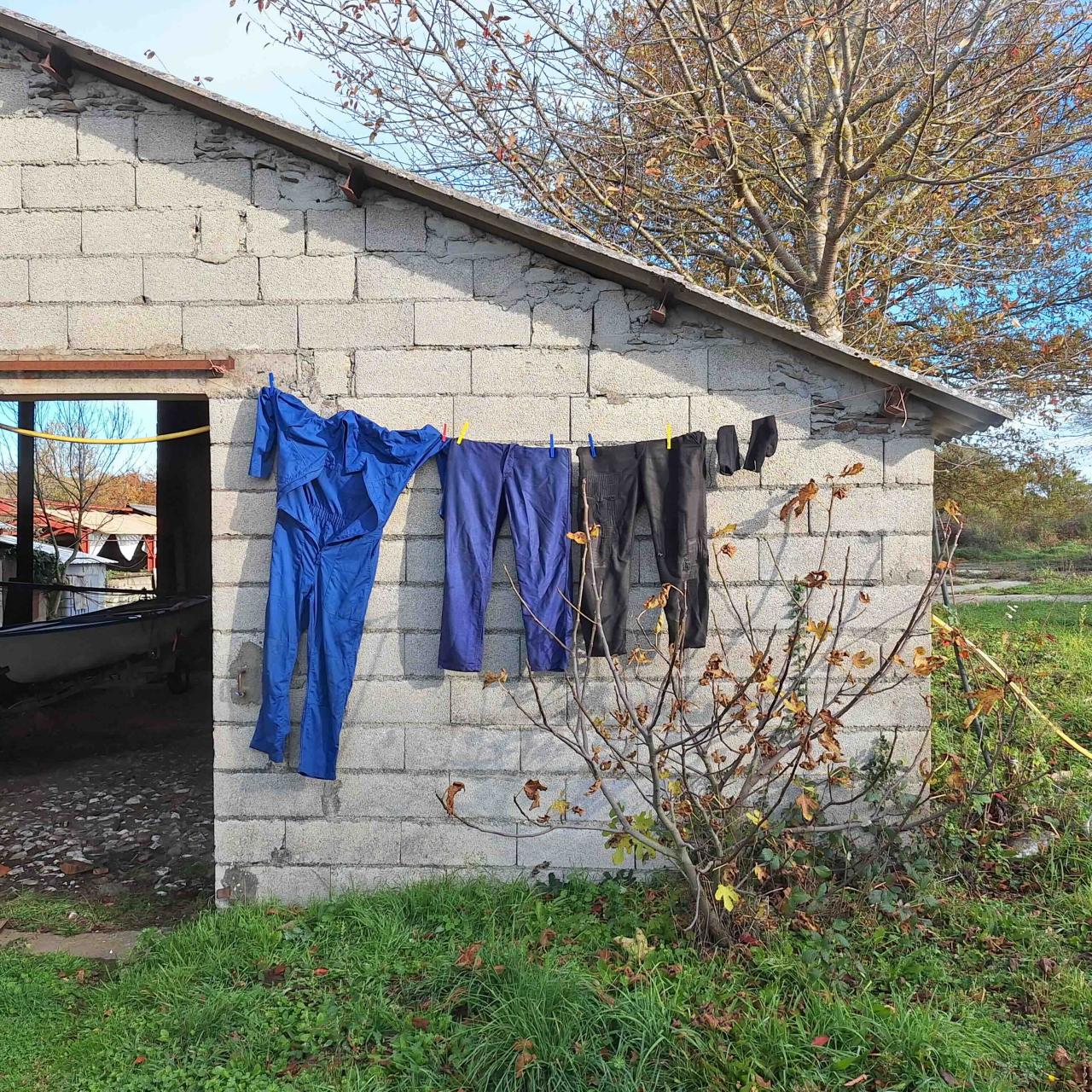
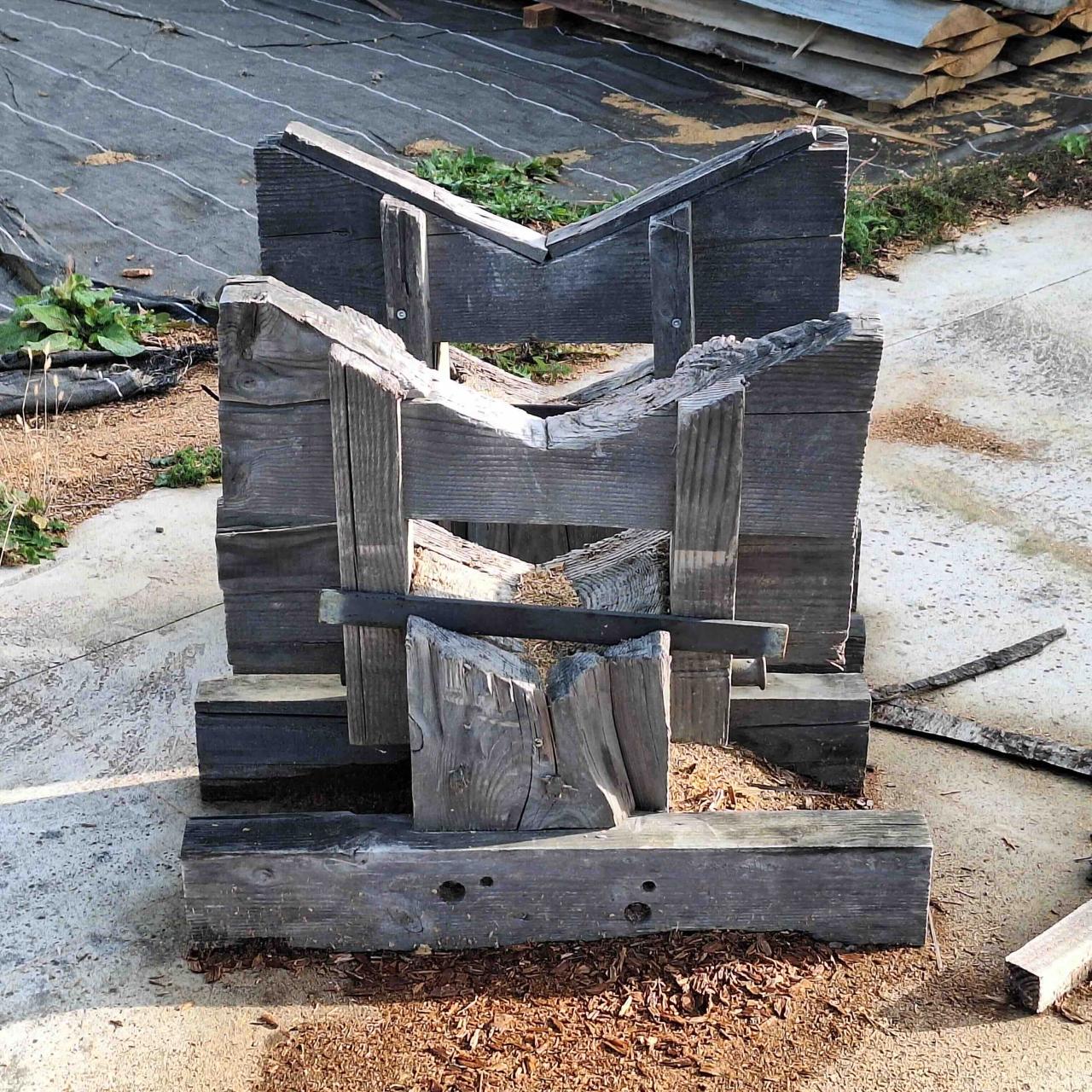
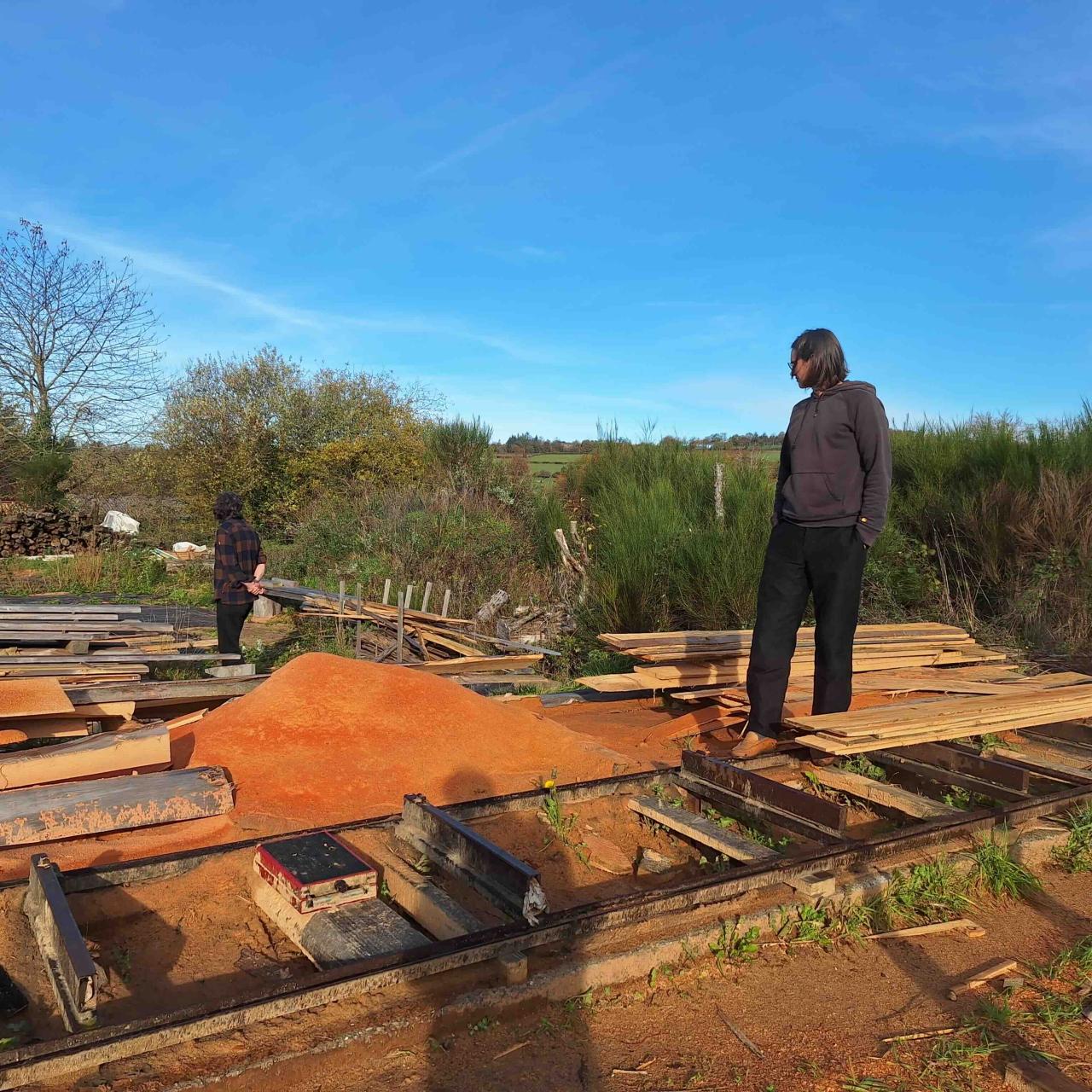
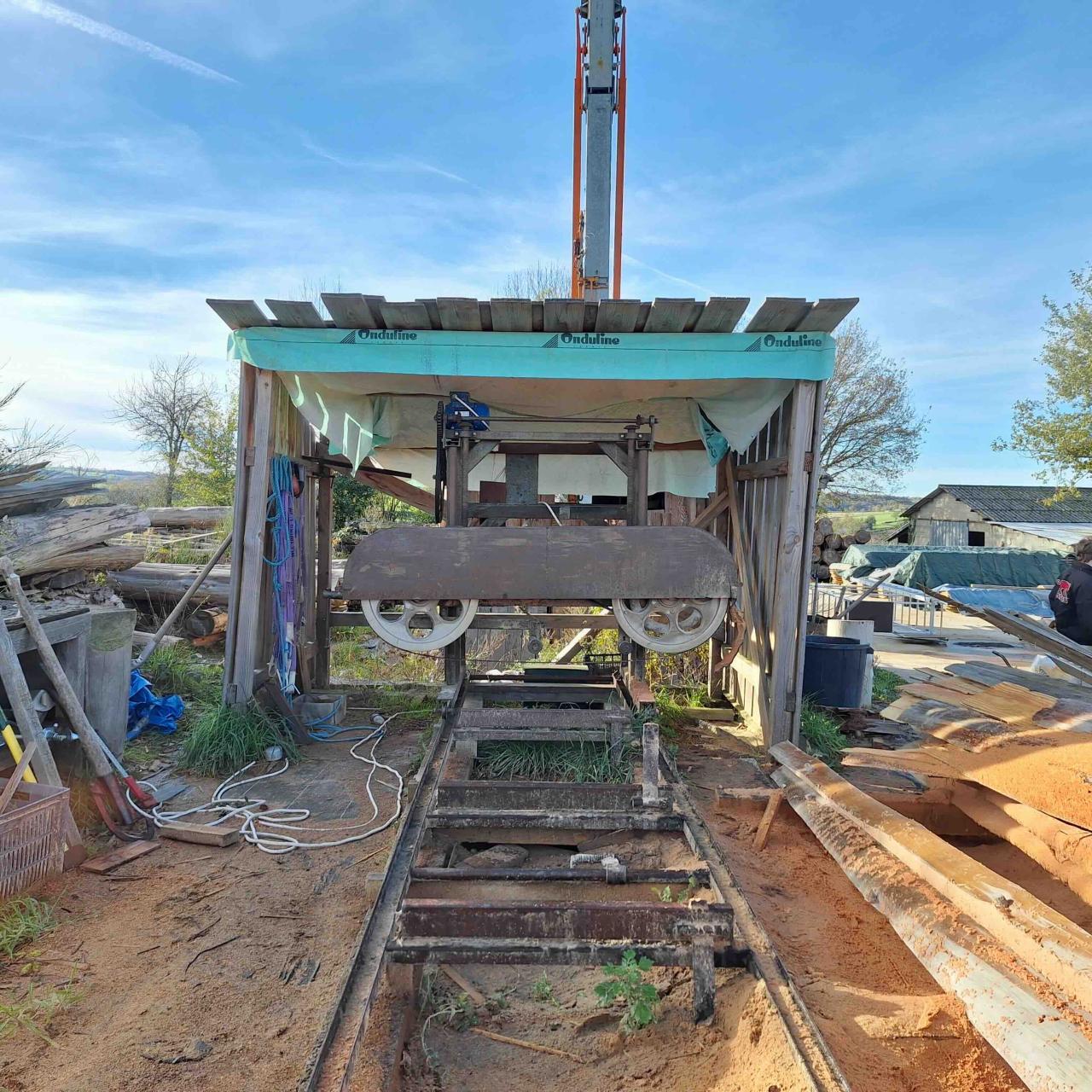
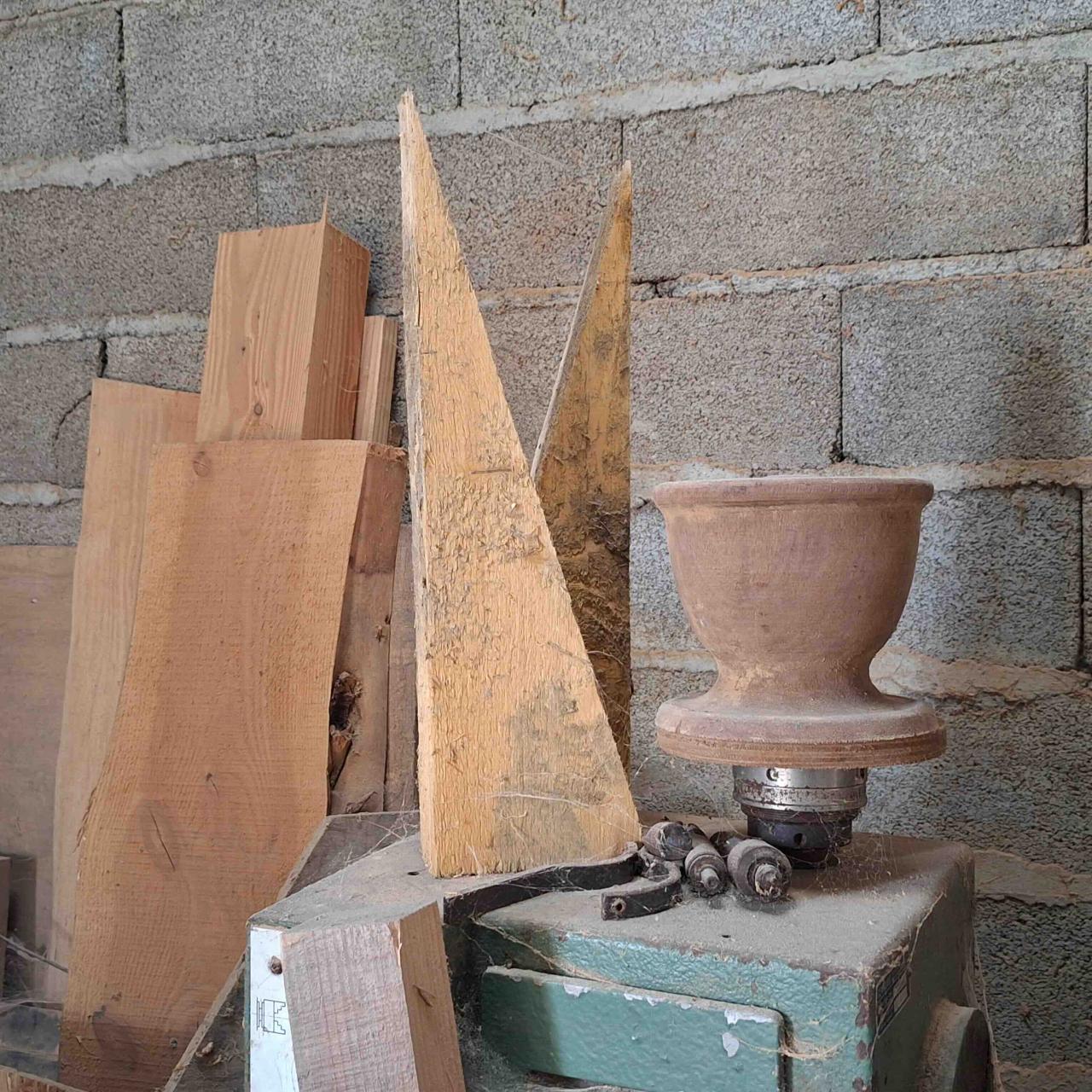
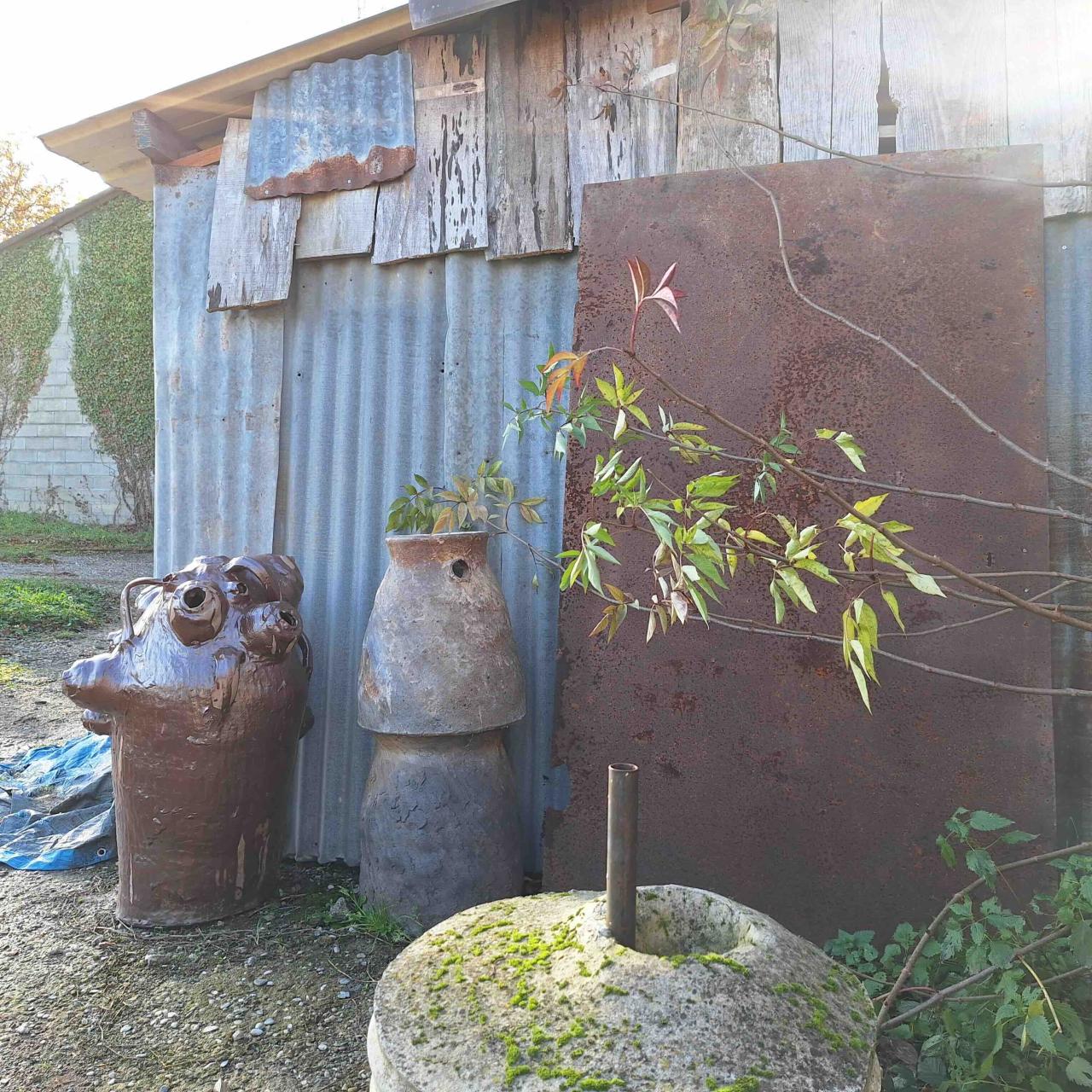
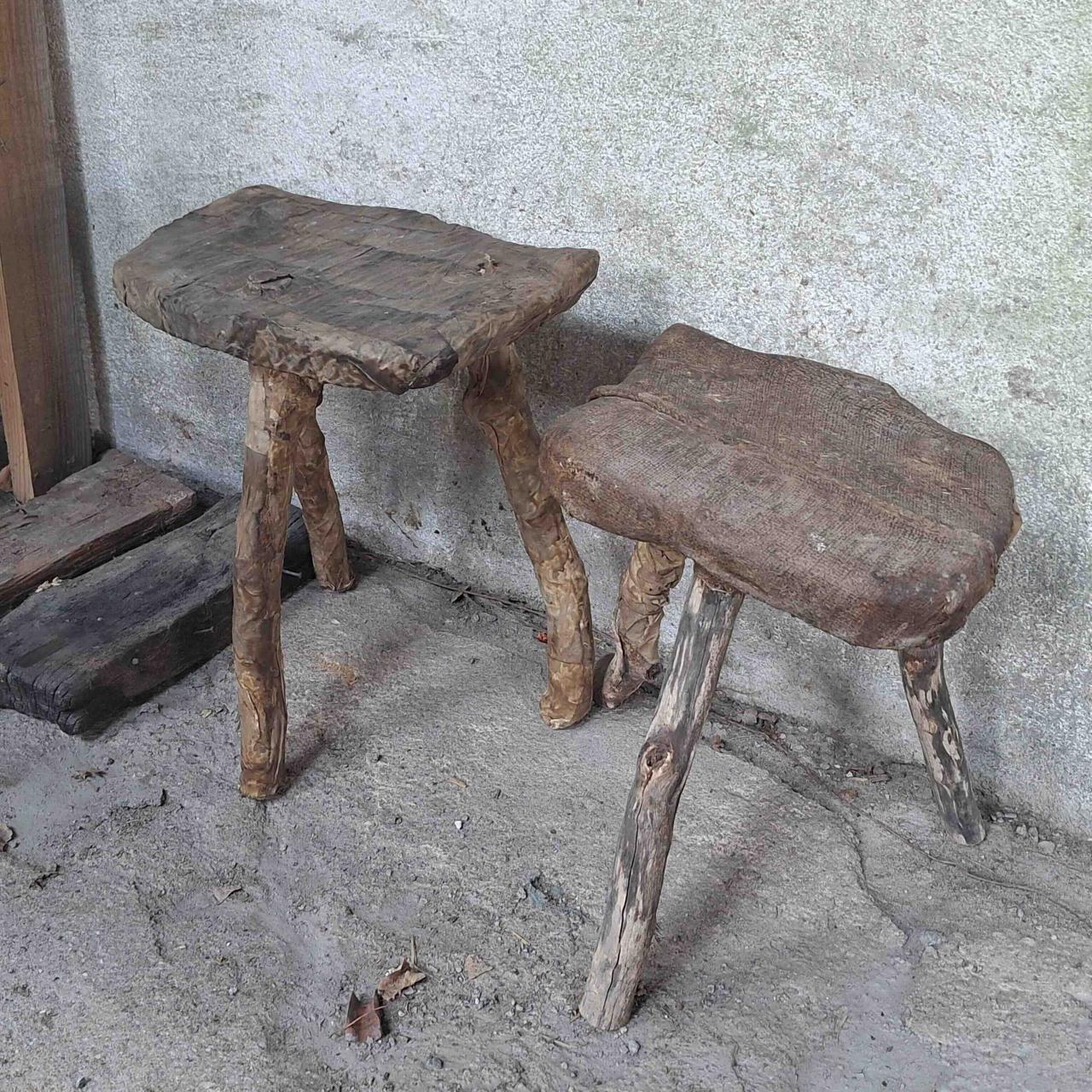
Île/Mer/Froid has set up its studio here. There are no strolls. There is work. In the sawdust, among the infinity of tree trunks, it is hard to find what isn’t there. In the abandoned farm partly converted into a sawmill, there is sufficient space and resources to prompt one to stay. The location known as La Moulinerie had been neglected, a pile of rubbish, with trees growing everywhere. It wasn’t a farmer’s dream by any means. The stable was in its original state and needed clearing out. There was no roof in the adjoining room. Further off, there was a large pit, which used to be the milking room. We tore down the wall. On the farm we share, we are able to use a jointer, a mortiser, a spindle moulding-machine, a rail saw or a crane, mainly to log Douglas fir, even though we are surrounded by oak, chestnut, lime and birch. It’s convenient, sometimes, when we drop by between two projects. We are sort of off-grid there, down the road. It ends there. It’s not a dead end, but a destination.
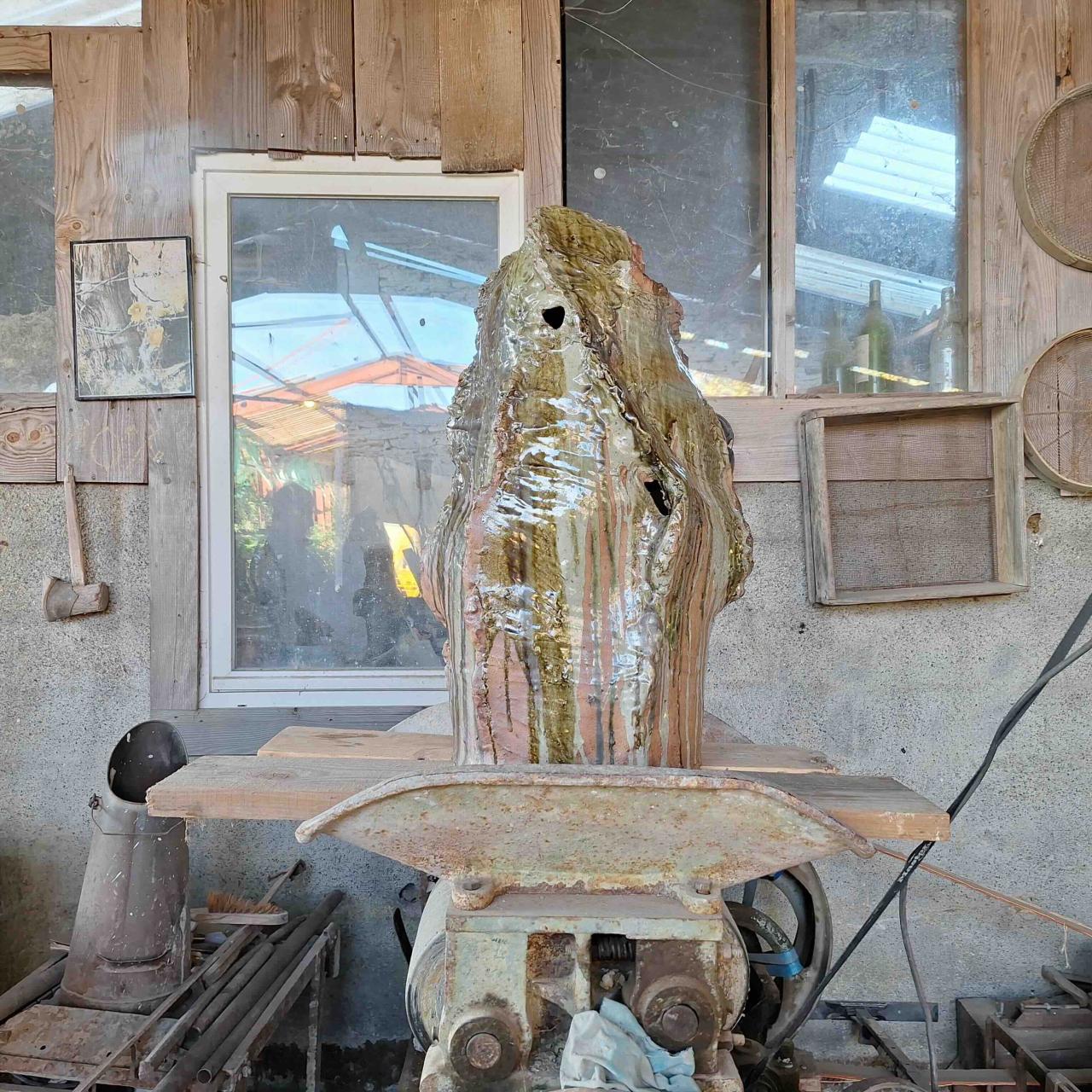
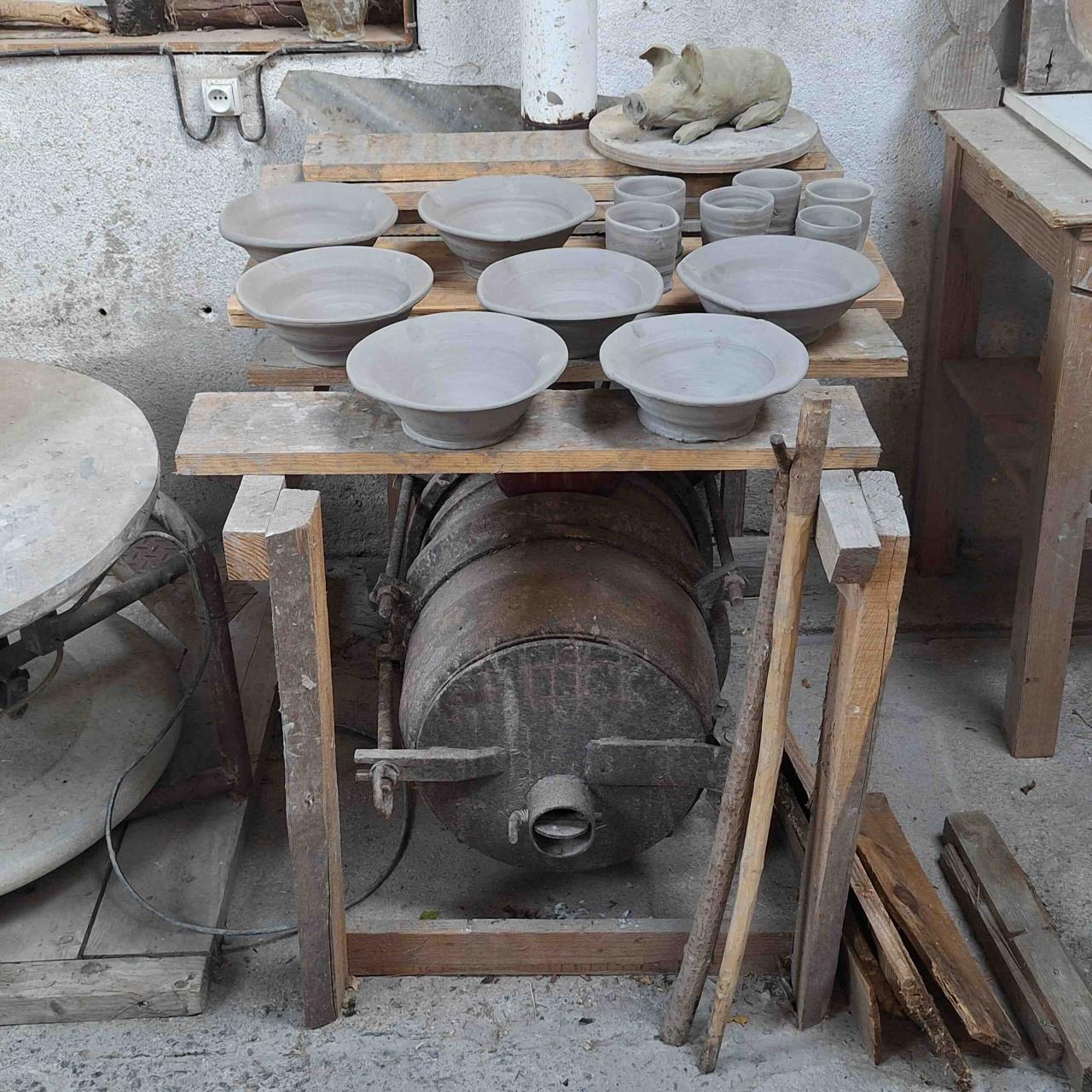
Île/Mer/Froid has settled down to find better ways to clutter. All of this because of a Bourgeois lathe, a heavy piece of electric equipment made to turn pots, which was gifted to us. An entire pottery gradually developed, with machinery borrowed from other crafts, such as a baker’s kneading trough and a grain crusher, which are very good at kneading mud and crushing raw clay. It was in La Borne, an entirely different region known for its bronzed sandstone, that our taste for terracotta emerged. For over five years now, we have slowly cut loose from our ties to the Berry region. There was no clay there. Now there is. A partner supplier recently had fifteen tons of it delivered to the mountain, just like that. Everything contributes to making it feel like a haven, an area of trust where anything is possible. We feel good there. And the bedrooms are upstairs. Like any home, spot on, we aren’t elsewhere, we aren’t peripheral, we aren’t far. Here, one is neither at one of our places nor the other, but simply at home.
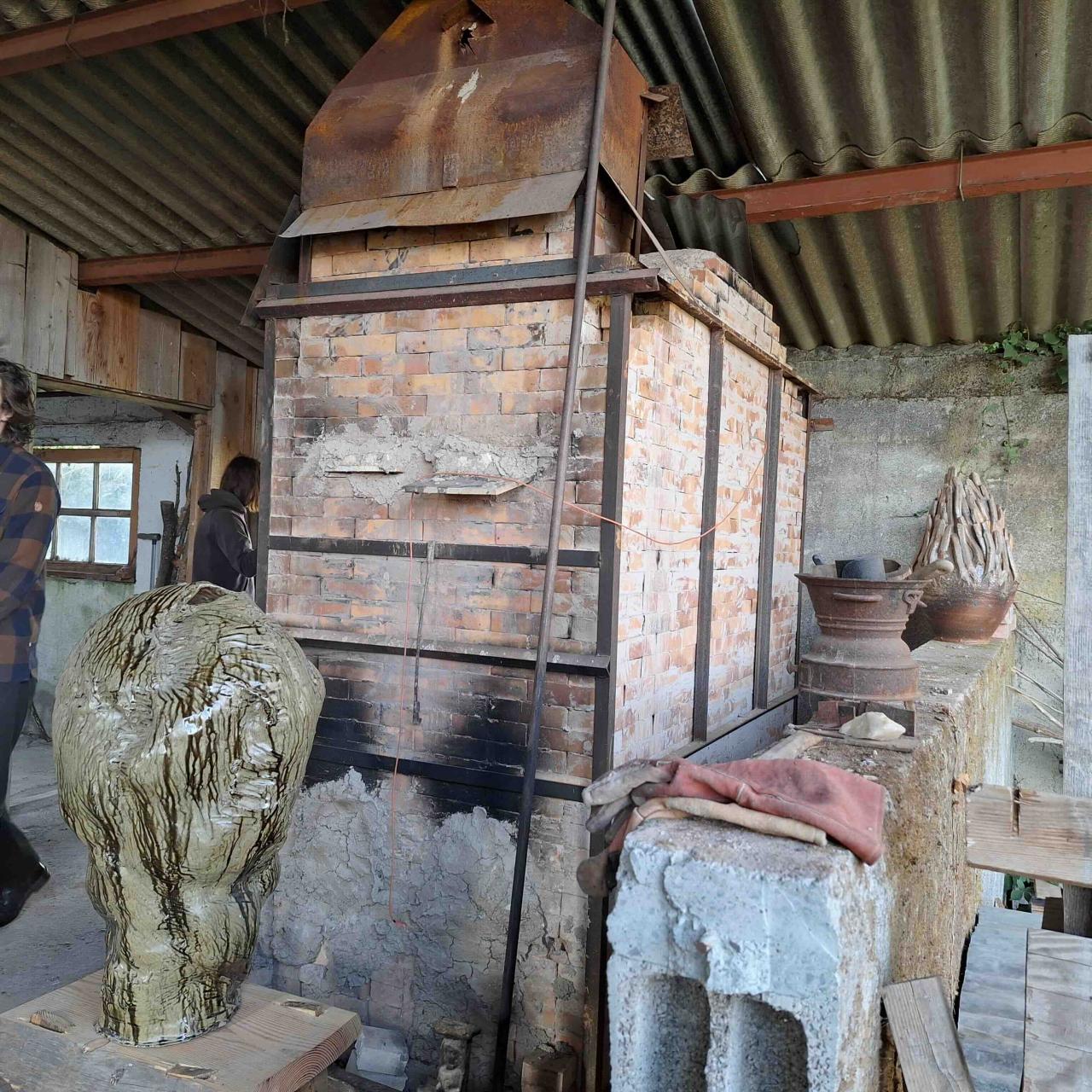
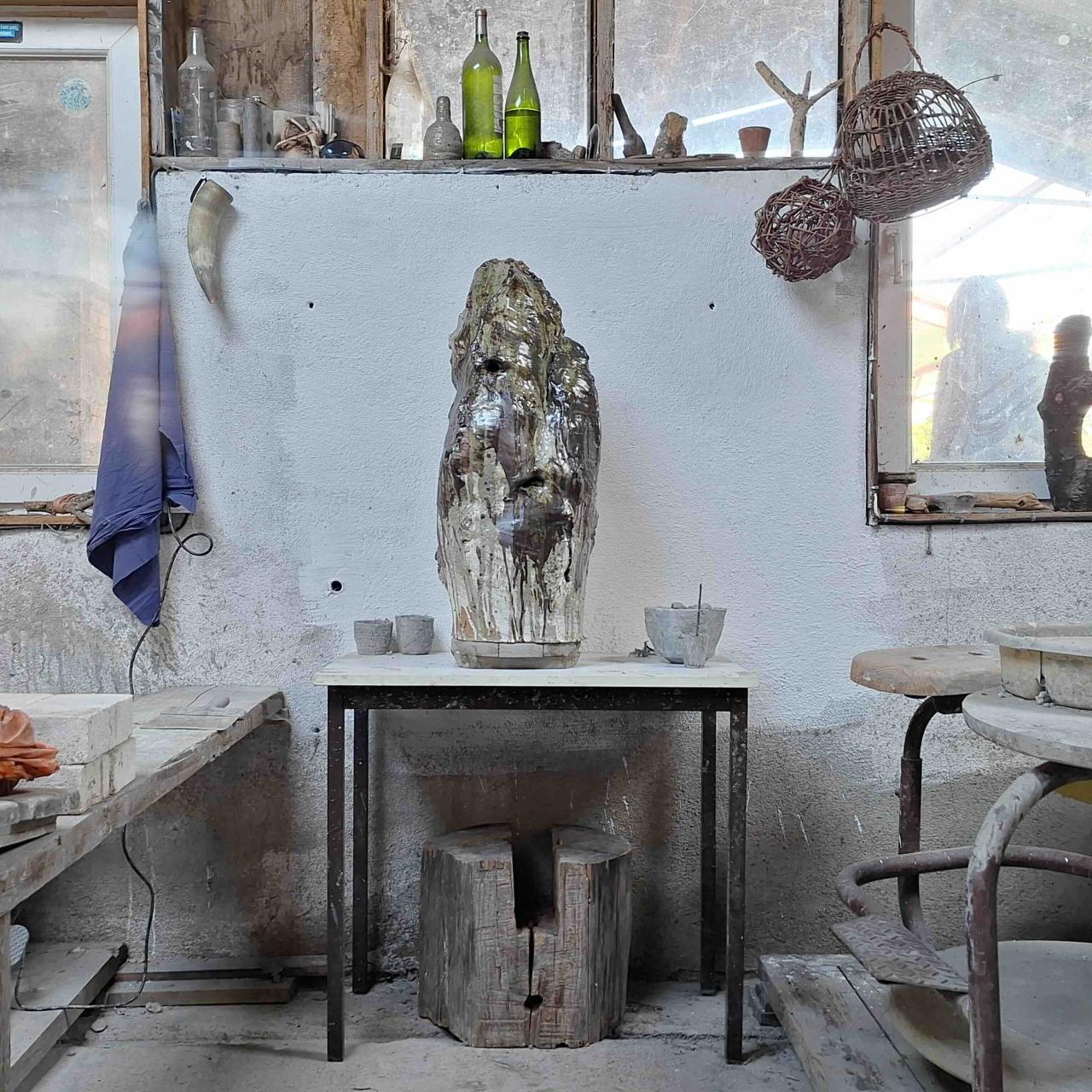
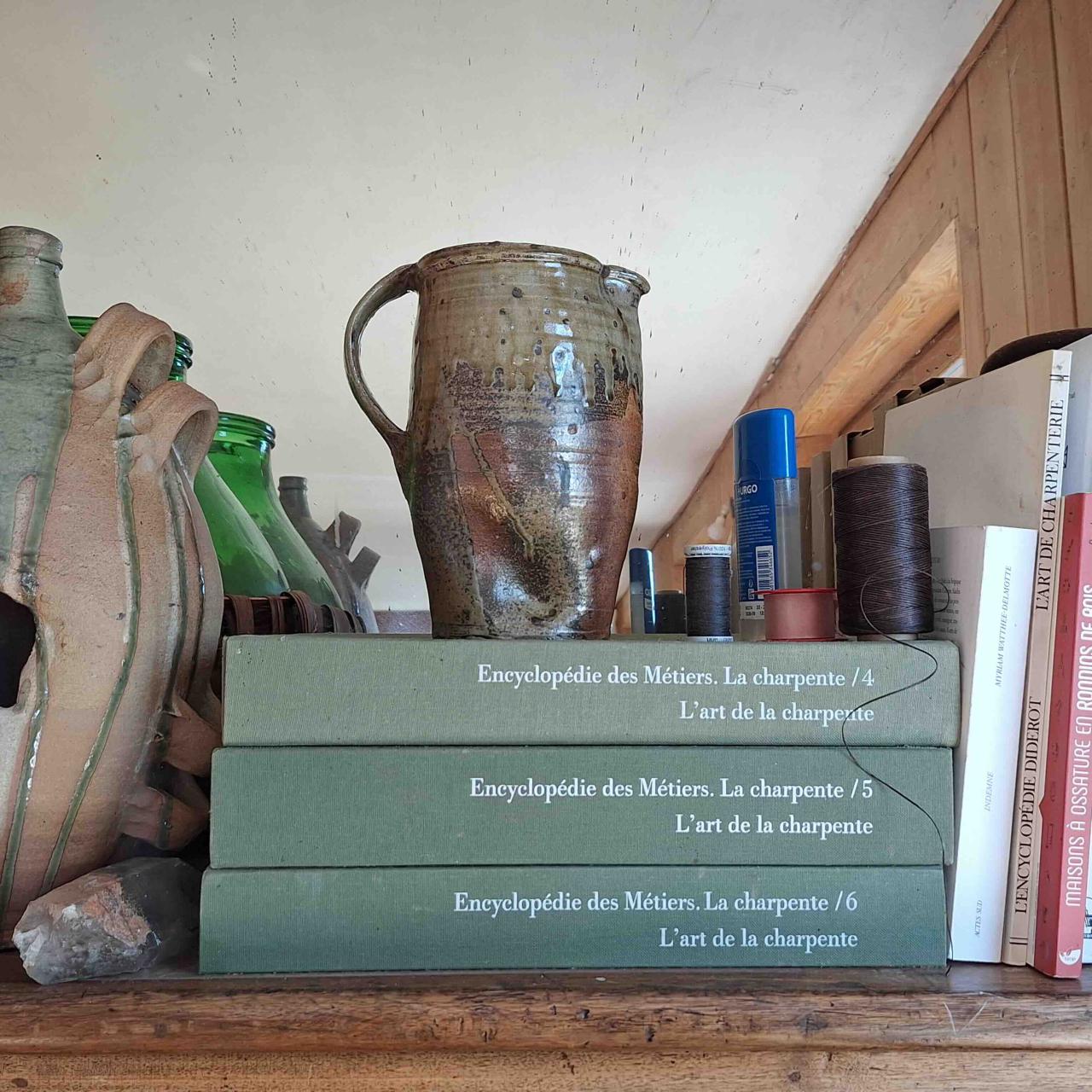
Île/Mer/Froid stands at the heart. Its kiln is used to fire ceramics, dye fabric, and warm food. It braises, it boils, it simmers. Branches from the surrounding elders are hollowed out and blown in to stoke the kiln. Despite a lack of true skills and alienation from the traditional, the two friends develop a simple interest in matter, which they shape according to whom and what they encounter. People and places are what feeds them, alive. They use without mastery. And since one isn’t virtuosic, one never makes the same object twice. The idea is to flow between heritage and freedom, to salvage as much as one invents. It fashions. It fascinates. The skills of others become one’s own material, modestly. And this is how one ends up making sculptures that don’t look like watercolours. When there are several of us, nothing belongs to anyone. In practice, there is no property. There is no paternity to claim, other than that of community. Together, they are him and them.