Florans Feliks
Florans Féliks: Creative ecosystems for a shared journey
With Florans Féliks, there is more sense in talking about a cultivation of creative ecosystems than about static artworks. As much a planter of trees as an educator and storyteller, her ecosystems are rooted in contact with the land — specifically that of Kazkabar in Saint-Paul de La Réunion. A community hub that encourages learning and creating, it was founded in 2004 and stands at a crossroads, at once making it a space symbolically charged with presences and stories. It is in this shifting geography, split in half by a gully, that her assemblages, huts and collective finery are born, durably anchoring the bodies that produced them into the territory they inhabit.
Florans Féliks’ work follows a principle of germination. In her open-air studio in Kazkabar, works are literally put into the ground, buried for several months. Textile becomes a body-envelope in which lumps of local soil and pumpkin seeds are swathed. These fertile cocoons topped with sézis-tèr serve both a practical and symbolic purpose. Although sézis1 are more commonly used as resting mats nowadays, they might perhaps serve to dry out the future seeds produced by the fertilised plants. In this instance, they hark back to their primary use: drying coffee beans. Introduced during the first Madagascan migrations, the presence of sézis establishes the heritage of a creolised population within the rhizomatic system of the Kaz. It is at once a marker of habitual mutation and of ancient migration.
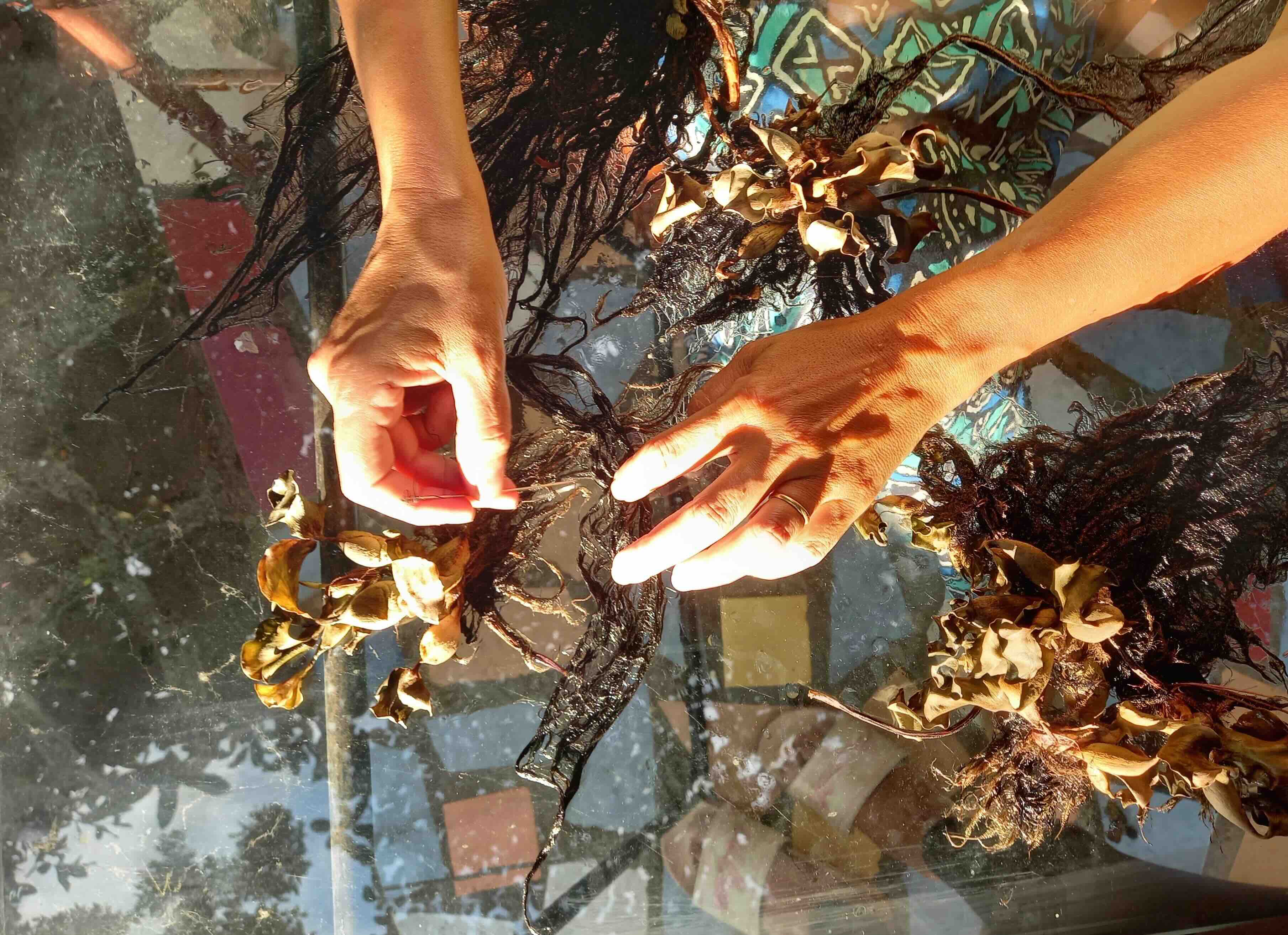
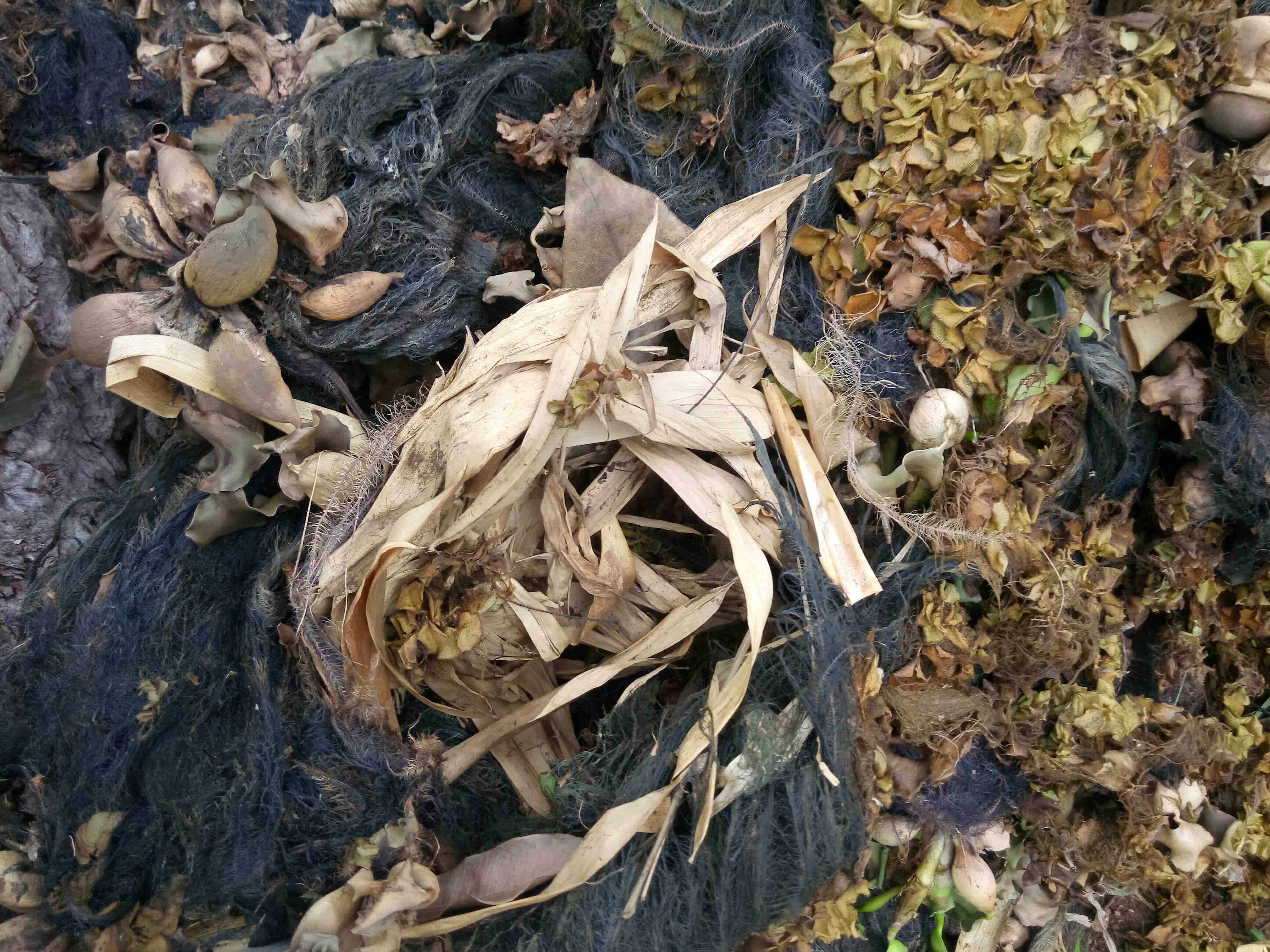
Kazkabar’s ron fanm — a community of diverse femininities2 — plays a central part here. Manual actions are repeated and taught (gathering, drying, kneading, flipping, plaiting) until the works are brought to life. Etandû, Etandî, Etandô, Etandard (2021) is an example of this process. The installation, interlinked with pieces of knitting, is made up of an aggregation of natural and synthetic materials that demonstrate a constant attention to what is “already there”. The roots, stems and bulbs of water hyacinths — an invasive plant in the Saint-Paul lagoon — are intertwined with salvaged domestic waste. The cleaning of the collected objects produces a shift in perception: the roots and stems take on the appearance of textured hair, the scouring pads of sponges become reminiscent of moss, and strands of synthetic hair become humus or damp branches. The discarded or invasive materials mutate and are regenerated thanks to caring gestures.
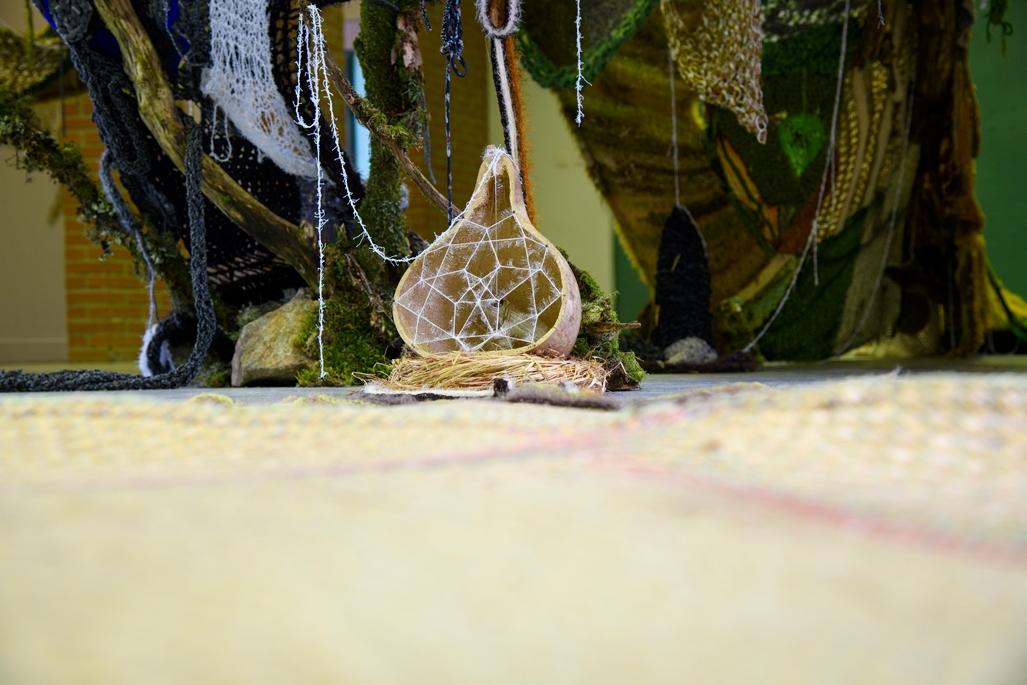
The artist’s presence in institutional exhibition spaces remains very discreet, since she mostly favours contact with the audience during kabars and bat’ karés.3 However, one exhibition is worth mentioning as a milestone in her career: La sagesse des lianes4, in 2021. On this occasion, Féliks transposed Kazkabar at the heart of the Centre International d’Art et du Paysage on the Isle of Vassivière (CIAPV). Triko ‘d’po’d’ravine si sézi’tèr (2021) recreates a smaller scale version of the area traversed by the Bernica gully. Knitted and crocheted pieces in earth tones are hung from heavy branches. Their layout outlines the shapes of hut-like shelters — a recurring motif in her work. Both a welcoming domestic space and a restorative haven, this piece was initiated by the ron fanm in Saint-Paul and completed on site, thus linking together two territories whose shared history involves the forced displacement of thousands of children uprooted from La Réunion by the French State in the 1960s and 1970s to repopulate the Creuse, where the CIAPV Art Centre now stands.
While the gully may evoke the natural erosion phenomenon that creates a visible fault in the landscape, it is also a repository of memory. Intrinsically linked to the history of slavery and runaway slaves, since the “fugitives” hid in these areas that were craggy and hard to access, Féliks points out that contemporary fugitive practices still happen there to this day. Her installation Hommage au gardien bœuf [Tribute to the herdsman, 2021] pays tribute to her deceased neighbour Gabriel, a singer-poet and herdsman of Moka cattle.5 The piece, which is made up of wood and straw, incorporates the symbolic elements of the herdsman (vacoa hat, diabolo, clothes pegs, cattle horn…). Often stigmatised and associated with a vagrant lifestyle, cattle herdsmen are in fact the guardians of a body of knowledge passed on orally, much like the runaway slaves of old. In Vassivière, the artist gathered visitors for a purification ritual involving cow’s urine collected from local farmers6 — protective gestures to act out and keep traces of wounds that still remain open to this day.
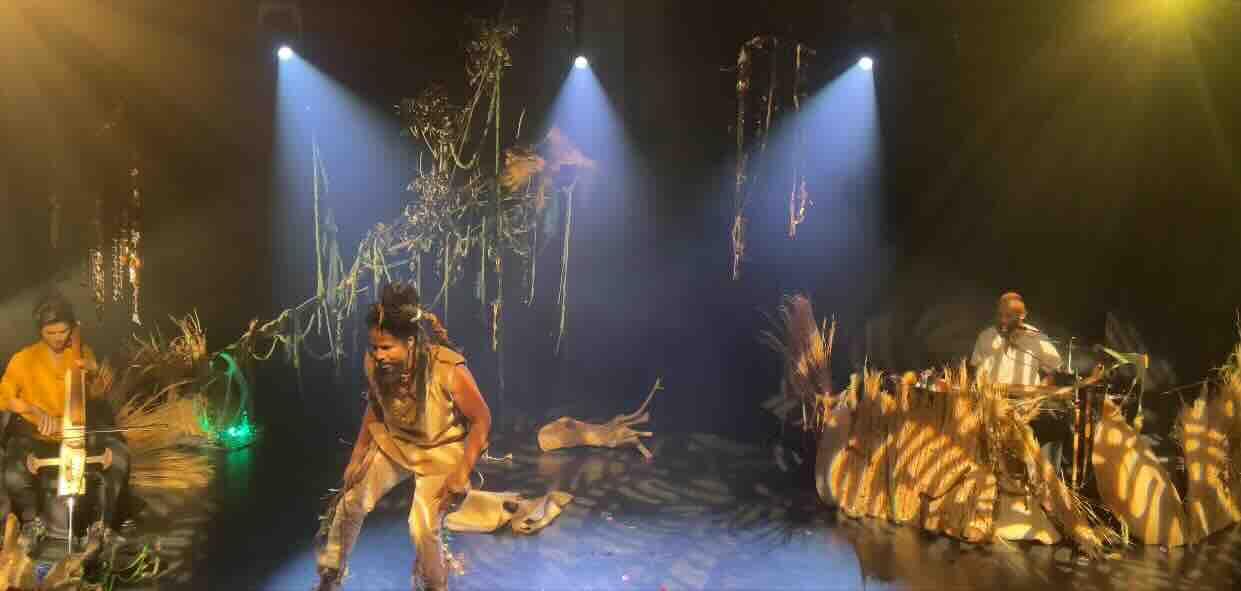
The artist’s focus on the richness of oral transmission can also be found in Granmèrkal (2005-ongoing). For this piece based on an eponymous Réunion legend, Florans Féliks works with children to create activatable hybrid objects, between birdlike accessories and recreational devices. Stories about Grand-mère Kalle are abundant and at times contradictory, but always consistent in the fear that the character elicits. In turns a witch or a martyr, she embodies a threatening figure who guards knowledge about the animal and plant life of the island, of which she is the keeper. The artefacts made from leaves or feathers act as an exorcism of these fears, turning into playful vectors of knowledge. They were reactivated again in the show I kri aou dann bwa (2022-2023) created by Tintin from the group Solilokèr, prolonging this need to share and the shifting nature of Féliks’ works.
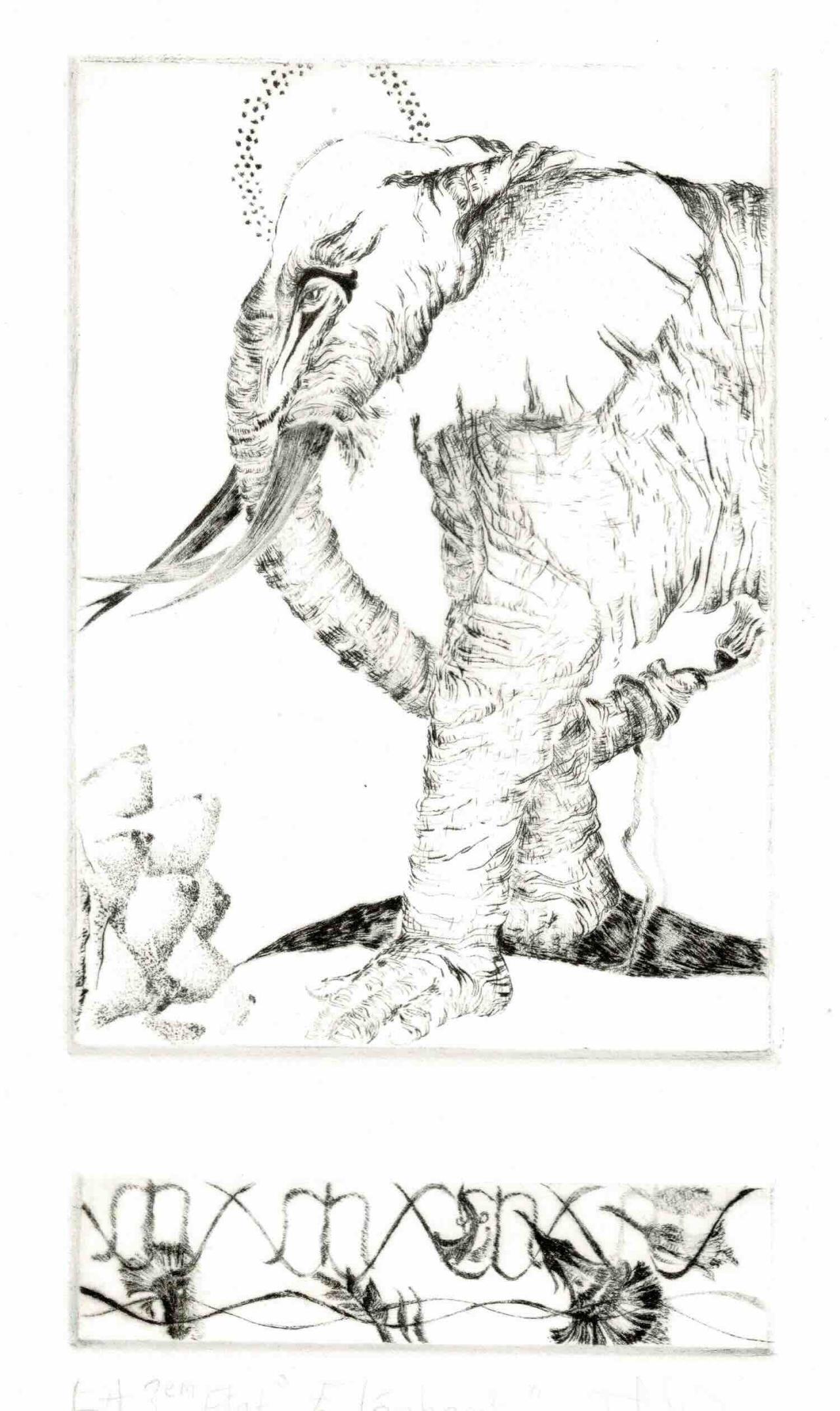
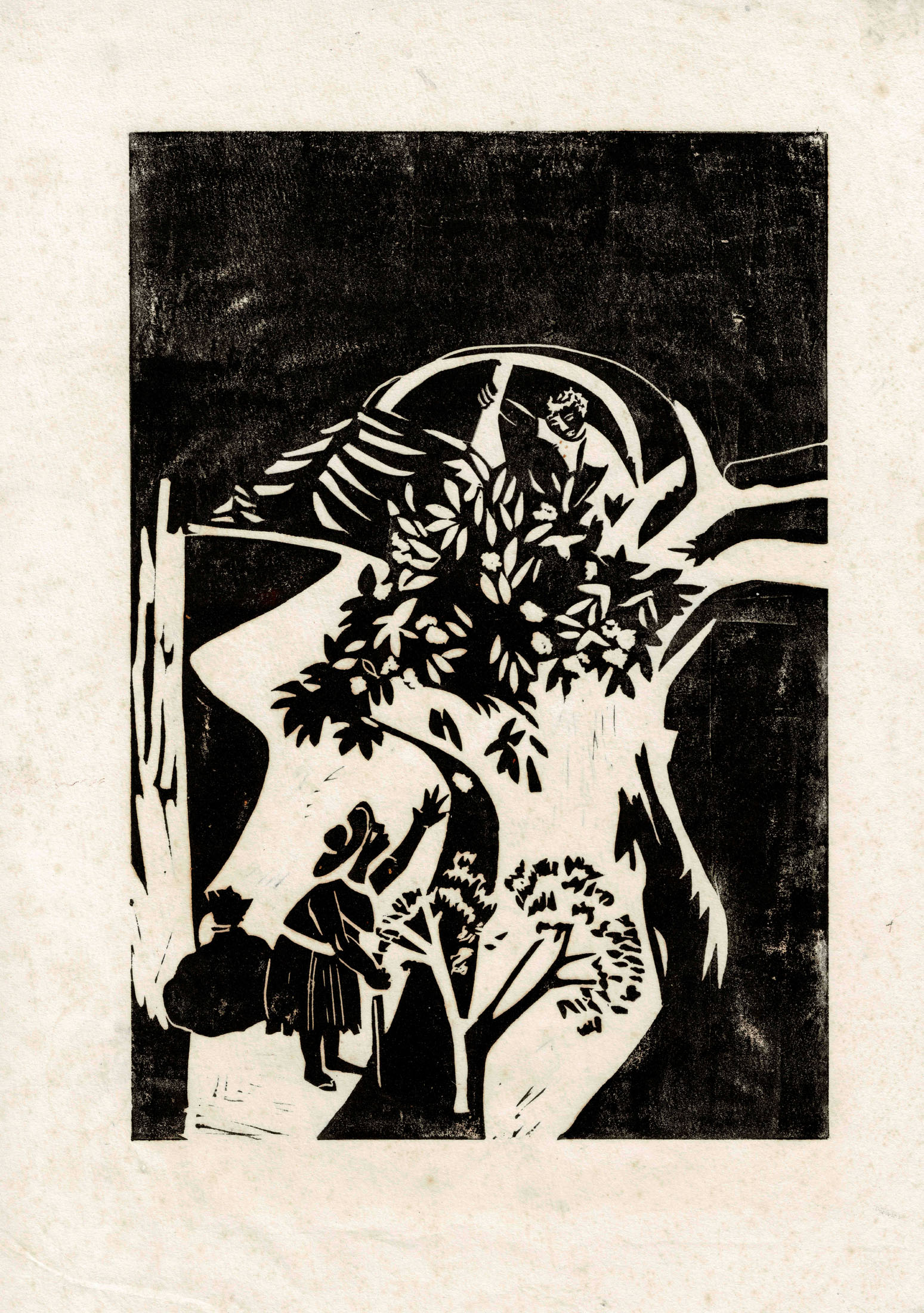
Féliks’ work in engraving isn’t as well-known, despite it being an integral part of her practice since her studies at the École Nationale Supérieure des Beaux-Arts de Paris. In 1998, she produced the series of engravings Gravir po gramoun goni to illustrate a book of stories by artist and author Wilhiam Zitte. In them, she addresses the subjects of faith, labour, mourning, and solidarity through the telling of ancestral stories. The minutia that the acts of incising and hollowing require provide her with a personal meditative space. The engravings are sometimes continuations of former works (the series of engravings Granmèrkal, 2012) or become activatable pieces, such as in the Salim series (2012-2021).7 At the intersection of a tale, a eulogy and a rebirth ritual, the engravings in Salim outline a shadow play. Through slow manipulation and attentive observation, shapes become somewhat polysemic. A leaf can become fire, goat horns, the wing of a bird, or a human figure.
Funeral rites are omnipresent. They activate a Réunion cosmogony in which animistic, Christian, Hindu and Muslim beliefs and practices coexist. The initiator of Kazkabar organises the annual event Lomaz Zansèt (2004-ongoing) there every 20th December. Concurrently with the servis kabaré, this specific kabar honours the memory of African-Madagascan ancestors through the maloya.8 According to Féliks, this is a physical experience that one must live and feel rather than explain, since it requires collective synchronicity. In 2019, Lomaz Zansèt exceptionally took on the form of a procession from the banks of the Saint-Paul cemetery to the Kazkabar compound. A zingad — a raft made out of cabuya trunks — by artist Migline Paroumanou, a sculpted bust by Delphine Hélode, and a sézi shrouded in white linen were included in the performance ritual, as an offering to the African-Réunionnais ancestors whose bones were unearthed by the cyclone Gamede a few years prior.9
Florans Féliks is part of a long tradition of artists who merge art and life. However, in Féliks’ case, art is the expression of an ecumenical relationship. It is rooted in the living, is passed down through the body, and relived as a collective. Each form it takes opens up an entire swath of memory and history, and offers a space for care. It is not about mending the past, but about creating the conditions for a life-saving shared journey.
Notes:
1 Large woven screwpine leaf mats, ubiquitous all around La Réunion.
2 Mainly made up of women, the ron fanm also welcomes men who are willing to share in the acts of care commonly associated with so-called female labour. This is what the artist names “diverse femininities”, perhaps as a way of breaking down established gender norms.
3 In Réunion Creole, “bat’ karé” means stroll. In the context of Kazkabar, the use of this term refers to the educational walks that the venue organises. The “kabar” is a festive and musical event during which maloya is performed. The term derives from “kabaré, servis kabaré”, a long-suppressed ritual practice in La Réunion dedicated to the worship of African-Madagascan ancestors. See “Histoire du maloya”, INA (19 December 1998) and “La Réunion: le maloya”, INA (26 January 2002).
4 La sagesse des lianes was a collective exhibition organised by Dénétem Touam Bona at CIAPV (Centre International d’Art et du Paysage Vassivière) from 19 September 2021 to 30 January 2022.
5 A species endemic to La Réunion, currently threatened with extinction. In 2024, fewer than 400 individuals were recorded on the island. See Quentin Rivière, “D’un cheptel conservatoire de races locales à un outil de gestion de la savane : le cas de la chèvre Péï et de la vache Moka à La Réunion”, Essais - Revue interdisciplinaire d’Humanités, Hors série-6 (2021) & Annaëlle Dorressamy / Julien Talérien “Le bœuf moka en danger : une race péi menacée d'extinction à La Réunion” Réunion la 1ère (July 2025).
6 On Réunion Island, cow’s urine is sacred. Mixed with sea water, milk or perfume, it is used as a blessing liquid during purification rituals.
7 The engravings produced in 2012 were activated for the first time by Florans Féliks that same year, during a Danyèl Waro concert in Saint-Gilles. Nine years later, in 2021, new voices and new bodies joined Salim. The poet and composer Danyèl Waro was accompanied by the Réunion Regional Conservatory’s choir, with choreography by artist Migline Paroumanou.
8 Inherited from the musical, spiritual and resistance fighting carried out by runaway slaves in La Réunion, maloya simultaneously designates a body of sounds, singing and codified dancing.
9 Delphine Hélode is the only female emancipated slave whose grave lies in the seaside cemetery of Saint-Paul. The passage of the cyclone Gamede in 2007 unearthed thousands of bones that revealed the presence of a slave cemetery outside the bounds of the official cemetery. A cemetery was officially inaugurated in their memory in 2019. See: Fabrice Floch, “Saint-Paul : inauguration du cimetière des esclaves découvert par Gamède.”, Réunion la 1ère (September 2019).
Traduction en créole - Francky Lauret
Florans Féliks : Ansanm Ansanm par an par pou in koumbla lartistik
Ansanm Florans Féliks, odrémyé mazine in fason fé koumbla an lartistik olèrk zévrédar i débouz pi. An zès-fonnkér, an plantér, an lamontrér, an krikékrakér, li fé pous son travay lartis , zonbriyé èk la tér, sat Kazkabar , koté Sin-Pol La Rényon. Landrwa la i ékzis dopi 2004. Térla, i akèy aou gran kér, i amont, i aprann, i viv sak na po viv. Ousa térin i lé, dann krwazé somin la Rényon, li tonm dirèk in landrwa bonbé la prézans ousa la tér i koz. La-minm, dann in zéografi na pwin lo bor, ousa la ravine i koup an travér, son bann fagotaz an boukan, son bann gran palto an nik la koud an lantouraz i pèt an flér, i mark po lontan la tras lo kor domoun la mandar tousala. I anpar, i ranpar azot, po toultan, la plas zot i rèt.
Travay Florans Féliks i lèv parèy in grin la po zérmé. Dann Kazkabar, an latélyé rouvér si lo syèl, li plant son travay lartis dan la tér poudbon, an dormans po plizyér mwa. Dofil po tisaz i vyin an zanponn-lo kor, i ansér bann gob la tér èk grin sitrwi an somans. Kokon-la, an bababoutir sonbliyé èk sézi-tér lé la an bitasyon, mé lé la osi an fonnkér. Kinm koméla, i ansèrv sézi1 pito pou ropozé, somanké va ansèrv pou fé sèk lo grin gondé, kan li sar fine doné. La i vyin rapèl pokosa té ansèrv sézi la promyé débi : fé sèk grin kafé.
Sézi l’ariv ansanm promyé malgas, li la rant an rasine pyédbwa listwar la Kaz in pèp fine kréolizé. Ali minm la mark manir ansérv ali zordi, èk la mark vwayaz bann zansèt.
Ron fanm Kazkabar — lantouraz tout kalité fanmté 2 —, i tonm an potomitan. La minm i fé, i arfé viv, i amont, i aprann , tout bann zès la min (amasé, séké, boulanzé, trésé) ziskatan i fé énèt lèvrédar. Etandû, Etandî, Etandô, Etandard (2021) i done in bon légzanp posa. Linstalasyon i angarot tout sanm morso triko mandaré. Fagoté èk zafér natirèl mayé èk zafér artifisyèl li amont byin lo réspé po sat « té fine -la ». Rasine, dobwa ansanm patat pansédo — plant i sava partou létan Sin-Pol —, lé anmayé sanm bann réstan la vi toulézour. Nétway tout sak la trouvé par si par la i aral aou dan in ot fason mazine sat ou i wa : bann rasine ansanm dobwa i vyin sové konyé, koté zéponz i grat i vyin la mous, mèsh sové sintétik i vyin féy dobwa po pouri atér sansa in bransh la rèt dann lo. Zafér zété, zafér i may anou, i arpran favér dann tout zès sonyaz lo kér dan la min.
I wa pa tro lartis dan lamontraz lartistik ofisyèl, li profèr akèy domoun dann kabar épisa an bat karé3. Kanminmsa na in lamontraz i mark son somin : La sagesse des lianes an 20214. Féliks i amène Kazkabar dann kér lo Sant Internasyonal l’Ar sanm lo Péizaz (CIAPV). Triko ‘d’po’d’ravine si sézi’tèr (2021) i ardésine an pli pti lo térin la Ravine Bernica i koup an dé. La trikot sa sanm zégïy, krosé. Lo travay koulér la tér , i tyinbo ansanm in gro bransh dobwa. Manyèr la aranzé i arsanm bonpé fason i aranz in boukan — sa in zimaz i arvyin bonpé dann son travay. In léspas i di ariv aou, i anpar aou, i sony aou,. Pyès-la la komans mandaré ansanm lo ron fanm koté Sin-Pol pou ansèv ali in situ. Li gatir dé landrwa èk in listwar lé mayé akoz déplasman forsé sépakonbyin marmay la Rényon. Léta fransé la dérasine azot zané 1960-1970 pou arpèp la Creuse, départman na lo sant l’ar koméla.
Si la ravine i fé mazine travay la pli èk lo van, i rouv nout zyé si in krédfon dann péizaz, li tonm osi in sours la mémwar. Son lésans minm i fé lyane ali sanm listwar lésklavaz, sanm maronaz akoz maron té i kasyèt dann ranpar konma, lé malizé po arivé. Féliks i vé pa i obli , térla, bann maronaz koméla i kontinyé minm. Dan l’Hommage au gardien bœuf (2021), linstalasyon i rann omaz son défin vwazin Gabriel, in fonnkézér-santér gardyin bèf Moka5.
Fé èk dobwa sanm la pay, li razout anndan zafér i fé mazine lam gardyin la (kapline bourdoné, oulké, pinsalinz, la korn bèf…). Souvandéfwa i agard travay domoun la dopi anlér konm zafér insinifyan, pwatan, gardyin bèf minm i tonm zarboutan lamontrér in fason viv, in konésans zis an parol parèy lontan bann maron. Koté Vassivyère, lartis la parti pran pisa bèf6 èk sonyér bèf laba, po mèt an partaz sanm vizitér in zès-fonnkér an koumbla. Po anpar la mark boubou i fémal minm.
Dann Granmèrkal (2005…) i trouv minm réspé po zistwar zansèt la kado anou. Ansanm zistwar réyoné Granmérkal la Rényon, Florans Féliks èk marmay lékol i fagot bann zobzé in pé batar i fo fé viv, rant la plim zwazo èk lo zé marmay. Zistwar Granmérkal néna plin, souvandéfwa i trouv tout èk lo kontrér, mésoman tout lé dakor po di madanm la i fé mont kap-kap si domoun. Sof an sorsyèz sof an martir, li roprézant in ménas i fé obli tout gabyé èl néna dési plant ék zanimo péi.
Parlfèt, saklon fèy, saklon la plim i vyin pito tir la pér, i dévir lo kap-kap an zé lamontraz. Pèstak I kri aou dann bwa (2022-2023) Tintin , lo group Solilokèr la fé, i arfé viv plis an gran lo bézwin mèt ansanm, èk lo koté na-pwin-lo-bor i trouv dan tout kréasyon Féliks.
I koné pa tro tro son travay la gravir. Somansa, lé la povréman dann tout son travay dopi son formasyon Lékol Nasyonal Sipéryèr Bozar Paris. Lané 1998, li i kalkil Gravir po gramoun goni pou in liv zistwar lartis épila lotèr Wilhiam Zitte la ékri. Ladan li kos ansanm rakontaz zistwar zansèt i koz dési krwayans, travay, lo déy èk solidarité. Po grafiné, po gravé i domann mèt la tèt èk out travay , i obliz rant anndan ou minm. Parlfèt sa i kado aèl in léspas zis po li minm. Nadéfwa in travay fine fé dopi avan i vyin in gravir (séri la gravir Granmèrkal - 2012). Nadlér, in gravir i ansérv po in ot travay i rès pou aktivé konm dann Salim (2012-2021)7. Rant rakontaz zistwar, pléré pou lo mor épisa sérvis po roénèt, bann gravir Salim i désine in téat lonbraz. Lérk i bouz dousman dousman, lèrk i vèy vèy byin, bann form i fé mazine aou bonpé zafér. In fèy i vyin dofé, korn kabri, la zèl zwazo obyin figir domoun.
Bann zès-fonnkér pou lo mor lé la partou. I fé lèv in in maabarldon réyoné ousa tout kroyans i viv kosté-kosté lam la natir, krétyin, malbar, zarab, tousala... Toulézan, li organiz an lantouraz Lomaz Zansèt (2004 – ankor pou fé) po lo 20 désanm. Dann minm siyon servis kabaré, kabar-la in fonnkér po zansèt malgas, lafrik, an maloya kabar8. Solon Féliks, na pwin po rod lésplikasyon, t’in moman po viv èk tout out kor, èk tout sak li giny rosanti, tout domoun ansanm, minm tan. An 2019, Lomaz Zansèt la ni in prosésyon dopi lo rivaz simtyèr Sin-Pol ziska térin Kazkabar. Dann zès fonnkér la, navé In zingad — rado madsoka — lartis Migline Paroumanou la fé, in léskiltir la tèt Delphine Hélode èk in sézi roulé dan la twal blan. Pérformans-la la tonm konm in lofrand pou bann zansèt réyoné i sort Lafrik siklone Gamède9 lavé mèt déor détrwa zané avan.
Florans Féliks i tonm in ti boutir lo gran lyane fami zartis i amay l’ar èk la vi. Mésoman ansanm èl, l’ar i tonm in zès-fonnkér i koumbla la tér, èk nout domounité. Li anrasine èk lo vivan, li rézone dann kor, li arpran son sans dann lantouraz èk domoun. Sak form i rouvér in bout la mémwar, in bout listwar po arsony ali. La pa di i répar lo pasé, soman i tasmanir, artrouv in parkoman rouv somin boranbor in domounité vivan.
Notes:
1 Gran nat vakoa trésé, néna partou La Rényon.
2 Kinm Anndan néna sirtou bann fanm, lo ron fanm i fé rant osi lo zonm lé kapab partaz bann manyér sonyé i kol souvandéfwa dan nout mazinasyon ansanm in travay fanm. Sa minm lartis i apèl “fanmté tout kalité ”. Somanké in fason désot baro lo genre.
3 An kréol réyoné, « bat karé » i vé di promené. Dann Kazkabar, bat karé i ansèrv pou tout kalité lamontraz landrwa i propoz. Lo « kabar » t‘in fèt èk la mizik ousa maloya i roul. Lo mo i sort dann « kabaré, servis kabaré », in manyèr fé rityèl réyoné pou rann omaz bann zansèt afro-malgas la lontan bord si koté. Agèt “Histware du maloya”, INA (19 décembre 1998) épi “La Réunion: le maloya”, INA (26 janvier 2002).
4 La sagesse des lianes t‘in lamontraz an groupaz Dénétem Touam Bona la propoz dann CIAPV (Sant Intèrnasyonal l’Ar é lo Péizaz Vassivyère) rant lo 19 sèptanm 2021 èk lo 30 zanvyé 2022.
5 Léspès péi La Rényon, zordi sonyaz la i menas disparèt. An 2024, té kont a pinn 400 zanimo dési lil. Agèt Quentin Rivyère, “D’un cheptel conservatware de races locales à un outil de gestion de la savane : le cas de la chèvre Péï et de la vache Moka à La Réunion”, Essais - Revue interdisciplinaire d’Humanités, Hors série-6 (2021) & Annaëlle Dorressamy / Julyin Taléryin “Le bœuf moka en danger : une race péi menacée d'extinction à La Réunion” Réunion la 1ère (Juillet 2025).
6 La Rényon, pisa bèf lé sakré. Mélanzé sanm dolo la mér, dolé obyin sanbon, i ansèrv pou béni obyin dann rityèl pou sas mové zafér.
7 Bann gravir la fé an 2012 i pran vi pou lo promyé fwa ansanm Florans Féliks lo minm lané, dann in konsér Danyèl Waro koté Sin-Zil. Nèf lané apré, lané 2021, bann vwa nèv épi bann kor nèv i mèt ansanm Salim. Lo fonnkézér konpozitér Danyèl Waro i shant ansanm lo kér konsérvatwar rézyonal La Rényon épi sanm lartis Migline Paroumanou pou lo parti dansé.
8 Léritaz lo fason amène la mizik, krwayans épi la rézistans zésklav maron La Rényon té tyinbo dann ségré, Maloya i nonm minm tan lo mizik, lo shanté èk lo fason dansé.
9 Delphine Hélode i tonm lo sèl fanm zésklav afranshi lo kor i rèt dann simtyèr marin Sin-Pol. Lo pasaz siklone Gamède lané 2007 i tir sou la sab bann milyé zosman i mark la prézans in simtyér zésklav par déor lo simtyér ofisyèl. La fé ofisyèlman in simtyèr pou la mémwar banna an 2019. Agèt : Fabrice Floch, “Saint-Paul : inauguration du cimetyère des esclaves découvert par Gamède.”, Réunion la 1ère (Septembre 2019).
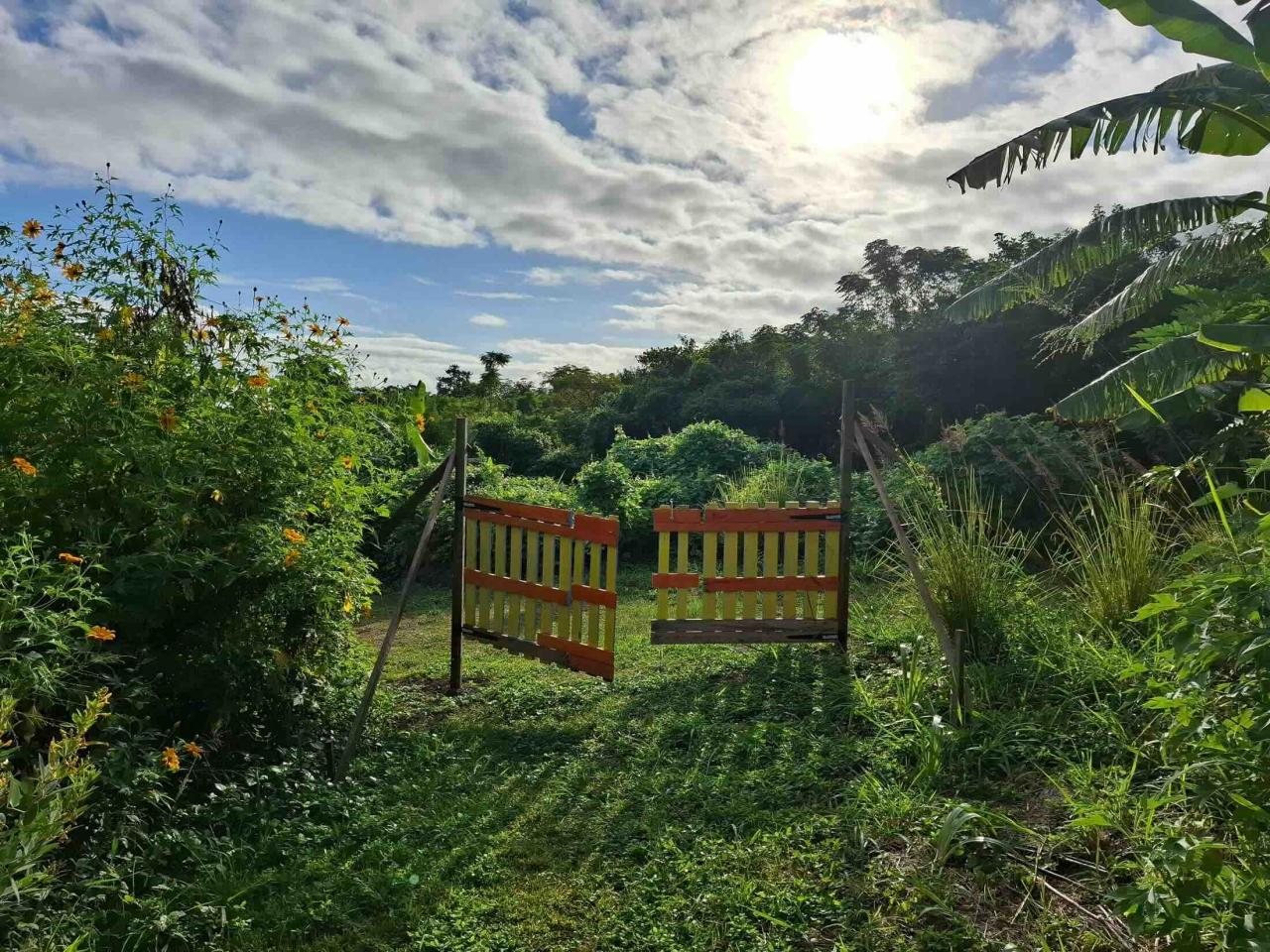
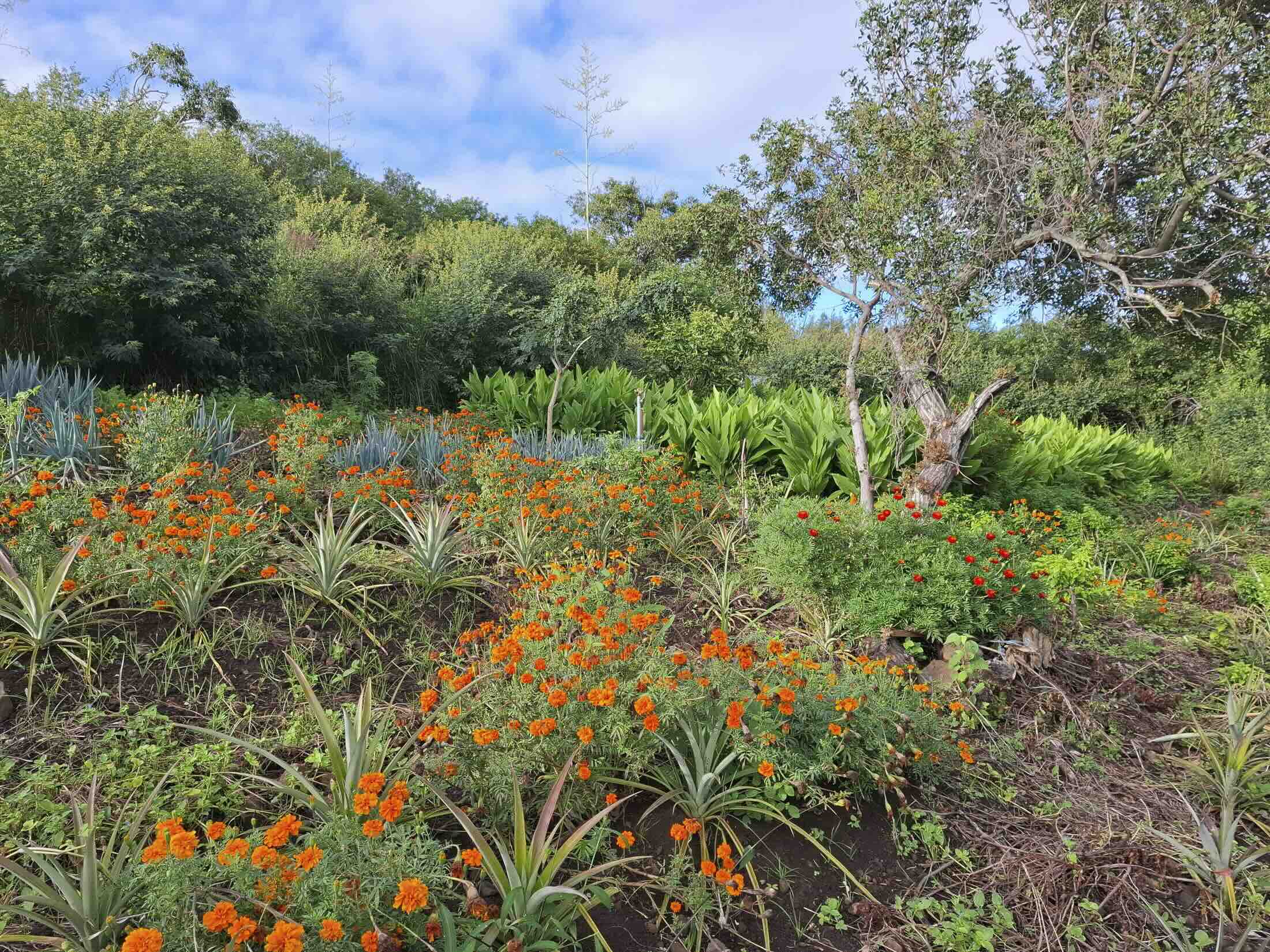
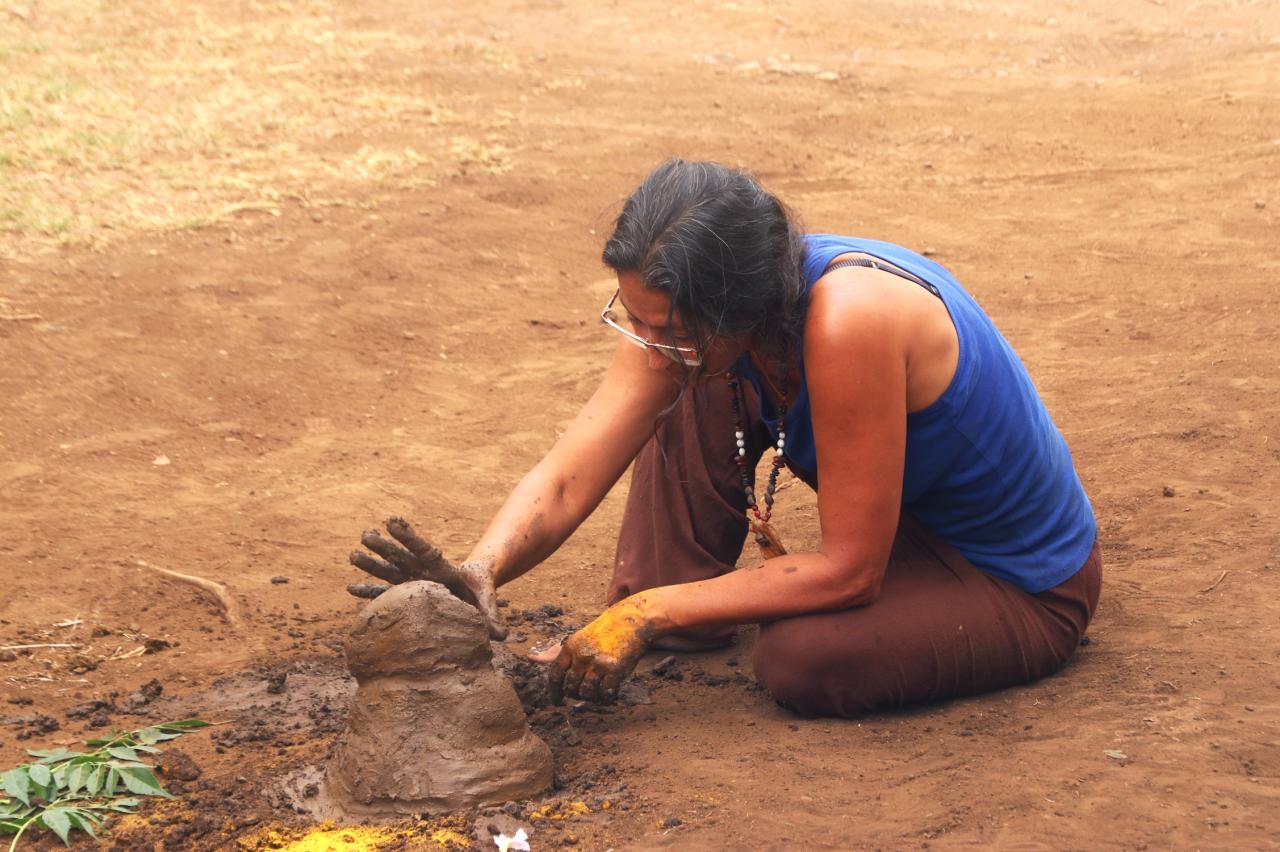
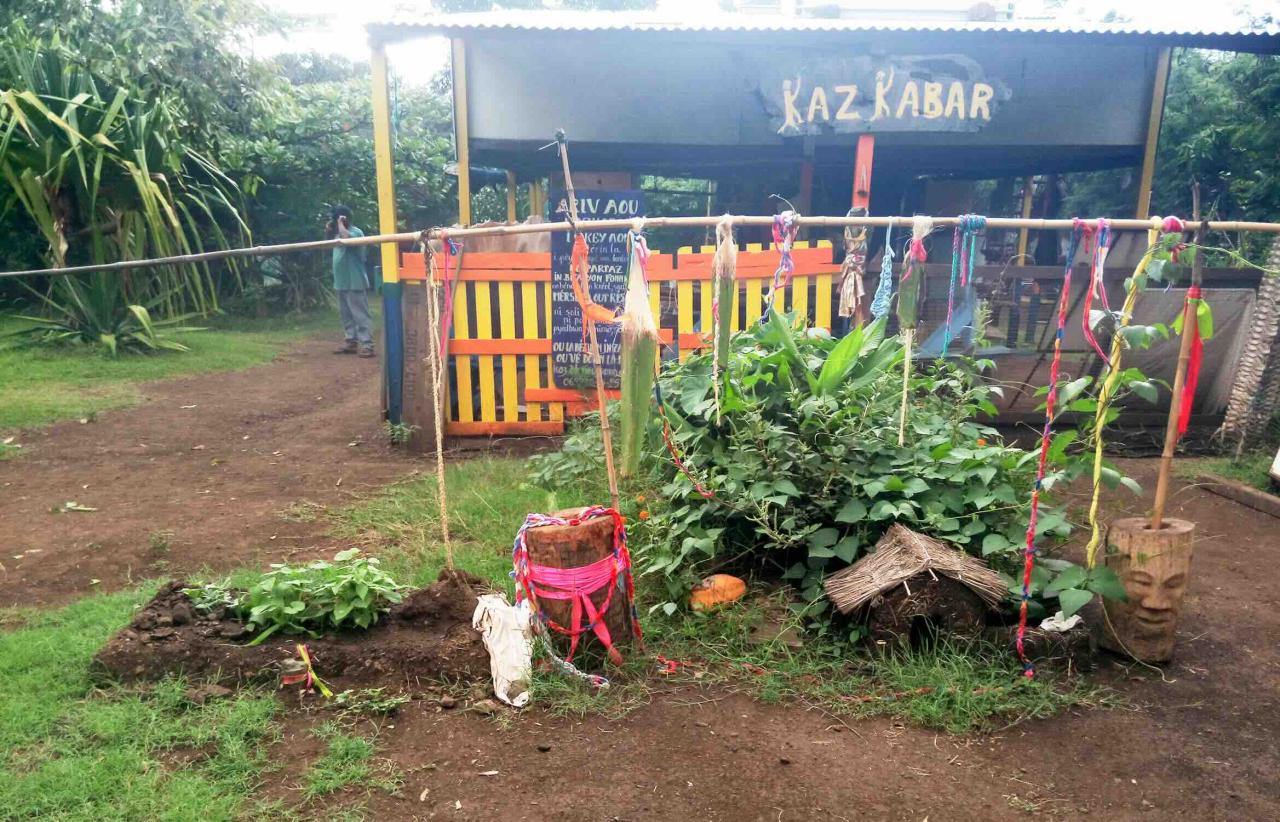
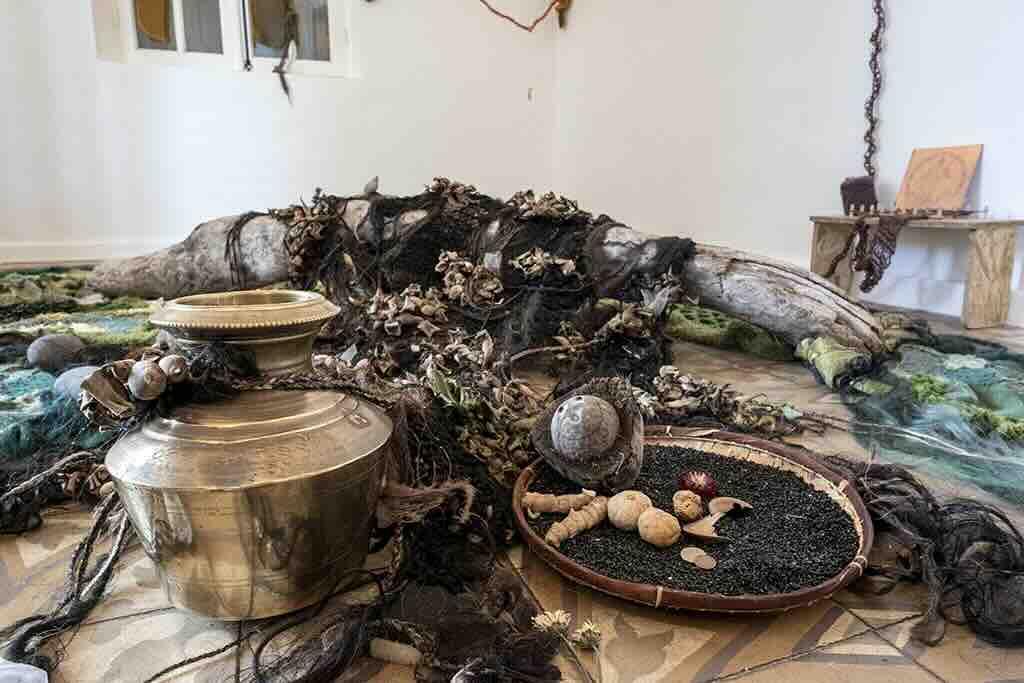
Photo: © Jacques Kuyten
© Gaëlle Deleflie
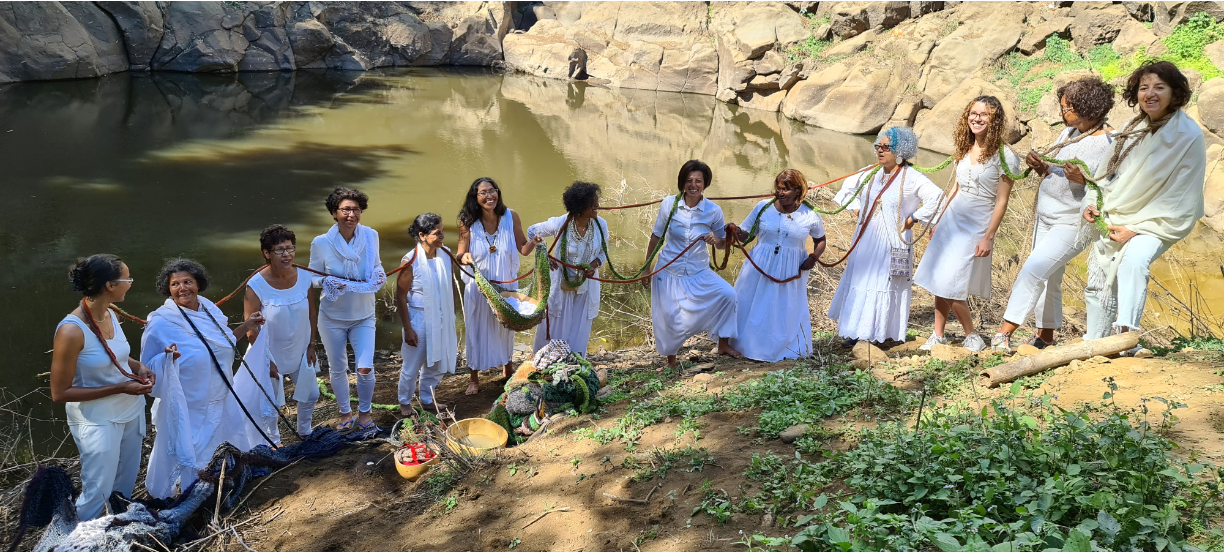
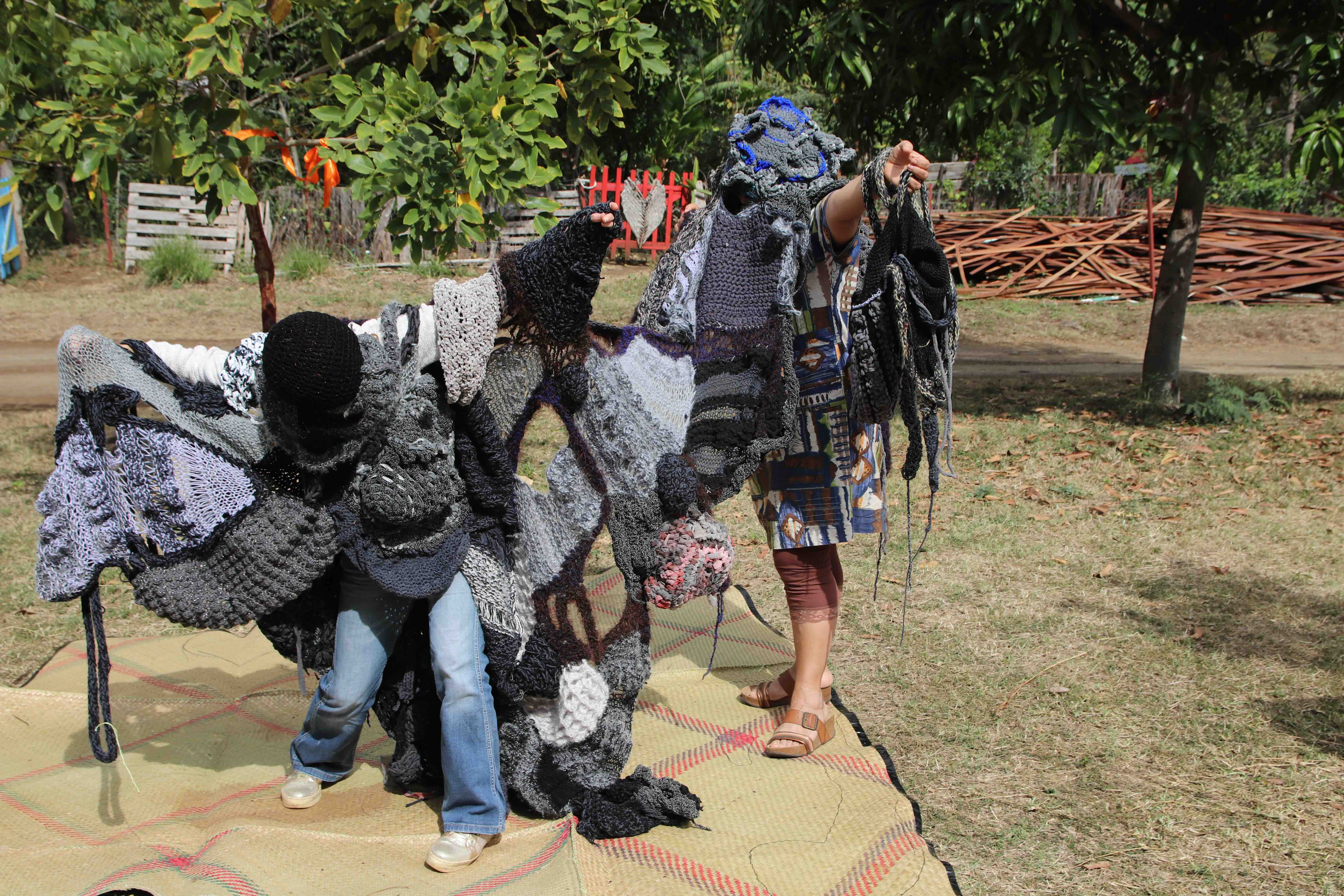
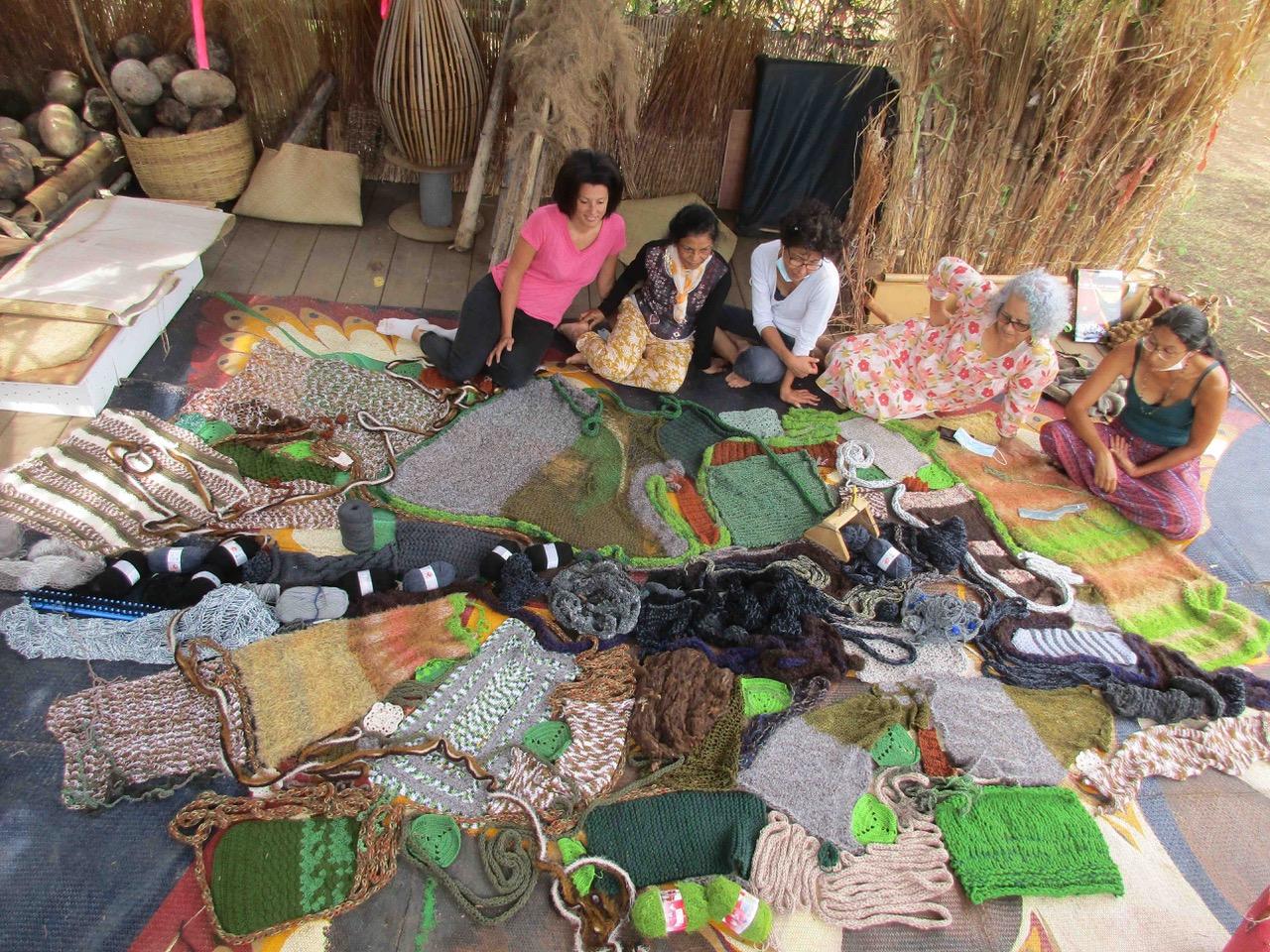
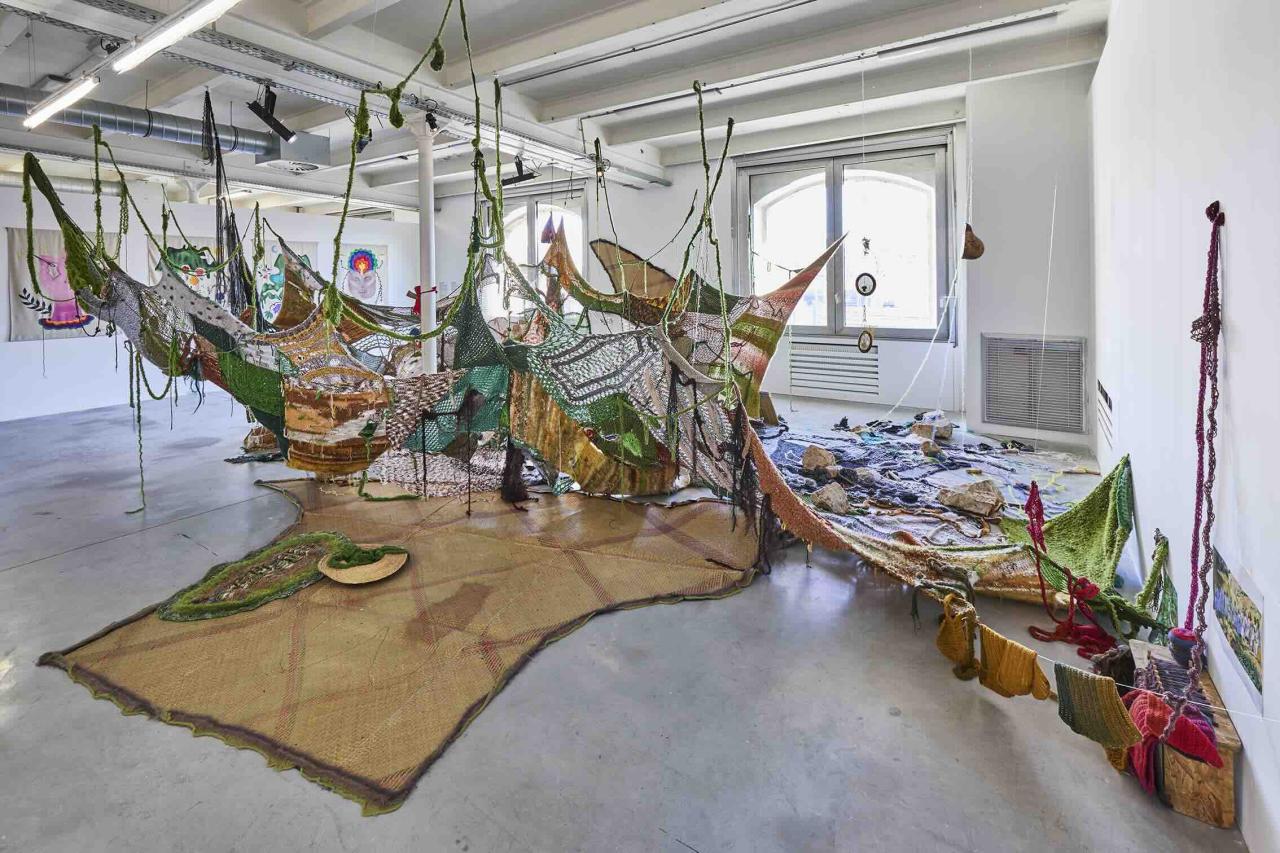
Photo : © Jean-Christophe Lett
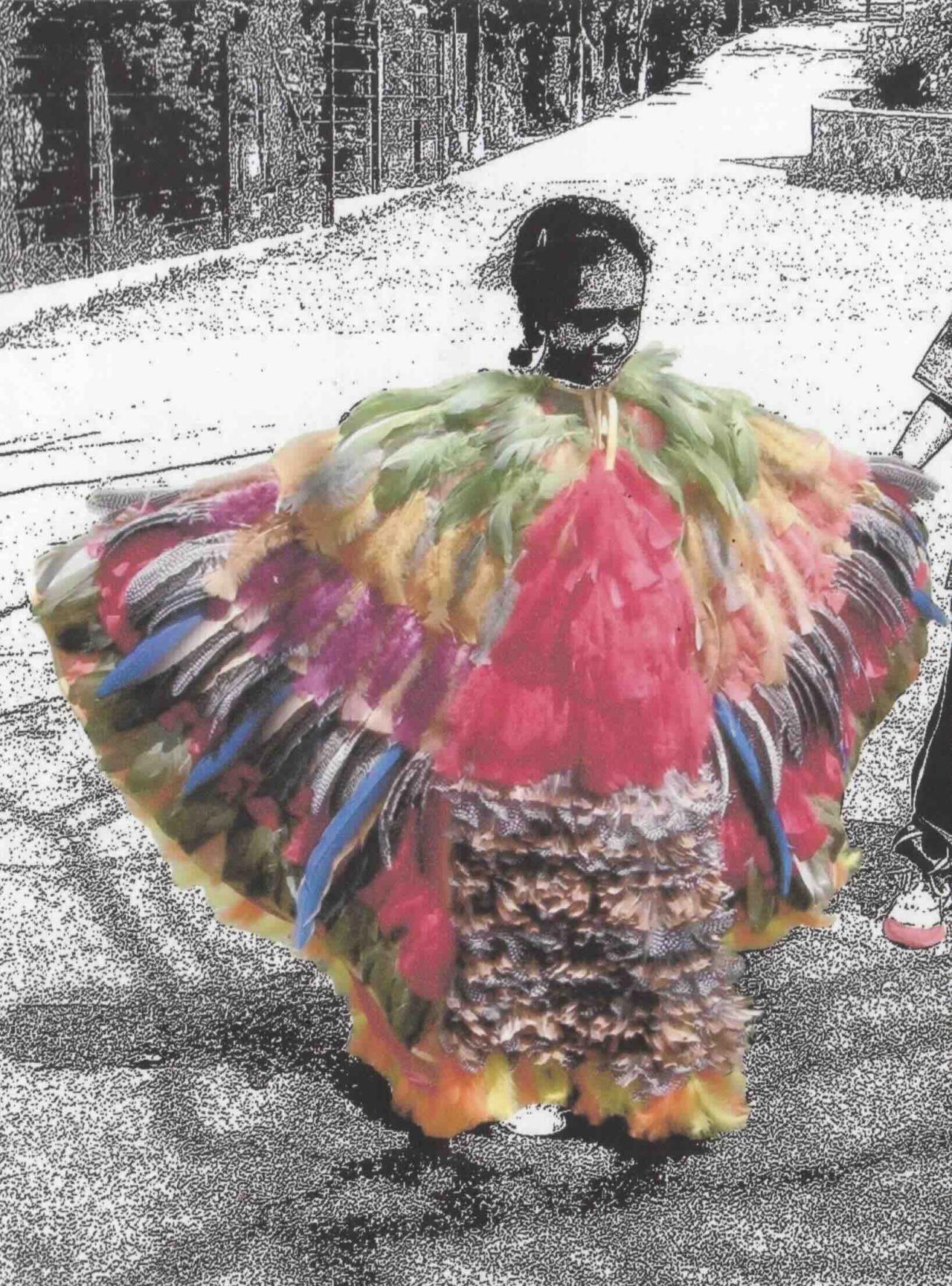
Photo: © Dominique Laporte
(2005 - ongoing) © Florans Feliks
Engraving © Florans Keliks
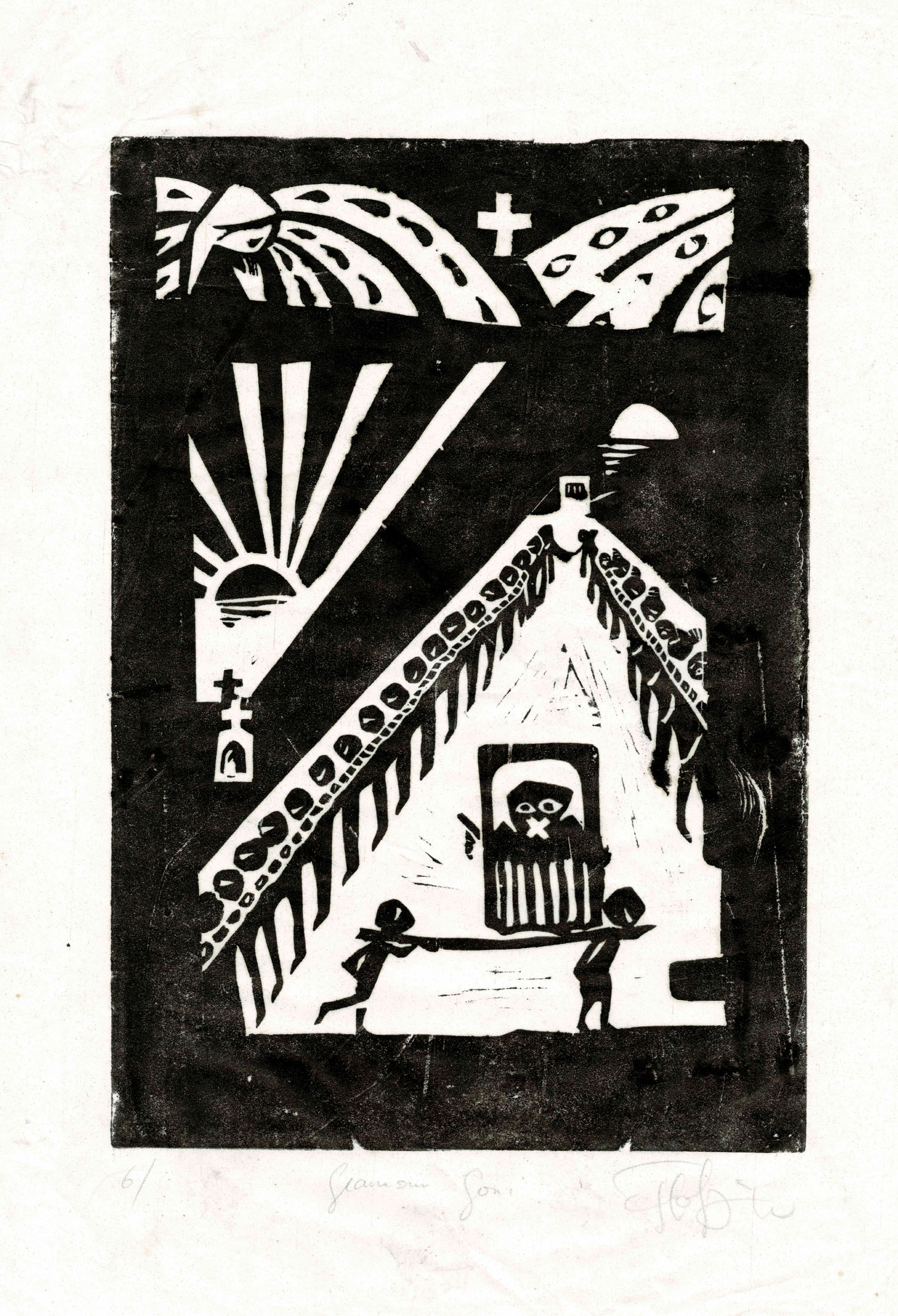
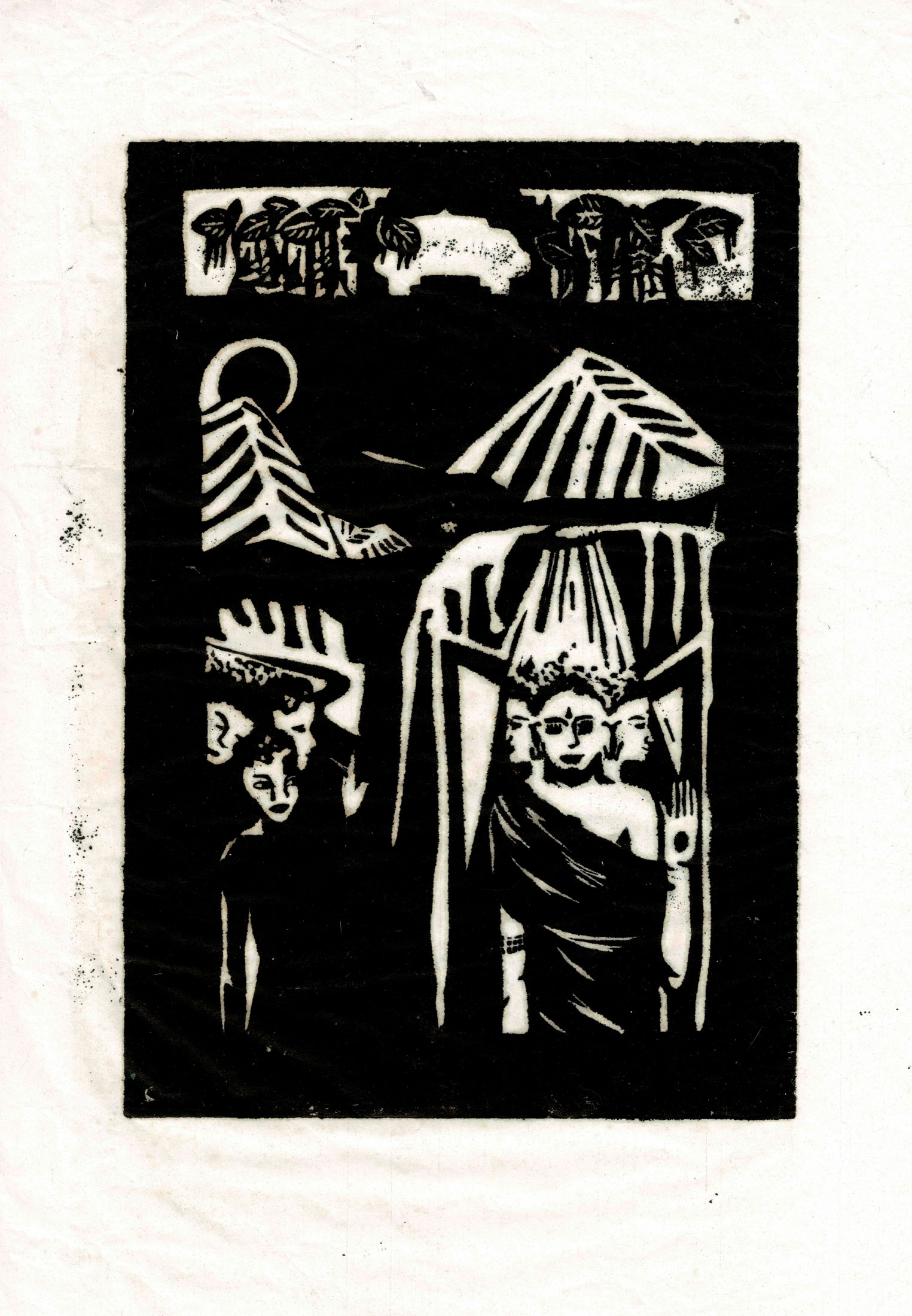
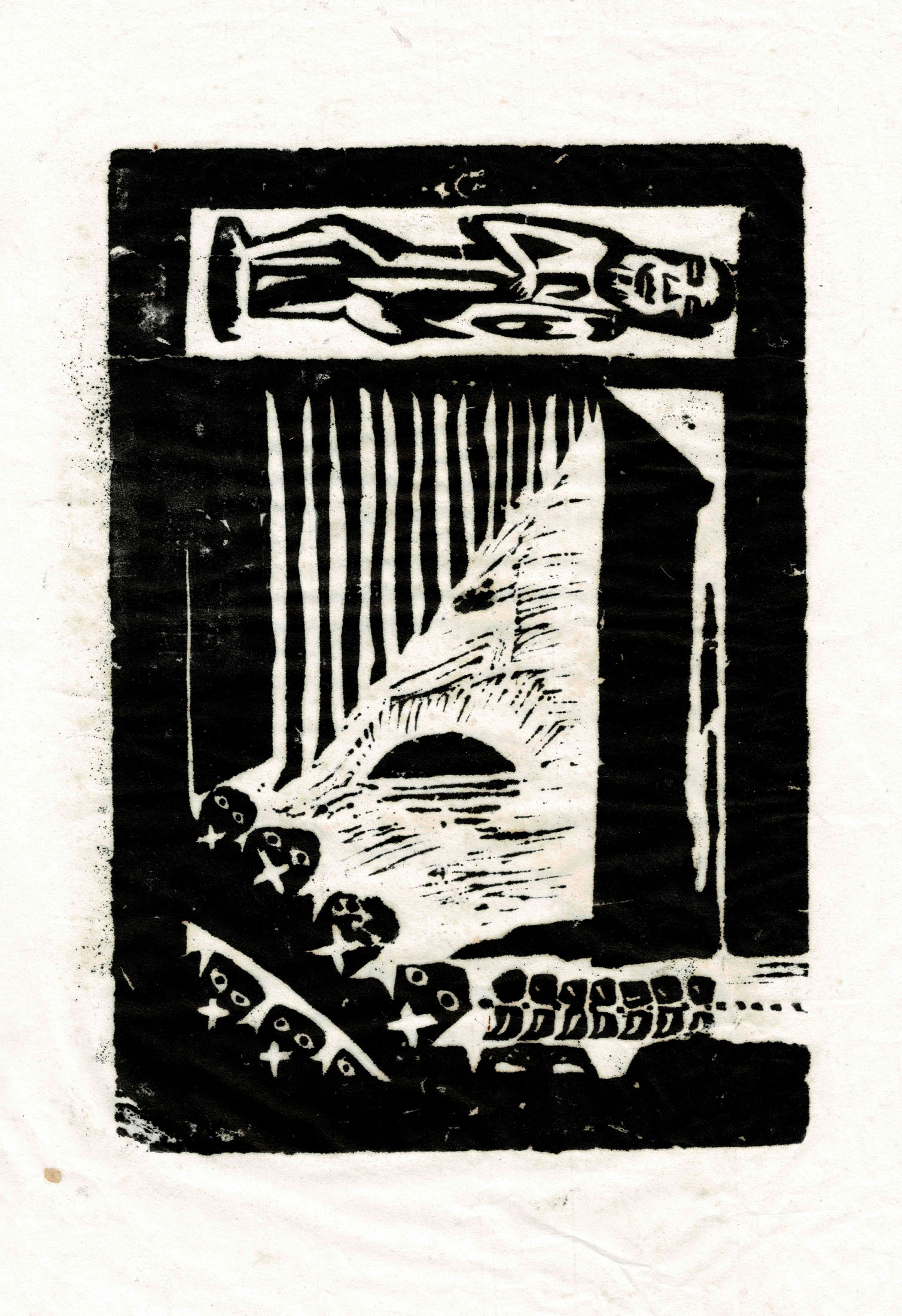
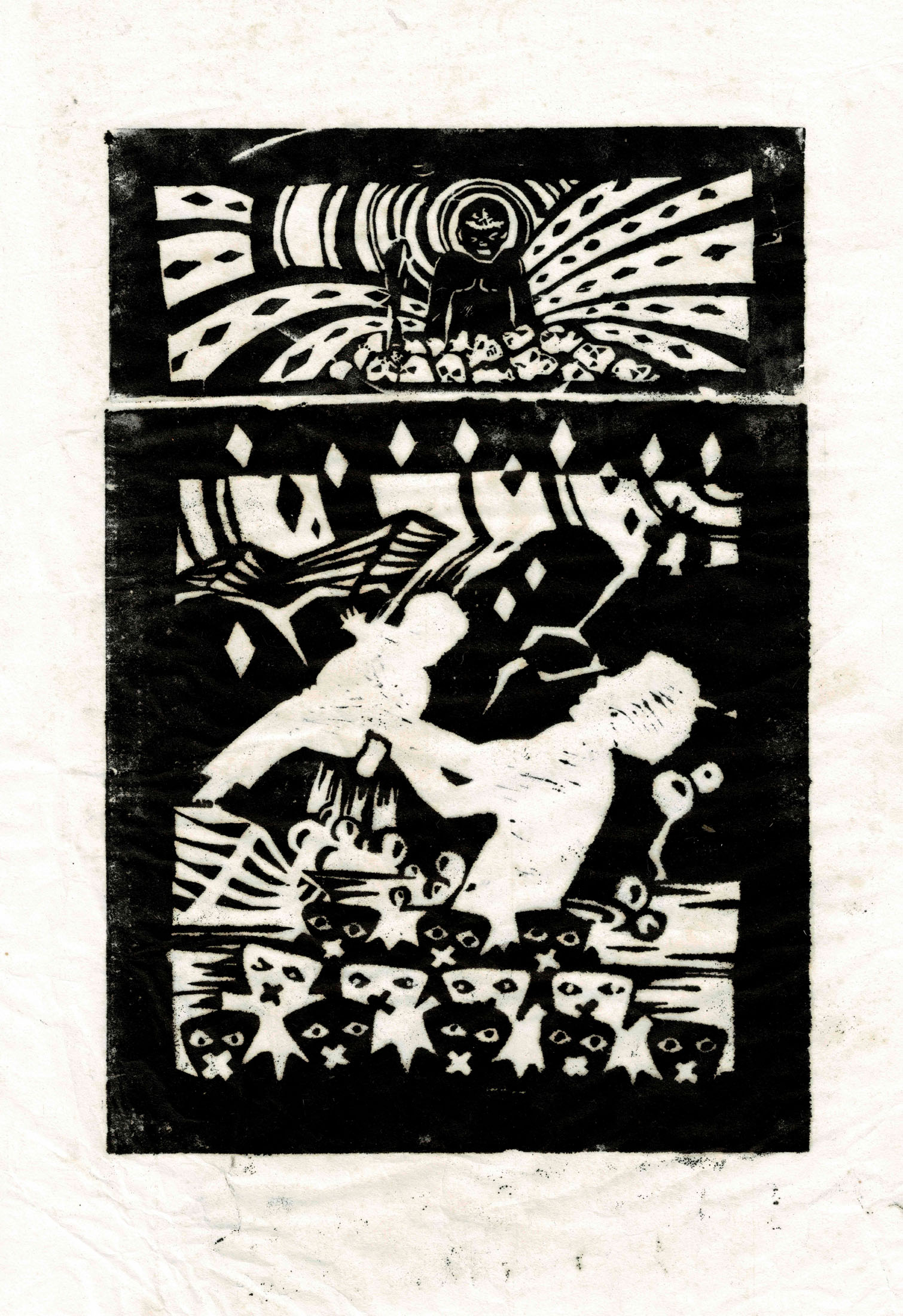
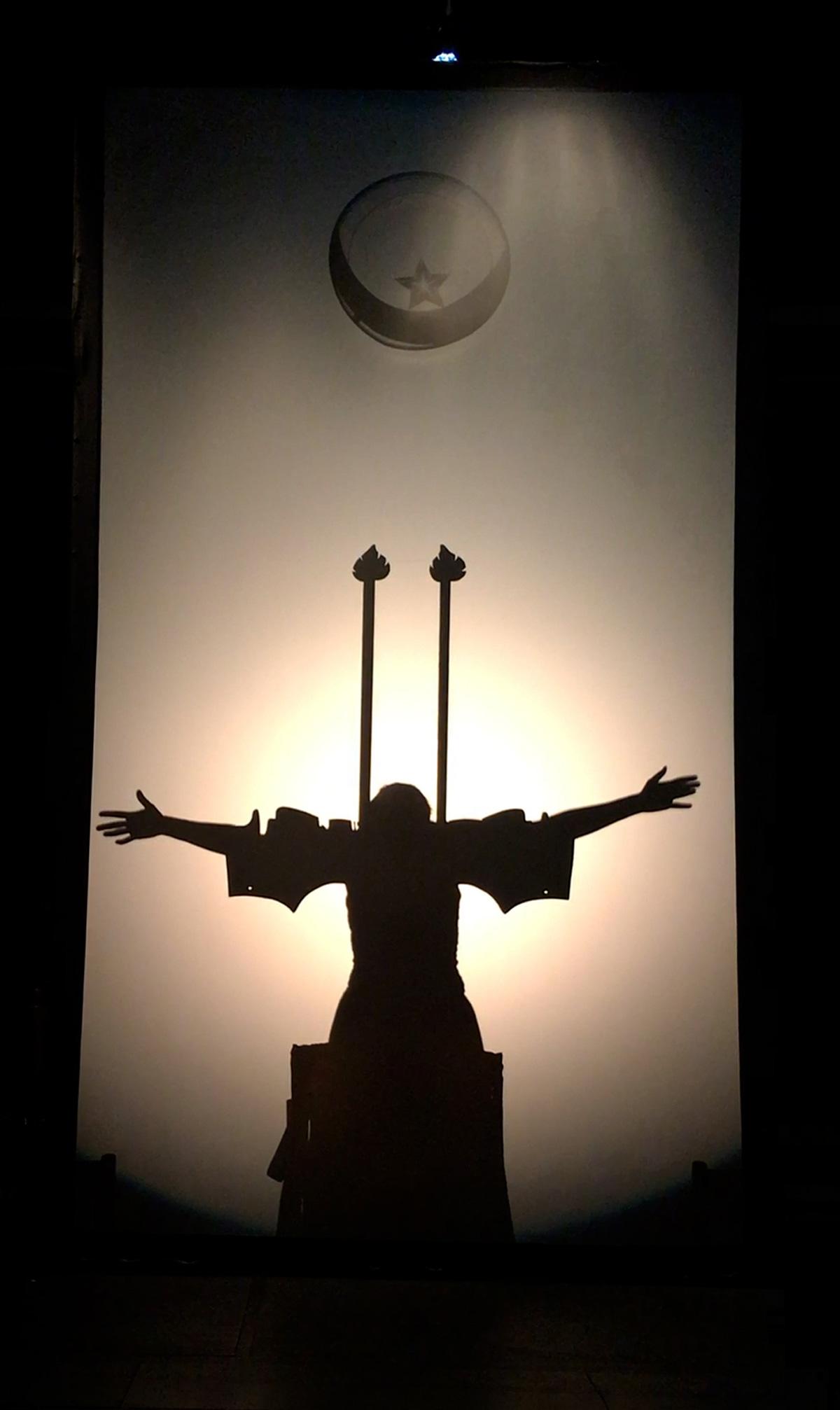
Shadow theater danced with cut-out elements on black foam board (these cutouts derive from an engraving that originated the work)
© Florans Feliks
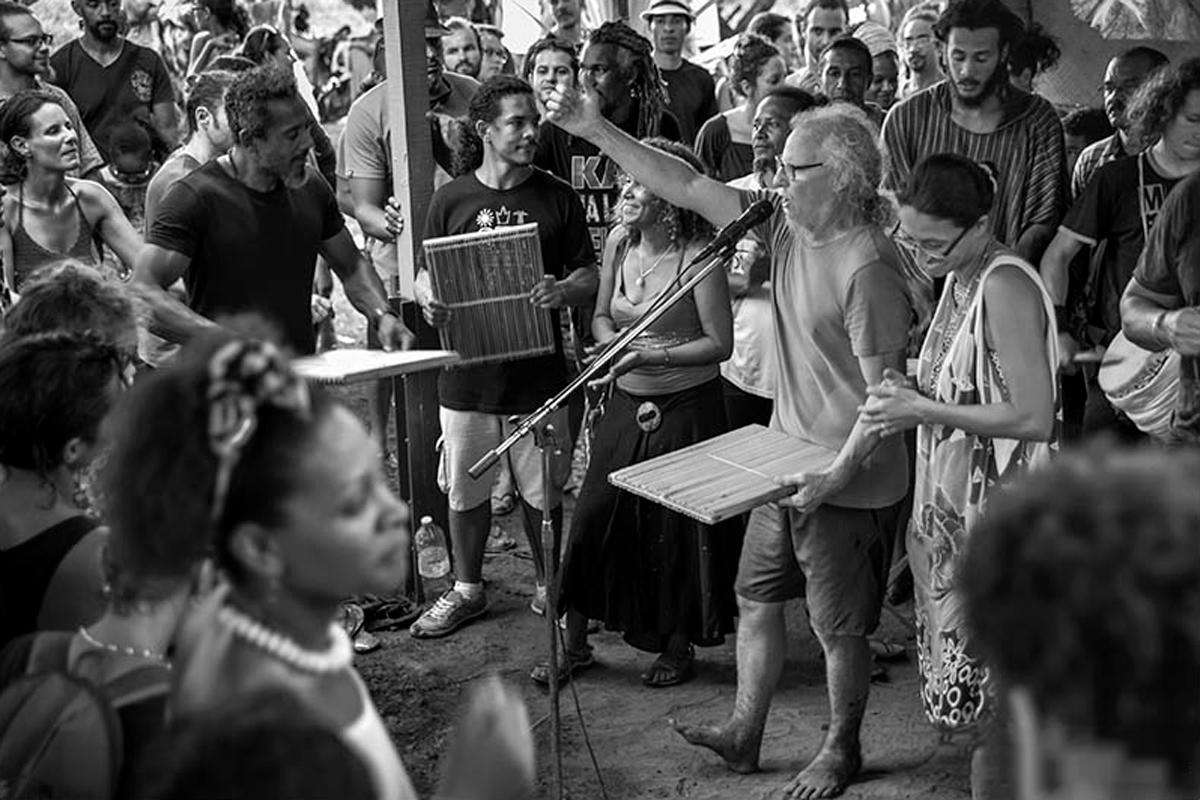
Photo: © Manu Magueresse
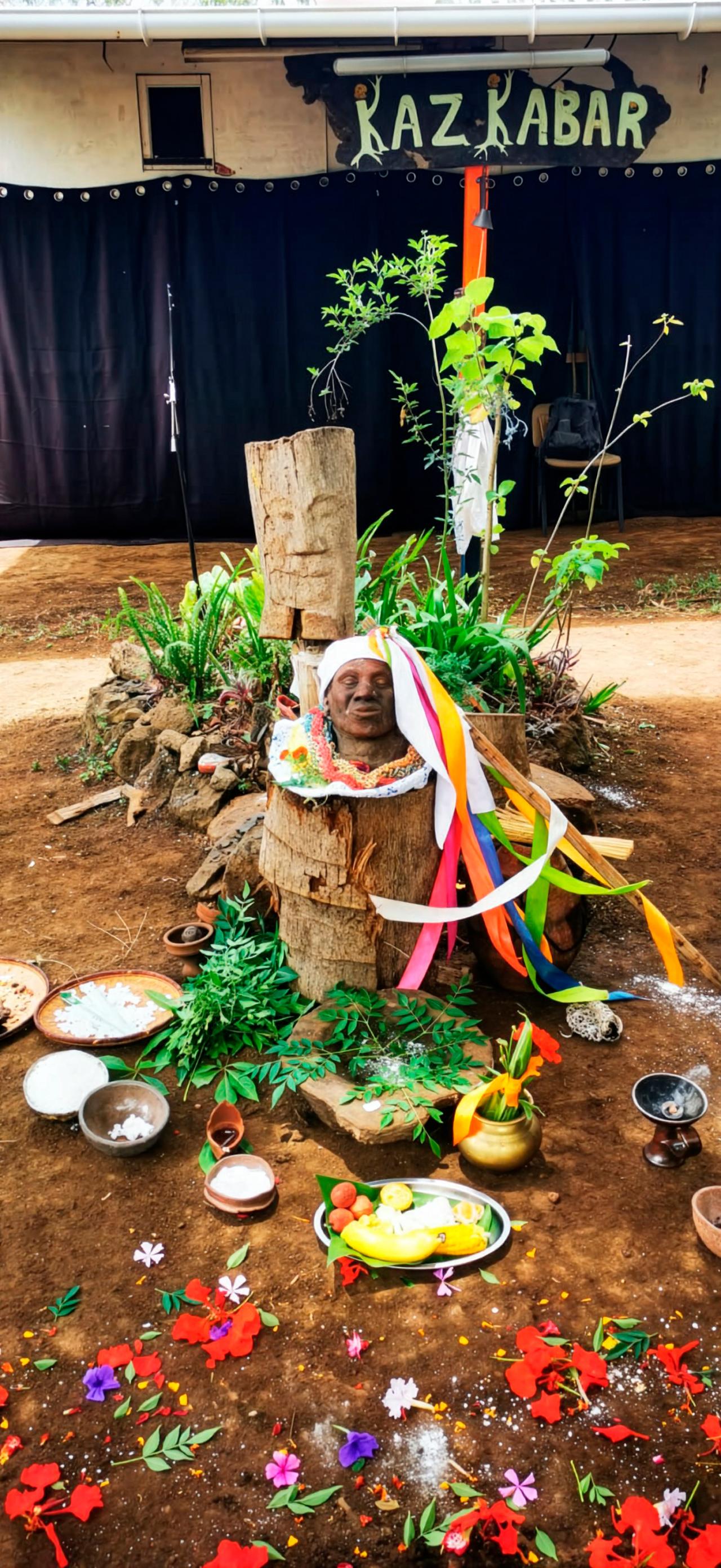
Result of the ritual performance carried out with Migline Paroumanou and Marie Line Tsimougom
© Florans Feliks