Bruno Yvonnet
At the Styx’s edge
Memory is an essential driving force in Bruno Yvonnet’s work, which he at first approached as a cultured iconographer before delving deeper into a world of images intertwined with personal recollections. In small touches, his latest works outline strange evocations of death, tucked away inside multiple depiction strategies — yet another mark of his technical virtuosity.
In the 1980s, Bruno Yvonnet’s work was driven by a dual desire to share and analyse what makes an image. Even then, he was already starting to isolate the formal, underlying laws of figurative activity in his sumptuous mezzotints of biblical or mythological scenes (Femmes dans jardins). Having removed the characters from these scenes, he played on the forces at work in the architectural views and empty scenery. In later works, he sought out iconographic archetypes, encouraging us to appreciate the agency of images and, beyond it, the ideological constructs they are steeped in (Vaillants, Boums).
The Poncifs series is emblematic of this focus on visual cultures. The 12 landscapes that compose it were inspired by a Prix de Rome catalogue published in the 1980s. From this catalogue, the artist inventoried the academic methods of composing a landscape: no background, background to the right, to the left, etc. and executed them one at a time, as if he were following recipes. He complemented each landscape with quotes taken from a 1950s book of morals aimed at teaching schoolchildren good manners. This assemblage of conformisms (landscapes, words) brings to mind a specific chapter in teaching history, revealing its alienating tendencies. Oddly enough, this series is presented like a fresco and painted on reinforced concrete, producing hefty pictures that break with the way frescoes are traditionally associated with architecture. But why the title Poncifs? It completes the proposition thanks to the double semantic field that the word belongs to: in French, a poncif is both a stencil with small perforations that allows for the reproduction of a drawing onto a surface (in this case fresh concrete) and a form or idea devoid of originality, which is what constitutes the boldness of these pictures.
The material makeup of the works will always be Bruno Yvonnet’s playground, the space in which he can experiment. While he has stated the absolute necessity of tying together technique and intention, he also accepts the unexpected visuals and meanings that arise from these reinterpretations. Tim Ingold calls this work method “the longitudinal point of view”. It allows an artist to generate a form by using “a confluence of forces and materials”, to “conceive the generation of form, or morphogenesis, as a process”.1 Technique is no longer merely a skill but also a cognitive added value.
In his latest works, Bruno Yvonnet shifts his focus to an iconography of proximity. The square formats of Beaux restes are family photographs from various sources reproduced on canvas. In these ample compositions, the figurative portion is enclosed in a swath of solid brick red, which at once contains and absorbs the image, leaving the faces and surrounding areas to dissolve into the monochrome. Brick red is used as a background colour for most of his paintings. By choosing to keep it visible, he creates undecipherable areas and, in doing so, confronts us with the dialectics of the figurative and the figural, namely the difference between a legible depiction and the vagueness of a certain opacity.2 These paintings that refuse to “submit the visible to the legible”3 contain the “inscription of form within signs” that Louis Marin spoke of in Portrait of the King.
The artist has a completely different dynamic in mind with Les grandes conserves, which also draws from vernacular imagery. Everything acts as a symbol in these silent, wax-painted landscapes. As is most often the case, Bruno Yvonnet operates a network of metanarratives, which expands family memory to art history and funerary anthropology: the materials he uses in Les grandes conserves are materials used in embalming (ashes, hide glue, canvas, wax) and in obvious relation to the Fayum portraits; these epic compositions are a melting-pot of several references, particularly the paintings of the Hudson River School (late 19th century).
The artist introduced new methods between 2019 and 2021 with the series Oubliettes, Imparfaites and Feues. The first two are based on family photos printed in 3D (lithophanes) and carry an ethnological project: to evoke enigmatic funeral rites through form. These 3D images are set in wooden boxes filled with ashes, which, if they were to be shaken, could potentially erase the images.
The series Feues was conceived performatively by the artist, with the beginning of the process being somewhat reminiscent of John Baldessari’s Cigar smoke4 project: Yvonnet produced smoke in order to capture it in 3D-printed negative photographs. These opaque prints are set in small concrete steles. The only way to see these images is by charging the included sun-powered battery to light up the inside of the stele. Only then does one get a chance to look at the fleeting image that appears, sublimely ethereal. It outlines immaterial impastos and transparencies in white before reverting to its trivial aspect, obverse and reverse of an elusive substance. This familiarisation with death, signified by the fragility and evanescence of the images, seems to stem organically from the artist’s relationship to memory, which is ubiquitous in his entire body of work. The series Feues contains a mournful and comical melancholy, which shows how aporetic Bruno Yvonnet’s art is: it refuses to depict by multiplying the methods of depiction. As Michel Foucault once put it: “It is in vain that we say what we see; what we see never resides in what we say.”5
Notes:
1 As opposed to the “hylomorphic conception”, which projects the transformation of matter into a culturally familiar form. Tim Ingold, Making: Anthropology, Archaeology, Art and Architecture. Routledge, London, UK, 2013.
2 See Luca Acquarelli (ed.), Au prisme du figural. Le sens des images entre forme et force. Presses Universitaires de Rennes, 2015.
3 Ibidem.
4 Cigar smoke to watch clouds that are different (by side sight view). 1972-1973. Ten colour photographs.
5 Michel Foucault. The Order of Things. Routledge, 1970.
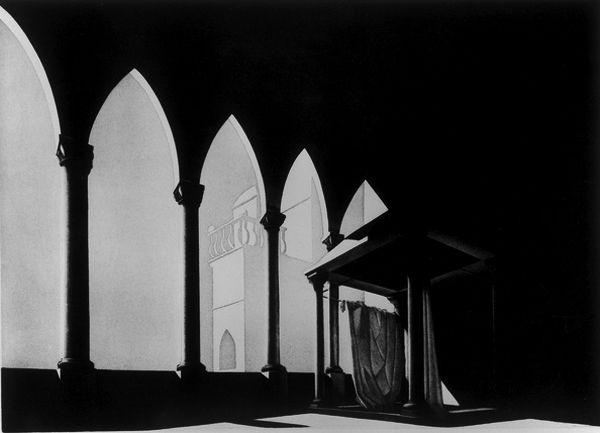
Mezzotint on BFK Rives, 31 x 44 cm
Édition Berggruen, Paris — Collection of the Museum of Contemporary Art of Lyon, 2011
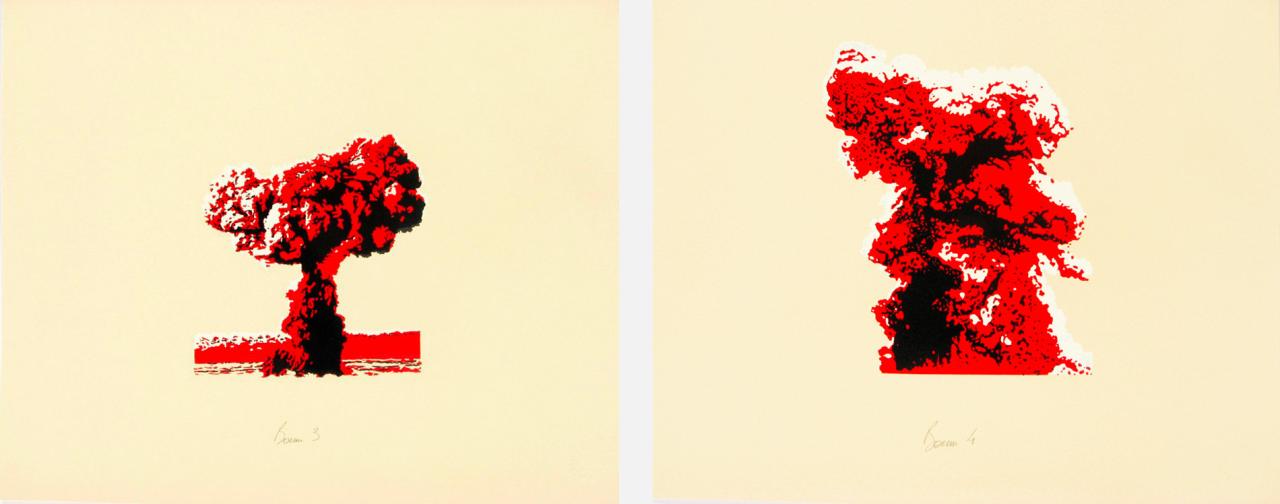
Linocuts, 21 x 29 cm, Édition URDLA, Villeurbanne
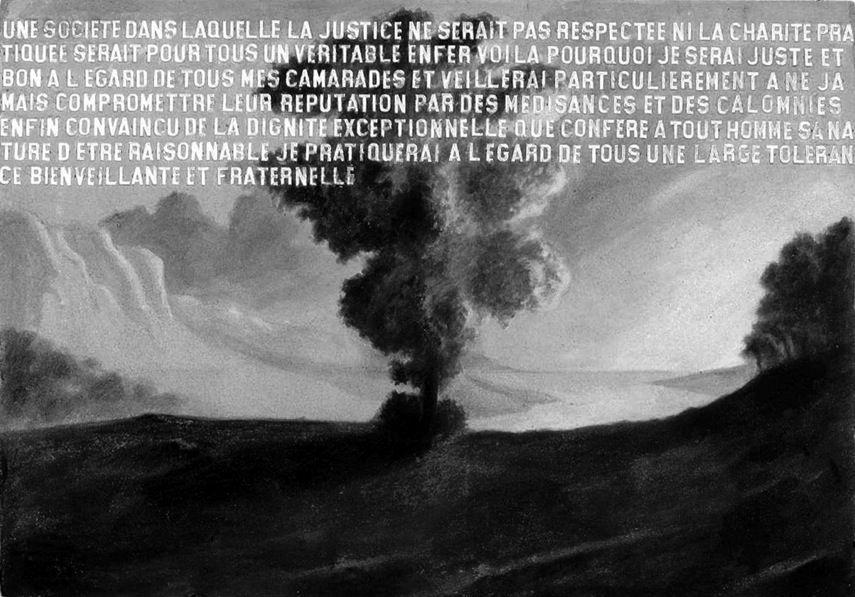
12 frescoes on reinforced concrete, metal lettering, 81 x 116 x 5 cm
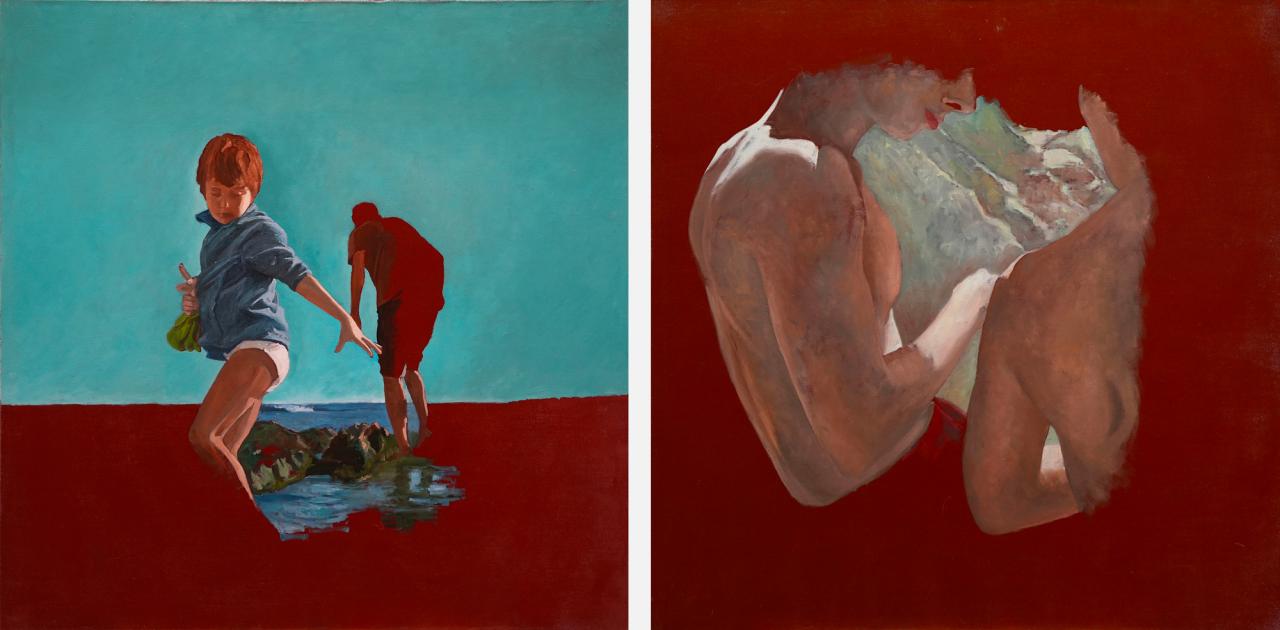
7 oil paintings on canvas, 120 x 120 cm
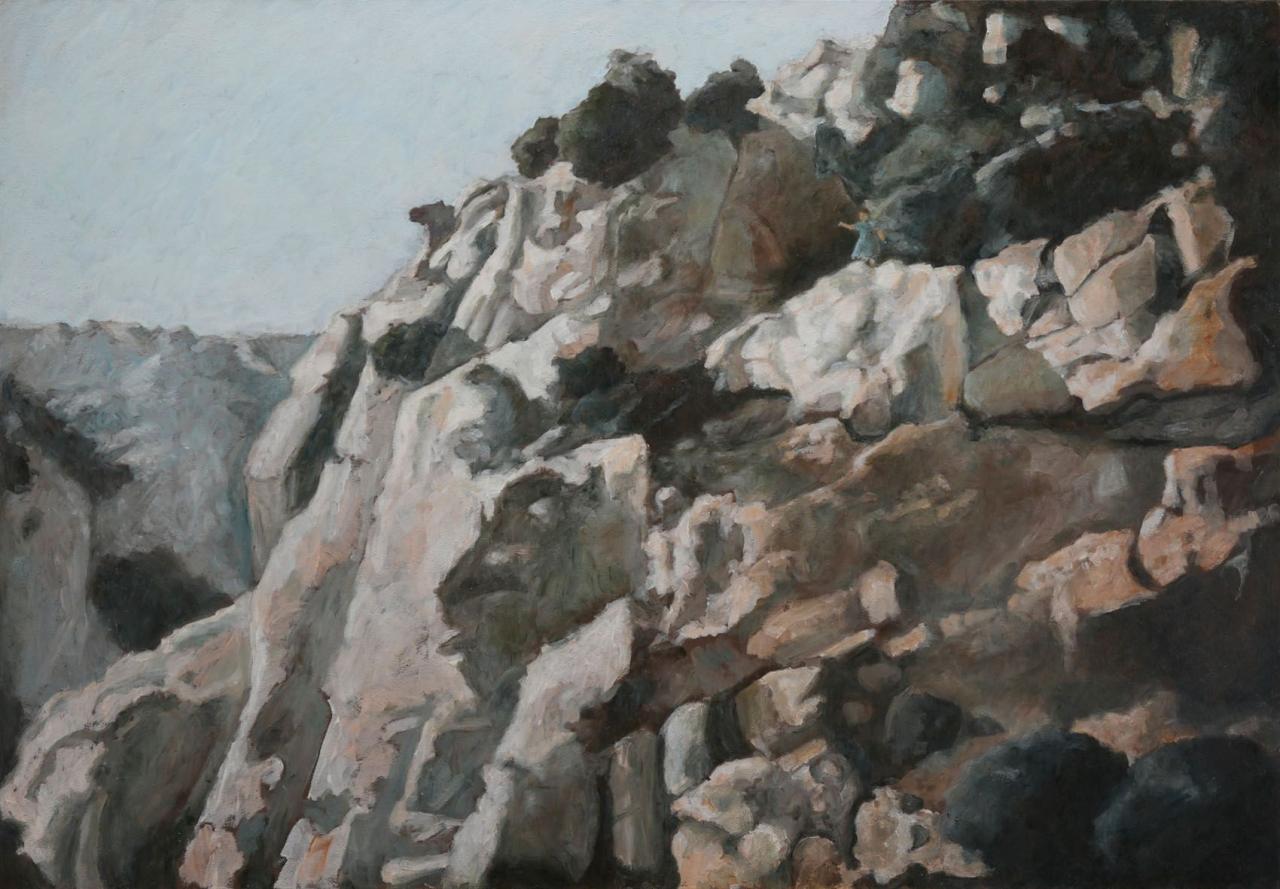
6 beeswax and pigment paintings on canvas coated with ashes, 120 x 170 cm
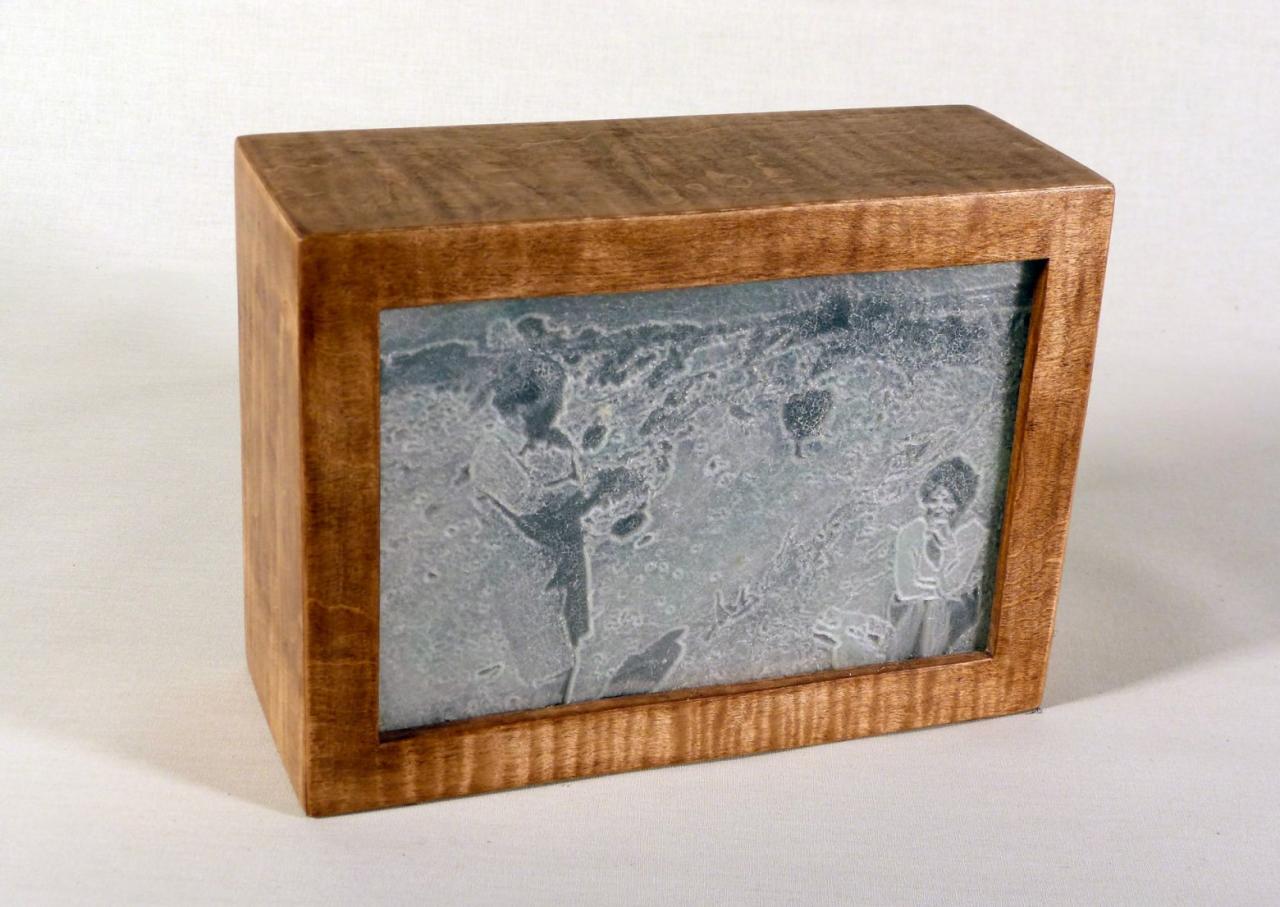
Wooden urn, PLA (polylactic acid) lithophane, ashes included at the bottom, 8 x 21 x 18 cm
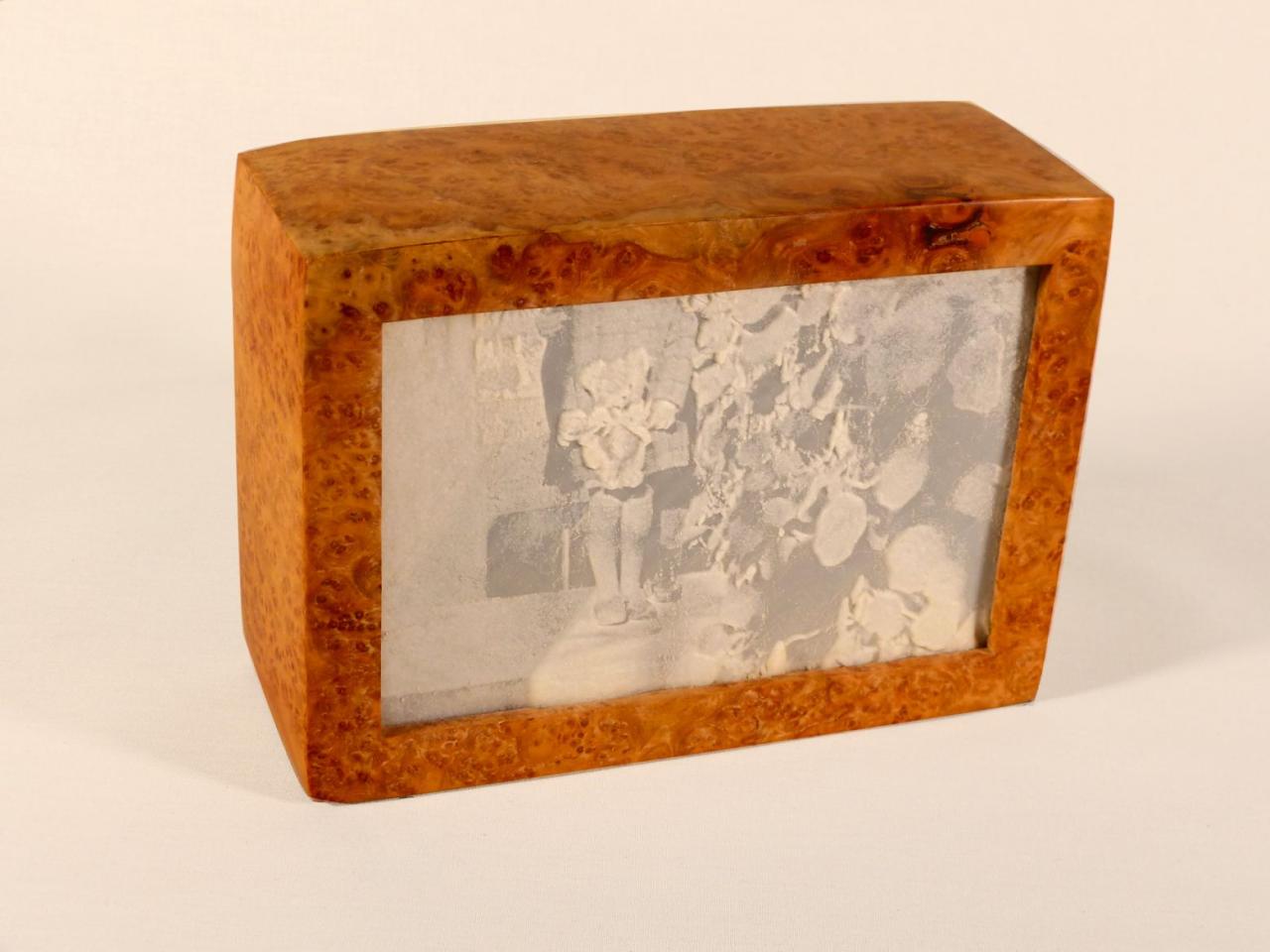
Wooden urn, PLA (polylactic acid) lithophane, ashes included
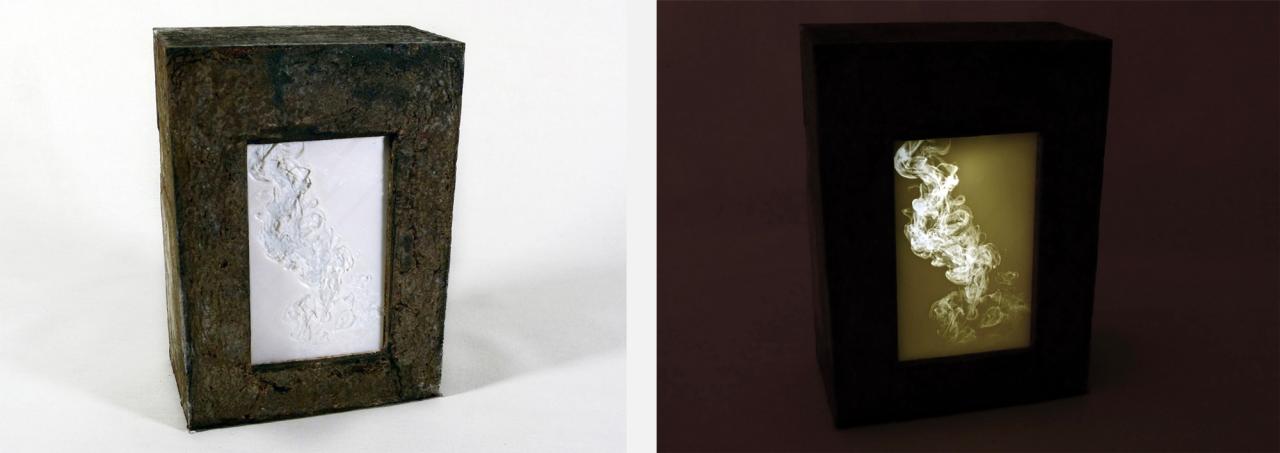
Concrete stele, PLA (polylactic acid) lithophane, lighting device, solar sensor, 11 x 18 x 25 cm